Tata Advanced Systems Limited (TASL) and Nibe Defence have secured positions to supply 850 long-range loitering munitions, commonly known as one-way attack drones, to the Indian Army.
This landmark acquisition, valued at approximately ₹1,500 crore, is being executed under the government's Fast Track Procurement (FTP) framework, marking a major leap in modernising the armed forces' precision strike capabilities.
The fast-track process is specifically designed to bypass the lengthy timelines of traditional military purchasing to meet urgent operational requirements.
Under this emergency route, the chosen manufacturers are mandated to begin delivering the drones within six months of the formal contract signing, ensuring swift deployment to front-line troops.
Following rigorous technical and commercial evaluations, TASL surfaced as the lowest bidder (L1) to secure the primary contract.
Adhering to standard defence procurement protocols for shared orders, TASL will fulfil 64% of the requirement—an estimated ₹1,000 crore share—while the second-lowest bidder (L2), Nibe Defence, will manufacture the remaining 36%, valued at roughly ₹600 crore.
Recent industry reports indicate that out of the competing firms, only three vendors cleared the stringent technical trials, with Nibe notably fielding its 'Vayuastra' platform.
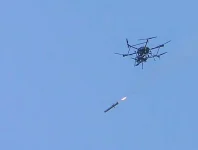
Loitering munitions act as a hybrid between unmanned aerial vehicles and missiles.
They can stay airborne to surveil a designated zone before autonomously diving to destroy a target with pinpoint accuracy.
The newly acquired systems reportedly boast a strike range exceeding 100 kilometres and feature advanced anti-jamming technologies to survive heavily contested electronic warfare environments.
Their cost-effectiveness and lethal accuracy against command posts, artillery, and radar stations have been extensively proven in recent global conflicts across West Asia and Eastern Europe.
For the Indian Army, inducting 850 of these advanced drones will serve as a massive tactical boost along the volatile northern and western borders.
To effectively integrate this new technology, the Army has already begun restructuring its Artillery formations.
This includes raising dedicated drone units such as the 'Shaktibaan' regiments and 'Divyastra' batteries, alongside equipping 'Bhairav' battalions to execute independent deep strikes behind enemy lines without waiting for conventional air support.
This contract also underscores India’s growing reliance on its domestic defence manufacturing ecosystem.
By splitting the order between TASL and Nibe, the Ministry of Defence is actively expanding local production capacity while reducing supply-chain bottlenecks.
This dual-sourcing strategy guarantees a steady flow of equipment during periods of high operational demand, aligning perfectly with the Atmanirbhar Bharat initiative.
The current order is just the beginning of a broader technological shift in Indian military doctrine.
The armed forces reportedly plan to induct nearly 100,000 drones of varying capabilities over the coming years, ranging from 50-kilometre tactical UAVs to 1,000-kilometre long-range platforms.
Driven by lessons from modern warfare, the Indian Army is rapidly building a robust, indigenous inventory of autonomous systems to fight and win the high-intensity conflicts of the future.