- Views: 147
- Replies: 5
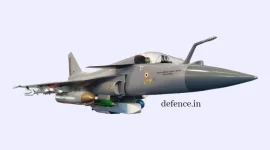
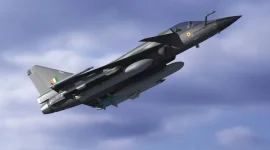
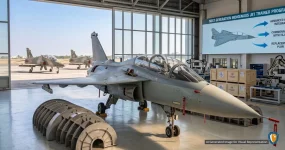
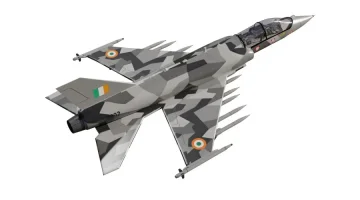
India's upcoming Tejas Mk2 Medium Weight Fighter (MWF) is set to feature a significantly higher proportion of locally made components compared to its predecessors.
By the time it reaches full-scale manufacturing, the programme aims to achieve an impressive 82% to 85% indigenous content by value.
This jet is being developed to replace the Indian Air Force's ageing fleets of Mirage 2000, Jaguar, and MiG-29 fighters, marking a monumental step in the nation's push for self-reliance in aerospace technology.
The core vision behind this project is not merely to assemble a larger combat aircraft within the country, but to guarantee that Indian institutions retain full control over its fundamental design, airframe, electronics, and sensor networks.
This approach highlights a major shift from the initial Light Combat Aircraft (LCA) project, ensuring that technological independence is prioritised right from the foundational stages.
The physical structure of the Tejas Mk2 will be almost completely developed at home. The Aeronautical Development Agency (ADA), in partnership with Hindustan Aeronautics Limited (HAL), is steering the aerodynamic and structural engineering.
They are heavily utilising advanced carbon-fibre composites alongside robust metal alloys to build an airframe capable of carrying an increased payload of up to 6,500 kg across 11 to 13 hardpoints.
In terms of electronics, the aircraft will showcase a massive leap in domestic capabilities.
Its navigation and manoeuvring will be governed by a locally engineered quadruplex digital fly-by-wire system, paired with an indigenous flight control computer.
This is a critical achievement, as flight-control technology is one of the most guarded and complex elements of modern military aviation.
The cockpit will feature a fully digital interface, anchored by a Wide Area Display and software developed in India, moving away from simply installing domestic versions of individual gauges.
For protection and tactical awareness, the Mk2 will tap into India's growing expertise in electronic warfare.
The jet will be equipped with the Unified Electronic Warfare Suite (UEWS) and advanced missile approach warning systems created by the Defence Research and Development Organisation (DRDO).
Most importantly, it will feature the Uttam Active Electronically Scanned Array (AESA) radar and a domestic Infrared Search and Track (IRST) system.
Incorporating an Indian-made AESA radar is a strategic milestone, as radar technology is a highly sensitive asset in modern warfare.
Despite these achievements, the initial prototypes of the Tejas Mk2 will not be entirely homegrown.
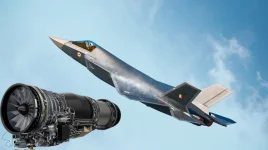
The most notable foreign element will be the General Electric F414 engine, which generates 98 kN of thrust. The first test aircraft, expected to roll out by late 2025, will use imported versions of this engine.
However, under a technology transfer agreement, up to 80% of the engine will eventually be manufactured in India, which will progressively boost the aircraft's overall domestic value. Safety-critical systems like the pilot's ejection seat will also continue to be sourced globally from proven manufacturers.
Ultimately, the true value of the Tejas Mk2 lies in securing technological sovereignty for India's defence sector. The country is transitioning from merely integrating foreign parts to mastering the core technologies that define combat readiness.
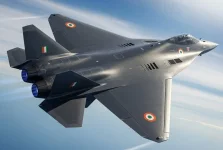
This expertise will act as a vital bridge toward building India's future fifth-generation stealth fighter, the Advanced Medium Combat Aircraft (AMCA).
If the targeted localisation goals are met, it will prove that India has the capability to master the complex digital, electronic, and propulsion systems required for next-generation aerial warfare.