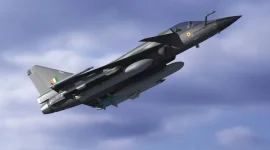
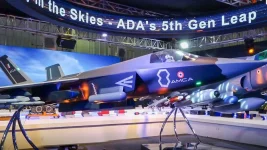
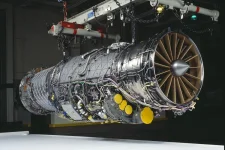
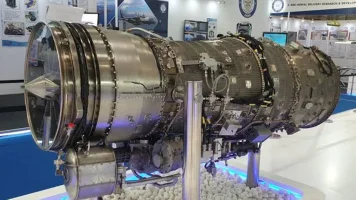
India is actively pursuing the creation of a domestic 120-kilonewton (kN) turbofan engine to power its ambitious fifth-generation stealth fighter, the Advanced Medium Combat Aircraft (AMCA).
This project has become one of the most critical technology initiatives in the nation's defence sector.
Currently, two global aerospace giants—France’s Safran and the United Kingdom’s Rolls-Royce—are competing for the partnership. However, their pitches go far beyond simply supplying a powerful engine; they offer fundamentally different blueprints for India's industrial future.
On the surface, both European manufacturers are promising a high-performance, afterburning jet engine suitable for the future AMCA Mk2 variant.
Yet, when examining their industrial strategies, methods of technology transfer, and long-term visions for India's aerospace sovereignty, the two proposals take entirely separate paths.
Safran’s strategy relies heavily on the established state-run ecosystem. The French aerospace firm is proposing a joint venture with the Gas Turbine Research Establishment (GTRE), India’s premier government agency for military propulsion.
Safran, which already has a strong foothold in India through the M88 engines powering the Indian Air Force's Rafale jets, is offering comprehensive technology transfer.
Negotiations with Safran are reportedly focused on sharing development costs, securing intellectual property (IP) rights, and determining future export permissions, all while utilizing GTRE's decades of institutional experience.
In contrast, Rolls-Royce is charting a private-sector route by proposing a partnership with Indian conglomerate Reliance Industries.
The British manufacturer's goal is to establish a completely sovereign combat engine ecosystem within India.
A key highlight of their pitch is the creation of a massive "Aerospace Gas Turbine Complex" in the country.
This facility would handle everything from initial design and testing to full-scale manufacturing and lifelong maintenance, serving as a hub that could potentially support both military and commercial aviation needs in the future.
For the Indian government, obtaining full Intellectual Property rights is arguably more crucial than minor differences in engine thrust.
New Delhi is eager to transition from merely assembling foreign hardware under license to holding complete design authority.
Owning the IP would allow India to modify the engine, develop future upgrades, manufacture critical internal components domestically, and export the final product without requiring approval from foreign nations.
Reports suggest that Rolls-Royce has made full IP transfer a central pillar of its pitch to meet this exact demand.
The competition essentially boils down to a broader choice regarding the foundation of India's defence future.
Selecting Safran would strengthen and integrate the existing government-led propulsion infrastructure under GTRE.
On the other hand, choosing Rolls-Royce would birth a brand-new, private-sector aerospace engine industry centered around Reliance.
Timelines also play a vital role in the decision-making process.
The Aeronautical Development Agency (ADA) plans for the initial Mk1 versions of the AMCA to be powered by American GE F414 engines—a powerplant that will soon be co-produced in India following a recent bilateral agreement between Washington and New Delhi.
The new 120-kN engine is strictly reserved for the heavier, more advanced Mk2 variant. Rolls-Royce has laid out a clear, albeit aggressive, schedule: developing the engine core by 2030, conducting flight tests by 2034, and starting mass production by 2036.
Safran’s timeline remains tied to ongoing negotiations but is broadly aligned to meet the AMCA Mk2 development deadlines.
Ultimately, the winner of this multi-billion dollar race will not be decided by technical specifications alone.
The final agreement will hinge on which company offers the best terms regarding deep technology transfer, absolute intellectual property ownership, export flexibility, and the ability to independently sustain India's defence aerospace sector for decades to come.