- Views: 1K
- Replies: 3
The rapid evolution of unmanned aerial warfare in the Middle East has created a significant strategic challenge for the Indian Air Force (IAF).
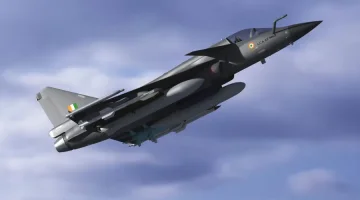
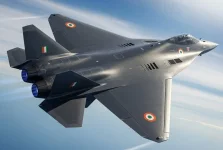
As Turkey’s Bayraktar KIZILELMA moves into active service and serial production, India’s indigenous counterpart, the Combat Air Teaming System (CATS) Warrior, remains in the developmental pipeline.
This timeline disparity presents a growing concern regarding the potential for advanced unmanned combat technology to reach India’s borders.
The Operational Edge of the KIZILELMA
The Baykar-developed KIZILELMA has transitioned from a developmental project into a mature, combat-ready platform.As of mid-2026, the UCAV has achieved major milestones, including successful live-fire engagements using AESA radar to secure beyond-visual-range (BVR) aerial kills.
Furthermore, recent collaborative trials with Italy’s M-346 fighter jets have validated advanced crewed/uncrewed teaming (CUC-T) capabilities, confirming the system’s ability to operate effectively alongside piloted aircraft.
With low-rate serial production currently underway and export orders already secured—most notably with Indonesia—the KIZILELMA is no longer an experimental asset but an established tool for modern aerial dominance.
Status of India’s CATS Warrior
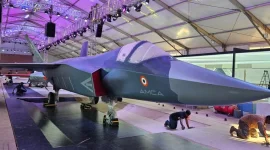
In contrast, India’s CATS Warrior program, spearheaded by Hindustan Aeronautics Limited (HAL), is currently focused on ground-based testing and prototype construction.While the successful completion of recent ground runs marks a vital step in the project’s maturation, the maiden flight of the full-scale demonstrator has been rescheduled for 2027.
The CATS platform is designed as an ambitious "loyal wingman" ecosystem, intended to work in tandem with a manned "mothership" to extend sensor reach and firepower.
Despite its technological promise and focus on indigenous sovereignty, the delay in flight testing means that the Indian system is currently in a different developmental phase than its Turkish competitor.
| Parameter | Bayraktar KIZILELMA | HAL CATS Warrior |
|---|---|---|
| Current Stage | Serial Production & Live Testing | Prototype Construction & Testbed |
| First Flight | Completed (Dec 2022) | Projected for 2027 |
| Operational Focus | Multi-role BVR & Strike | Loyal Wingman & Swarming |
| Teaming Status | Proven (CUC-T with M-346) | Simulated (Pending Flight Validation) |
Strategic Implications for the IAF
The risk for the IAF lies in the geopolitical landscape.Turkey maintains robust defence cooperation with regional actors, including Pakistan, which has historically been a significant operator of Turkish unmanned systems.
While Baykar has explicitly stated it will not supply the KIZILELMA to India, the prospect of this advanced technology being integrated into the neighbouring air force creates an urgent need for an asymmetric response.
Should this platform—or its underlying teaming technologies—proliferate to the region, the IAF may face a sophisticated unmanned threat before the CATS Warrior reaches full frontline service.
This potential gap has necessitated an urgent re-evaluation of current air defence strategies.
To mitigate this risk, the IAF is actively exploring interim measures, such as the modification of existing combat platforms and the accelerated deployment of long-range loitering munitions, to maintain regional equilibrium until indigenous loyal wingman capabilities are fully realised.