- Views: 3K
- Replies: 12
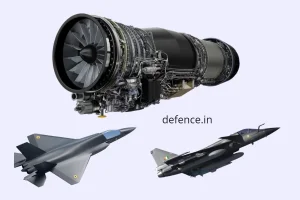
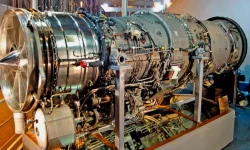
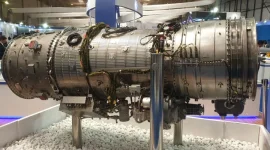
India's quest to power its fighter jets with a home-grown engine has reached a major turning point with the advancement of the "Kaveri 2.0" project.
Previously viewed as a delayed initiative under the original GTX-35VS designation, the effort has been completely revitalised.
Today, it stands as a well-organised programme with strong industry support, strict deadlines, and a clear plan for integration into active combat aircraft.
A major breakthrough occurred in February 2026 when Defence Minister Rajnath Singh observed the successful full afterburner test of the engine.
This demonstration, which included a newly designed afterburner module developed alongside BrahMos Aerospace, marked the project's transition from a testing phase to a confident stride forward.
This renewed success is driven by a massive shift in India's strategy for developing jet engines.
In the past, the Kaveri project faced severe difficulties with the "hot section"—the most complex area of a jet engine where turbine blades endure intense heat and immense pressure.
Earlier attempts suffered because India lacked the advanced material science and manufacturing skills needed to sustain high Turbine Entry Temperatures (TET), which are vital for engine power and lifespan.
However, the Kaveri 2.0 has overcome these hurdles by utilising single-crystal blade technology and modern high-temperature composites. These upgrades allow the engine to function safely near 1,700 Kelvin, a crucial requirement for achieving a competitive thrust-to-weight ratio.
Furthermore, the establishment of dedicated titanium and superalloy manufacturing plants in the country has greatly supported these critical material requirements.
The recent test of the afterburner, which reportedly delivered thrust in the 80 kN range (up from a baseline dry thrust of around 49 kN), is more than just a single achievement. It proves that the fully integrated engine can hold up under extreme heat and physical stress.
The focus now moves to ensuring the engine performs consistently in all flying conditions, especially at high speeds and altitudes.
To achieve this, rigorous high-altitude trials are scheduled for 2026 and 2027. These evaluations will take place at both Russia's High Altitude Test Facility (HATF) and India's own INDIRA test bed.
These tests are essential to check the hot section's durability in realistic flight environments, where airflow and pressure are significantly more challenging than on the ground.
Alongside these ground tests, the programme is aggressively preparing for actual flight trials.
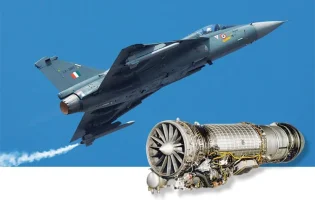
A specially modified older Tejas airframe will serve as a Flying Test Bed (FTB) to carry the Kaveri 2.0 engine.
Because the original Tejas was built around the dimensions of the Kaveri engine, fitting it into the aircraft requires minimal structural changes and promises a highly efficient integration.
Expected to take place in the coming years, this phase is critical. It will evaluate raw engine power as well as how well the system integrates with the aircraft's air intakes, control systems, and maintenance procedures during regular combat operations.
The strategic value of this engine programme is immense, particularly regarding its future role in upgrading the Tejas fleet during the 2030s.
Currently, the Indian Air Force relies on the American GE F404 engines for its Tejas Mk1A jets. However, recent global supply chain issues and technical snags with imported engines have caused notable delays in fighter deliveries, pushing schedules back by more than two years.
As the current Tejas fleet reaches its first major maintenance cycle, an "Indian Core" upgrade is being planned. This involves swapping the foreign engines with Kaveri 2.0 units, significantly reducing India's reliance on external suppliers and ensuring complete control over the aircraft's lifecycle without harming immediate combat readiness.
Another vital change is how the programme is being managed.
The Kaveri project is no longer restricted to government laboratories; it has embraced broad private industry partnerships.
Companies like Godrej Aerospace have taken a leading role in the manufacturing and assembly of the engines, having already delivered initial serial production units like the D1 in late 2025, with more units expected for handover to DRDO in 2026.
This shift frees up scientists at the Gas Turbine Research Establishment (GTRE) to concentrate on deeper research and development in advanced materials and future engine designs, rather than building the hardware themselves.
The adoption of "Digital Twin" technology by Godrej Aerospace marks another major step forward in this industrialised framework.
By building highly accurate digital models of engine parts—especially the sensitive hot section—engineers can simulate heat stress, wear, and potential failures before any physical testing occurs.
This modern approach drastically cuts down development time, minimises costly trial-and-error, and brings India's engine testing standards in line with the best global aerospace practices.
On a larger scale, the Kaveri 2.0 initiative is about more than just one type of fighter jet.
It represents India's dedication to creating a completely independent aerospace engine industry.
The dry variant of the engine is already earmarked for unmanned applications like the DRDO Ghatak stealth drone.
The knowledge gained across the entire Kaveri spectrum will support the creation of larger, more powerful engines, such as the 110–120 kN class required for the upcoming Advanced Medium Combat Aircraft (AMCA), and will lay the groundwork for sixth-generation technologies.
By dividing design, testing, and production among specialised institutions and private partners, India is building a strong foundation for continuous advancement in aviation propulsion.
The debate over whether the Kaveri 2.0 can fully replace the GE F404 has shifted.
It is no longer just a technical question, but a matter of strict schedules, acceptable risks, and military strategy.
The GE F404 is a proven and reliable engine with a massive support network, and any domestic replacement must meet those high standards.
However, given the recent delivery setbacks of imported engines and the undeniable progress of the Kaveri 2.0 in thrust, materials, and domestic manufacturing, India's homegrown engine has evolved from a distant ambition into a highly credible and essential alternative for national defence.