India’s upcoming Project Kusha, the domestic long-range air defence initiative designed to boost the nation’s missile shield, is frequently seen as a direct rival to Russia’s S-400 Triumf.
However, Moscow’s reaction points to a different perspective. Instead of seeing Project Kusha as a danger to its military ties with New Delhi, Russia is tweaking its approach, setting itself up as a lasting technology partner in India’s growing air defence network.
This change highlights the evolving character of India-Russia defence relations. For many years, Moscow’s bond with New Delhi relied heavily on selling fully built military hardware.
Now, with India pushing its Atmanirbhar Bharat campaign to achieve self-sufficiency in defence, Russia acknowledges that future collaborations will hinge on joining India’s homegrown projects rather than just exporting ready-made weapons.
A major sign of this shift is Russia's readiness to talk about sharing technology linked to its next-generation S-500 Prometey air defence system.
Rather than trying to directly sell the S-500—which is still a critical, highly strategic asset for Russia’s own military—Moscow has shown interest in joint research and technological partnerships that would benefit India’s future long-range missile defence ventures.
This kind of teamwork could involve sharing expertise in advanced target tracking, long-distance interception, high-speed missile navigation, and command-and-control frameworks.
Such capabilities would greatly support initiatives like Project Kusha and India’s wider vision for a unified air defence grid.
For Moscow, this is a sensible adaptation, not a step back.
Decision-makers in India have consistently stated that upcoming major military projects will focus on domestic manufacturing whenever possible. This rule applies to everything from fighter jets and aviation engines to missile networks, electronic warfare, radar systems, and complete air defence umbrellas.
Military planners in Russia realise that trying to convince India to keep buying foreign long-range missiles forever is a losing battle. By proposing joint efforts instead of trying to compete, Russia maintains its importance in one of its most vital global defence alliances.
It is also crucial to note that Project Kusha is not meant to take the S-400’s place immediately.
India’s five S-400 squadrons, procured at an estimated cost of around $5.4 billion, will remain some of the military's most powerful long-range air defence tools for years to come.
The Indian Air Force has already linked these batteries to its Integrated Air Command and Control System (IACCS), allowing them to work smoothly with airborne warning planes, local radars, and other missile units.
Russia still offers vital backing for this S-400 fleet, providing regular maintenance, spare parts, software updates, and replacement missiles. These ongoing service needs guarantee that Moscow will stay deeply involved in India’s air defence operations, even as domestic systems grow stronger.
Furthermore, Project Kusha—officially known as the Extended Range Air Defence System (ERADS)—is built to meet distinct tactical needs.
Based on publicly available details, the Defence Research and Development Organisation (DRDO) programme aims to create a series of long-range interceptors designed to take down aircraft, cruise missiles, and certain ballistic threats.
It is being developed with an estimated budget of ₹21,700 crore and will feature three interceptor variants: the M1 (150 km range), M2 (250 km range), and the heavy M3 (350–400 km range).
These missiles are intended to form a domestic shield that protects vast areas and cuts down the long-term need for foreign weapons.
Rather than kicking out the S-400 right away, Project Kusha is largely anticipated to function alongside current weapons within a wider, multi-layered protective network.
This multi-tiered strategy has always been a hallmark of India’s air defence planning.
At the very top, India operates the S-400 together with the DRDO’s homegrown Ballistic Missile Defence (BMD) shield. Together, these systems guard against distant aerial dangers and incoming ballistic missiles.
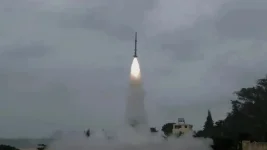
Project Kusha is meant to reinforce this long-range tier by bringing in indigenous interceptors that can hit targets extending from 150 kilometres to roughly 400 kilometres away, depending on the specific missile used.
With a reported single-shot kill probability of over 80%, the system is expected to see phased induction between 2028 and 2030.
Below this high-altitude tier, the military already uses Barak-8 Medium Range Surface-to-Air Missiles (MRSAM) created with Israel, the Akash and upcoming Akash-NG systems, and Very Short Range Air Defence Systems (VSHORADS) meant to stop low-flying targets.
The end product is an increasingly advanced, layered shield where different missiles support one another rather than compete.
Experts in Russia also appreciate another key part of India’s military mindset—its skill in blending equipment from various nations into one cohesive operational system.
The Indian Air Force has decades of practice merging Russian aircraft bodies with Israeli electronics, French sensors, British weapons, and home-built mission computers.
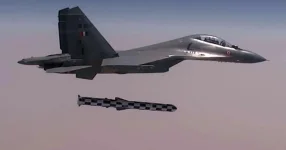
The Su-30MKI fighter jet is widely seen as the ultimate proof of this method, combining global technologies into a distinctively Indian platform.
A similar logic will likely shape the integration of future air defence systems.
Domestic Active Electronically Scanned Array (AESA) radars produced by Bharat Electronics Limited (BEL), alongside local command centres and networks built for Project Kusha, will probably operate side-by-side with Russian S-400 batteries under the IACCS umbrella.
This will let military leaders assign targets to different missile types based on the specific combat situation.
For Russia, this kind of compatibility is much better than being completely replaced.
Rather than losing a major buyer, Russia holds onto its position through maintenance contracts, technical aid, and potential joint ventures in advanced missile tech, all while India takes charge of building its own systems.
This shift also mirrors wider global trends. International sanctions, unpredictable supply chains, and a stronger push for local manufacturing have pushed many nations to seek self-reliance in arms production.
Moscow understands that India’s strategic independence means relying less on any single outside source, including Russia itself.
By welcoming joint development instead of demanding direct sales, Russia can keep its footprint in India’s long-term military upgrades and protect one of its most critical international defence partnerships.