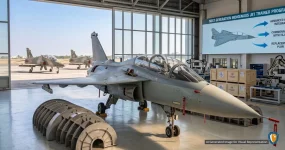
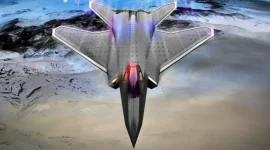
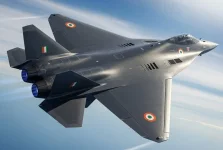
Recent reports indicating that India is exploring entry into the French-led Future Combat Air System (FCAS)—a sixth-generation fighter jet programme—have sparked discussions among aviation experts.
Former American fighter pilots view this as both a major strategic chance and a high-stakes technological risk for New Delhi.
This follows the Indian Ministry of Defence's recent confirmation to a Parliamentary Standing Committee that efforts have been officially initiated to join the advanced aerospace project.
In a recent analysis, former United States military aviators C.W. Lemoine (who flew the F-16 and F/A-18) and Gonky (a former F/A-18 and A320 pilot) evaluated India's potential involvement in the FCAS.
They debated whether stepping into this initiative would fast-track India's goals for a sixth-generation air fleet or merely entangle the nation in a complex, multi-country project that is already experiencing delays and internal friction.
The core appeal for India lies in acquiring cutting-edge technologies that would otherwise take decades to build from scratch.
While India is actively developing its own indigenous fifth-generation stealth jet, the Advanced Medium Combat Aircraft (AMCA), it is also planning ahead for the future.
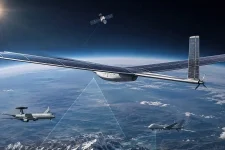
By joining the FCAS—which envisions a complete combat ecosystem featuring a "combat cloud," artificial intelligence, and drone swarms—the Indian defence industry could gain invaluable exposure to next-generation stealth, advanced sensors, engine propulsion, and manned-unmanned teaming capabilities.
Despite these benefits, the veteran pilots expressed doubts about whether the FCAS is the safest path forward for India. They noted that the European alliance behind the project has been troubled by severe disputes.
Originally planned by France, Germany, and Spain, the programme has seen major disagreements between aviation giants Dassault and Airbus regarding technology sharing, leadership roles, and how manufacturing work should be divided.
From the European perspective, bringing in a massive partner like India could inject much-needed funding and fresh manufacturing capabilities into the struggling programme.
Furthermore, India already shares a strong and historic defence relationship with France. Since the Indian Air Force successfully operates a fleet of French Dassault Rafale jets, integrating into another French-led aviation project could be a smoother process compared to other global partnerships.
On the flip side, Lemoine and Gonky highlighted a common pitfall of joint military developments: having too many nations involved often leads to conflicting design demands.
When every participating country demands specific features, technology transfers, and manufacturing shares, it usually results in design compromises. These complications inevitably lead to bloated budgets and massive delays in delivering the final aircraft.
Drawing on the history of other international fighter projects, the aviators served a word of caution. They explained that building a combat jet tailored to the specific needs of a single country is a much simpler task.
Trying to combine the unique tactical requirements and political interests of several different air forces into one single aircraft often makes the engineering process extremely difficult.
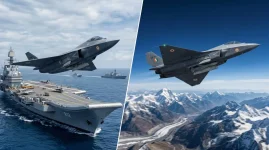
This situation places India in a difficult strategic position. New Delhi urgently needs to modernize its air power to match the rapidly advancing capabilities of China, which not only operates the fifth-generation J-20 stealth fighter but has also tested newer prototypes like the J-35.
Meanwhile, India currently faces a shortage of active fighter squadrons, and its own AMCA stealth jet is still several years away from entering active service.
The discussion also touched upon India’s reluctance to purchase Russia's Su-57E as a quick fifth-generation fix. Given that the Indian Air Force heavily relies on the Russian-origin Su-30MKI, skipping the Su-57 seems notable.
The American pilots theorized that this decision likely stems from concerns over Russia's ability to produce the jets in large numbers, as well as disagreements over how much manufacturing technology Moscow is willing to actually share.
In conclusion, joining the FCAS represents a classic high-risk, high-reward scenario for India.
By stepping in early, the Indian defence sector could gain unparalleled hands-on experience with revolutionary aerospace technology. Simultaneously, India's entry could provide the financial and industrial lifeline needed to rescue the fractured European programme.
However, before any real progress can be made, the existing partners in the FCAS must first resolve their own political and industrial disputes.
The best possible outcome for India would be a partnership that guarantees genuine access to advanced technologies and boosts its domestic manufacturing.
New Delhi must ensure that it does not simply become a financier for a stalled project weighed down by the competing demands of multiple nations.
Ultimately, the insights from the former American aviators boil down to one critical question for New Delhi: Is the goal merely to buy a future fighter jet, or to absorb the technical know-how required to build independent Indian jets in the future?
The answer to this will decide if the FCAS partnership truly accelerates India's military strength or turns into another endlessly delayed defence project.