- Views: 2K
- Replies: 2
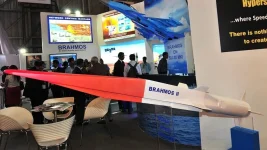
During its developmental testing phase, the BrahMos supersonic cruise missile displayed precision so remarkable that it could theoretically strike through the window of the Pakistani Prime Minister's Office.
This vivid recollection was shared by General J.J. Singh (Retd.), the former Chief of Army Staff who supervised the weapon's integration into the Indian Army back in 2007.
Co-developed by India's Defence Research and Development Organisation (DRDO) and Russia's NPO Mashinostroyeniya, the missile quickly proved its lethal accuracy.
Looking back at the programme's infancy, the former Army Chief remembered observing field trials at the Pokhran testing facilities.
He authorised the missile for active duty only after personally witnessing its flawless strike capabilities. His reflections highlight the immense trust the military placed in this joint venture well before it was formally deployed.
General Singh clarified that his reference to the neighbouring country's executive office was not a statement of operational intent, but rather a powerful metaphor to describe the weapon's surgical strike capacity.
Even in its early test flights, the missile's ability to hit designated coordinates with negligible deviation was fully established.
Another memorable milestone shared by the veteran officer involved the late President Dr. A.P.J. Abdul Kalam. To mark the system's entry into the armed forces, Dr. Kalam presented General Singh with a BrahMos scale model, predicting that the system would eventually dominate the global market for high-speed cruise missiles.
The Indian Ministry of Defence officially declared this ceremonial transfer on June 21, 2007. This date marked the beginning of routine deliveries of the sophisticated weapon to ground forces.
Revolutionising Deep-Strike Capabilities
The arrival of BrahMos brought a paradigm shift to India's conventional warfare strategies.Prior to its deployment, ground troops relied heavily on the Air Force or traditional rocket artillery to hit distant targets. With ground-based artillery typically capping out at approximately 75 kilometres, engaging critical enemy infrastructure deep across the border was a logistical challenge.
This limitation was shattered by the new cruise missile.
Initially restricted to a 290-kilometre range to comply with the guidelines of the Missile Technology Control Regime (MTCR)—which India had not yet joined—the weapon allowed military commanders to destroy supply depots, radar installations, and command hubs in mere minutes, all from the safety of Indian territory.
Armed with a 200 to 300-kilogram conventional warhead, it offered unprecedented destructive power.
Flying at nearly three times the speed of sound (Mach 2.8) and capable of hugging the terrain at altitudes as low as 10 metres to evade radar detection, the missile gives adversaries almost no time to react. This is a massive tactical upgrade over slower, subsonic alternatives.
Surgical Accuracy Reshaping Tactics
From day one, the hallmark of the BrahMos has been its unerring accuracy, featuring a Circular Error Probable (CEP) of less than 10 metres.This meant military strategists could pivot away from broad-area saturation bombardments. They could instead target specific structures, reinforced bunkers, and individual command posts while vastly reducing unintended collateral damage.
General Singh’s anecdote highlights the immense faith the defence establishment placed in the weapon’s advanced inertial and active radar guidance systems.
Though his mention of the Pakistani leadership's headquarters was a figure of speech, it perfectly captured the military’s assurance that the missile would hit exactly where instructed.
Post-2007 Technological and Export Milestones
Over the past seventeen years, the platform has seen relentless innovation. Following India's formal entry into the MTCR in June 2016, the geographical constraints on the weapon were lifted.Today, extended-range variants can strike targets between 400 and 800 kilometres away. Furthermore, it has become a truly universal platform, successfully integrated into mobile land launchers, naval warships, submarines, and modified Su-30MKI fighter jets.
The system has also successfully transitioned from a domestic asset to a major defence export.
In January 2022, the Philippines made history as the first international buyer, signing a $375 million contract for shore-based anti-ship batteries, with the first batch delivered in April 2024. Other nations, including Vietnam and Indonesia, are actively exploring procurement.
Concurrently, scientists are advancing the BrahMos Next Generation (BrahMos-NG), a lighter, more compact iteration designed to be carried by a broader array of aerial and naval platforms.
A Pillar of Conventional Deterrence
Defence experts universally view this supersonic asset as the bedrock of India’s modern conventional deterrence.By possessing the capability to instantly obliterate high-value, time-critical targets, New Delhi can inflict severe damage on hostile forces without escalating to nuclear warfare.
Its staggering velocity, terrain-hugging approach, and pinpoint accuracy render it nearly impossible for modern air defence systems to intercept.
The reflections of General J.J. Singh offer an insightful look into the deep-rooted trust India’s top commanders held for this indigenous project from the very beginning.
Nearly twenty years post-induction, the BrahMos not only retains its status as a premier precision-strike tool for the armed forces but has also firmly established itself as one of the most formidable supersonic cruise missiles globally.