The question of whether India prematurely cancelled its indigenous Kaveri fighter engine programme is gaining fresh attention.
Former Indian Air Force (IAF) Chief, Air Chief Marshal RKS Bhadauria, has argued that the Kaveri project should not be dismissed as a complete failure, suggesting that an additional decade of focused development could have yielded significant operational results.
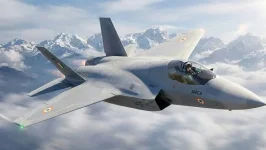
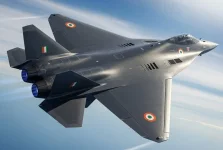
This perspective is highly relevant today as India actively searches for a new 120 kN-class engine to power its fifth-generation Advanced Medium Combat Aircraft (AMCA).
After decades of struggling to build the Kaveri engine—which was originally designed to power the Light Combat Aircraft (LCA) Tejas—India is currently looking towards international joint ventures, particularly an expected partnership with France's Safran, to co-develop a high-thrust engine.
Historically, the Kaveri programme encountered massive roadblocks involving specialised materials, complex component manufacturing, and inadequate domestic testing infrastructure.
According to parliamentary defence documents, the engine underwent nearly 2,800 hours of testing by late 2016 and achieved successful flight tests on an Il-76 test bed aircraft, reaching speeds of Mach 0.7 at an altitude of 12 kilometres.
Despite these milestones, the engine fell short of delivering the thrust-to-weight ratio required for a modern fighter jet like the Tejas.
Consequently, the government decided to look outward for foreign engines and next-generation partnerships rather than pushing the Kaveri into an operational fighter jet.
However, Bhadauria has consistently offered a more balanced view of the project's legacy.
He noted that while the existing Kaveri engine cannot simply be plugged into an AMCA-class platform, the programme built an immense foundation of knowledge.
Decades of research in turbine design, combustion dynamics, and advanced materials have provided a technical baseline that India can leverage in future engine projects.
Open-source developments further validate this: a "dry" (non-afterburning) variant of the Kaveri engine is currently being developed for the DRDO Ghatak unmanned combat aerial vehicle (UCAV), and reports indicate an upgraded 90 kN "Kaveri 2.0" is being engineered for potential mid-life upgrades of frontline IAF fighters.
When evaluating the Kaveri's history, it is crucial to remember the immense technology gap India faced.
Established global aerospace giants had spent over half a century perfecting turbofan engines, while India was attempting its first major military engine project from scratch.
The programme was also severely hindered by 1998 international sanctions, a lack of local high-altitude testing facilities, and restricted access to critical materials.
The fundamental lesson for the new AMCA engine project is not necessarily that Kaveri should have run forever, but that building indigenous aero-engines requires decades of uninterrupted funding and institutional patience.
While the first tranche of AMCA fighters will fly with American GE F414 engines, the subsequent phases will require a powerful co-developed alternative.
As India finalises technology transfers with foreign firms like Safran, the priority must be to establish deep domestic engineering capabilities rather than settling for simple licensed assembly lines.
Ultimately, the Kaveri was not a dead end, but a necessary first chapter in India's long journey toward true self-reliance in military aviation.