- Views: 2K
- Replies: 4
The Indian Ministry of Defence has established strict, time-bound targets in its newly released Request for Proposal (RFP) for the Advanced Medium Combat Aircraft (AMCA) project.
According to the document, the chosen private sector partner is required to execute the maiden flight of the AMCA prototype no later than 30 months after the contract is officially signed.
This ambitious deadline highlights the government’s commitment to accelerating the creation of India’s homegrown fifth-generation stealth fighter, a major national initiative that recently received a ₹15,000 crore approval from the Cabinet Committee on Security (CCS).
Beyond the initial flight, the RFP stipulates a rigorous testing schedule, requiring a total of 1,800 test sorties to be completed within a firm 84-month (seven-year) window from the date of the agreement.
This extensive flight testing will involve five distinct prototypes, which have been designed by the Aeronautical Development Agency (ADA) and the Defence Research and Development Organisation (DRDO).
The testing phase is intended to perfect the aircraft's stealth characteristics—such as its internal weapons bays and radar-absorbent materials—alongside its advanced avionics, sensor fusion, and overall flight performance.
The completion of these 1,800 sorties within the 84-month timeframe is a mandatory prerequisite before the fighter jet can be cleared for serial production.
To guarantee accountability, the entire development cycle is tracked through 14 specific mandatory and indicative milestones.
This highly structured approach represents a significant shift from previous Indian military aviation programmes.
By enforcing firm contractual deadlines and incorporating penalties for missing targets, the Ministry of Defence intends to avoid the lengthy delays historically associated with indigenous equipment development.
The competition to manufacture the fighter features major private entities, with the shortlisted groups reportedly led by Tata Advanced Systems, an L&T-BEL partnership, and Bharat Forge.
The successful consortium will be obligated to register a brand-new, dedicated company within three months of winning the bid to solely manage the AMCA’s execution.
This rapid development schedule is heavily aligned with the Indian Air Force’s goal of inducting the first AMCA squadrons by the mid-2030s.
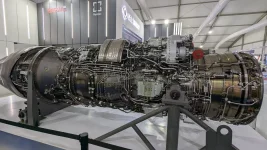
The IAF ultimately plans to operate around seven squadrons of the stealth fighter in total, starting with the Mk-1 variant powered by American GE-F414 engines, before transitioning to a Mk-2 version equipped with a more powerful, jointly developed 110kN engine.
By placing the private sector at the forefront of manufacturing, the government expects significantly improved supply chain agility, rapid prototyping, and superior production efficiency.
Successfully meeting these tight deadlines will firmly establish India among an elite group of nations possessing the industrial capability to swiftly design and manufacture advanced fifth-generation combat aircraft.