- Views: 1K
- Replies: 2
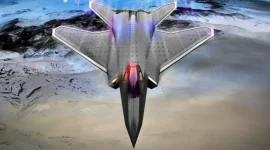
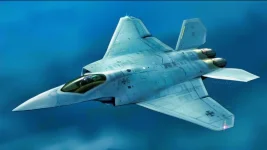
The recent collapse of the Franco-German partnership regarding the Next Generation Fighter (NGF) component of the Future Combat Air System (FCAS) in June 2026 has opened an intriguing door for India.
With Germany withdrawing from the core fighter project, Paris is actively exploring alternatives to maintain its independent sixth-generation aviation capabilities.
French military planners are now deeply focused on safeguarding domestic control over the critical technologies required to build their next-generation combat jet.
The French Air and Space Force has laid out rigorous operational specifications for aerospace giant Dassault Aviation. These demands mirror the country's distinct strategic posture.
Unlike many of its European neighbours, France requires an aircraft capable of launching independent nuclear strikes and conducting seamless operations from naval vessels.
Ultimately, Paris is determined to wage high-intensity warfare without relying on foreign nations for essential military assets.
The Narrowing Global Window
This shift in the European defence landscape arrives just as the competing Global Combat Air Programme (GCAP)—spearheaded by the United Kingdom, Italy, and Japan—accelerates toward its 2035 launch window.While GCAP has welcomed Canada as an observer and discussed potential roles for nations like Saudi Arabia, the window for full industrial participation is rapidly closing.
Executives involved in the project have warned that any new partners must commit by 2026 to avoid derailing the manufacturing timeline.
For India, this restricted timeline makes France's revamped aviation strategy highly significant.
If entering the GCAP initiative as an equal manufacturing partner proves too difficult, a newly sovereign French sixth-generation programme could offer New Delhi a lucrative alternative path to acquiring next-generation aerial combat technology.
Recent reports from August 2026 already indicate that the Indian Ministry of Defence is in active talks to join the French-led FCAS initiative.
Nuclear Deterrence and the France Libre
What France envisions goes far beyond a standard air-superiority jet. A non-negotiable requirement is that the future aircraft must integrate seamlessly with the nation's airborne nuclear deterrent.Paris is already funding the development of the ASN4G, a hypersonic nuclear cruise missile slated for deployment by 2035 alongside the upcoming Rafale F5 standard. Consequently, any fighter replacing the Rafale must maintain France’s capacity to execute strategic nuclear strikes.
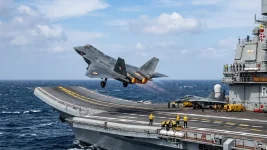
Additionally, the proposed fighter must be fully compatible with the French Navy's upcoming next-generation aircraft carrier, officially named France Libre in early 2026.
Replacing the Charles de Gaulle around 2038, this massive 80,000-tonne nuclear-powered warship will feature advanced Electromagnetic Aircraft Launch Systems (EMALS) sourced from the United States. It is explicitly designed to field both the Rafale F5 and the future sixth-generation aircraft.
Serving on the France Libre introduces significant engineering hurdles for the future jet. The aircraft will require:
- Heavy-duty landing gear and specialized arresting hooks.
- High-grade anti-corrosion coatings for harsh maritime environments.
- A reinforced structural frame capable of withstanding the violent forces of catapult launches and arrested landings.
The "System of Systems" Combat Network
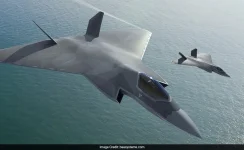
French strategists are also heavily focused on a "system-of-systems" combat network.In this framework, the manned fighter acts as a central command hub, directing swarms of unmanned combat drones and "Remote Carriers".
Operating through a highly secure "combat cloud", this setup allows human pilots to stay safely outside heavily defended enemy airspace while dispatching autonomous drones to handle high-risk tasks like electronic jamming, reconnaissance, and decoy operations.
Strategic Opportunities for India's AMCA
The most compelling aspect of this scenario for India is France's strict commitment to operational independence. Paris has a long history of rejecting foreign reliance when it comes to vital defence hardware.By collaborating on a French-led sixth-generation jet, India would not merely be buying a finished product off the shelf. Instead, New Delhi could gain invaluable, hands-on experience in areas like advanced sensor integration, electronic warfare, drone teaming, and next-generation propulsion.
The groundwork for such a high-level partnership is already well-established. The aerospace relationship between New Delhi and Paris continues to deepen, highlighted by discussions around large-scale Rafale procurements and extensive industrial cooperation between French and Indian defence contractors.
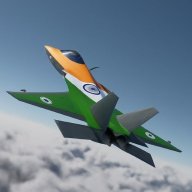
Notably, French engine manufacturer Safran has been selected for the development of modern jet engines intended for India's own Advanced Medium Combat Aircraft (AMCA) project. A joint sixth-generation venture would be a natural evolution of this growing alliance.
Despite the optimism, Indian policymakers must remain pragmatic regarding technology transfer. It is highly unlikely that France will grant open access to its most guarded secrets.
Proprietary systems related to nuclear payload delivery, core sovereign mission software, and top-tier electronic warfare capabilities will undoubtedly remain under strict French oversight.
Even with these limitations, the strategic window is too significant to ignore. If France presses forward with a domestically controlled successor to the NGF and India secures early involvement, New Delhi could transcend the role of a traditional buyer.
Instead, India would position itself as a co-developer, gaining access to cutting-edge technologies that could directly empower and accelerate its indigenous AMCA programme.