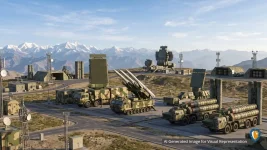
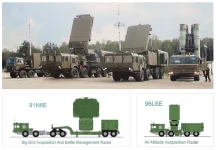
Moscow is significantly intensifying its defence export campaign towards New Delhi, proposing the sale of its advanced S-500 Prometheus air defence network and the Su-57 fifth-generation stealth fighter.
This renewed diplomatic effort coincides with a recent meeting between Indian Prime Minister Narendra Modi and Russian President Vladimir Putin in Bishkek on Monday, August 31, 2026.
The bilateral discussions focus on expanding long-standing military partnerships, coming at a critical juncture when the Indian Armed Forces are seeking to plug vital capability gaps and secure the nation's airspace against evolving regional threats.
Russia’s push to sell the S-500 system capitalises directly on the operational success of the S-400 Triumf batteries currently operated by India.
During last year's Operation Sindoor, the Russian-built S-400 proved highly effective against aerial incursions from Pakistan.
Notably, the system successfully neutralised a Pakistani Airborne Early Warning and Control (AWACS) aircraft at extreme ranges, validating the platform's long-range lethality and boosting its prestige among Indian military planners.
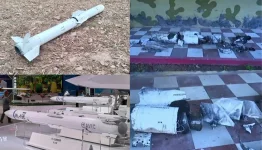
Seeking to build on this battlefield success, Russian officials reportedly delivered a formal proposal to supply New Delhi with five additional S-400 squadrons just prior to the Bishkek summit.
Should the Indian Ministry of Defence accept this offer, it would effectively double the Air Force's contracted S-400 inventory, solidifying a formidable area-denial umbrella over the subcontinent.
However, absorbing the newer S-500 Prometheus—which boasts interception capabilities up to 600 kilometres against hypersonic and near-space targets—is not a simple choice.
The Defence Research and Development Organisation (DRDO) is actively developing its own indigenous long-range surface-to-air missile network under Project Kusha.
Designed to engage threats at ranges between 150 and 400 kilometres, Project Kusha, alongside India’s maturing Ballistic Missile Defence (BMD) shield, aims to provide similar layered protection.
Consequently, the government must evaluate if the Russian S-500 offers a unique capability or merely duplicates ongoing domestic engineering efforts.
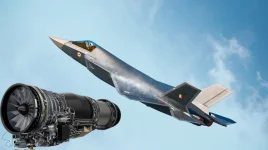
Simultaneously, Moscow is offering the Su-57 Felon stealth fighter to help India overcome a severe shortage of combat aircraft squadrons.
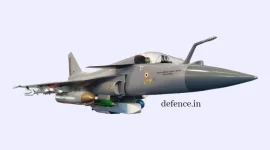
This proposal arrives as India’s indigenous Advanced Medium Combat Aircraft (AMCA) programme remains in the developmental phase.
Despite receiving a ₹15,000 crore clearance from the Cabinet Committee on Security (CCS) in early 2024, the AMCA is only expected to see its first prototypes roll out by 2028-2029, with full operational induction slated for 2034 or beyond.
Russia has sweetened the Su-57 deal by suggesting comprehensive technology transfers and domestic manufacturing, positioning the aircraft as a powerful interim solution before the AMCA matures.
The pressure to acquire a fifth-generation jet is mounting rapidly due to massive regional arms build-ups. China currently operates a fleet of over 500 J-20 stealth fighters, while Pakistan is anticipating the arrival of Chinese-made J-35 stealth jets.
This places New Delhi in a strategic dilemma: endure the capability gap while waiting for the domestic AMCA, or purchase a foreign stealth platform to counter immediate airborne threats.
Opting for the Su-57, however, introduces massive logistical hurdles.
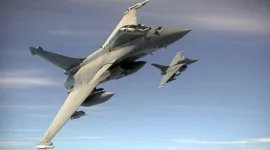
The Indian Air Force currently maintains a highly complex inventory comprising Russian Su-30MKIs and MiG-29s, French Rafales and Mirage 2000s, Anglo-French Jaguars, and the indigenous LCA Tejas.
Integrating yet another completely new fighter type would severely strain training, maintenance, and spare parts supply chains at a time when the Air Force is actively trying to streamline its fleet.
Furthermore, officials remain cautious following the failure of the Fifth Generation Fighter Aircraft (FGFA) joint venture, a previous Indo-Russian attempt to co-develop the Su-57 that New Delhi eventually walked away from in 2018.
Beyond stealth fighters and air defence, Moscow has presented a comprehensive package of strategic upgrades. This includes the sale of the Voronezh early-warning radar system, which provides vast coverage for tracking incoming ballistic missiles.
The package also encompasses a joint modernisation programme for the backbone Su-30MKI fleet—in collaboration with Hindustan Aeronautics Limited (HAL)—as well as lifecycle extensions for the Navy’s Russian-built Kilo-class submarines.
Despite these lucrative offers, Russia is navigating a highly competitive Indian defence market.
Over the past decade, New Delhi has strategically diversified its weapon sourcing, concluding major procurement deals with the United States, France, and Israel.
Recent examples include the long-negotiated acquisition of American Javelin anti-tank missiles and the anticipated purchase of 114 additional multi-role fighters, widely expected to favour the French Rafale.
Concurrently, the state's push for self-reliance is yielding tangible results, with domestic platforms like the Tejas, AMCA, and Project Kusha taking precedence in long-term strategic planning.
Nevertheless, Russia retains a distinct structural advantage. More than half a century of defence trade has left the Indian military deeply integrated with Russian hardware.
From main battle tanks and nuclear submarines to combat helicopters and frontline interceptors, legacy systems constitute the core of India’s fighting strength.
The continuous requirement for servicing, overhauling, and eventually replacing this massive inventory guarantees that Moscow will remain a central player in India's defence ecosystem for decades.
Ultimately, the procurement of high-value strategic assets like the Su-57 or S-500 goes beyond standard military evaluations; it requires high-level political consensus.
The ongoing dialogues between PM Modi and President Putin aim to ensure Russia retains a premium status in India's modernising military architecture, despite aggressive competition from Western manufacturers and India's own rising defence-industrial base.
New Delhi must now carefully balance the necessity for immediate tactical superiority against its long-term vision for absolute technological independence.