- Views: 2K
- Replies: 10
India’s growing fleet of Rafale fighter jets is a central pillar of its strategy to maintain dominance in the skies.
The nation already operates 36 of these aircraft under a 2016 agreement, and has recently ordered 26 maritime variants (Rafale-M) for the Indian Navy, with deliveries expected to begin around 2028 to 2029.
Furthermore, the Defence Acquisition Council recently approved the purchase of 114 additional multi-role fighters in February 2026. This massive procurement, estimated at ₹3.25 lakh crore, is set to drastically enhance the combat readiness of the Indian Air Force (IAF).
To reach their maximum effectiveness in hostile skies, these advanced combat jets are highly dependent on cutting-edge air-to-air weapons.
Currently, the primary armaments include the Meteor missile, designed for beyond-visual-range engagements, alongside the MICA missile, which is utilised for close-quarters aerial combat.
Deliveries for the newer 114 jets are projected to start around 2030, and a large proportion will be built domestically, underscoring the need for a steady and reliable supply of these crucial weapons to support the fleet.
The Meteor is widely respected for its ramjet engine, which creates a massive "no-escape zone" of over 100 kilometres, making it a highly lethal component of the Rafale’s arsenal.
India secured a supply of these missiles along with its first 36 jets, and further orders are being processed for the upcoming naval fleet.
However, as the total number of Indian Rafales could soon approach 170 aircraft, the military requires a significantly larger stockpile to support daily training, maintain high operational alertness, and prepare for potential combat scenarios.
Unfortunately, securing these European-made missiles has become increasingly difficult due to a surge in global demand.
Other nations operating the Rafale, such as Qatar and the United Arab Emirates, are rapidly purchasing huge quantities of MICA and Meteor missiles to arm their own growing fleets amidst rising regional instability.
Furthermore, high usage rates in active global conflicts have placed immense pressure on MBDA, the manufacturer. This surge has resulted in supply chain bottlenecks, causing noticeable shortages even for the French Air Force.
This severe scarcity in the international market exposes a critical weakness for India. Relying entirely on foreign manufacturers for advanced defence systems introduces the risk of unexpected delays, export bans, or being pushed down the priority list during a crisis.
To secure its national interests, India must find a way to move away from total dependence on imports and build strategic self-reliance in its missile supply.
One potential solution involves strengthening industrial ties with France to manufacture these weapons locally. This strategy could lead to the creation of a dedicated supply chain within India, where Indian companies would build or assemble MICA and Meteor components under licence.
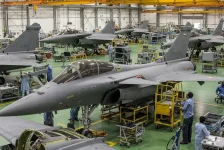
This aligns perfectly with India's broader goal of localising Rafale production; for the upcoming batch of 114 jets, the government is already aiming for 50-60% domestic manufacturing, which includes building airframe parts and establishing maintenance facilities for the M88 engines.
A more radical and highly effective alternative is to integrate India's own domestically developed missiles onto the French-built fighters. The Defence Research and Development Organisation (DRDO) has created the Astra series, which presents a highly capable substitute.
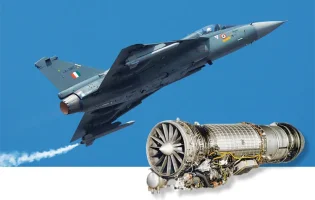
The Astra Mk1 is already in active service on fighters like the Su-30MKI and LCA Tejas.
More impressively, recent updates in early 2026 confirm that the highly advanced Astra Mk2—equipped with a dual-pulse solid rocket motor—has achieved an extended strike range of up to 240 kilometres, putting it in the same league as elite global interceptors.
With integration trials for both the Mk1 and Mk2 on the Rafale scheduled to begin in 2028 with technical assistance from Dassault and Thales, Indian forces could soon field a highly flexible loadout: using the imported Meteor for high-value, extreme-range targets, while relying on the cost-effective Astra for general combat and bulk stockpiling.
Successfully arming the Rafale with Astra missiles would drastically cut India's reliance on foreign imports while directly supporting the government's Atmanirbhar Bharat (self-reliant India) initiative.
It would also guarantee easier maintenance and resupply through domestic production by Bharat Dynamics Limited.
While French authorities have traditionally been reluctant to share the sensitive software source codes required for such deep modifications without direct oversight, India's massive new order for 114 jets provides strong negotiating power to secure these vital technical concessions.