- Views: 1K
- Replies: 1
The recent move by the United Kingdom to cancel the Mid-Life Upgrade (MLU) for the Meteor beyond-visual-range air-to-air missile represents a major transformation in European defence strategy.
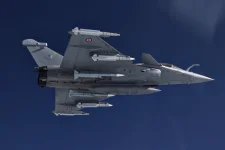
This policy pivot could carry lasting consequences for India, which is projected to host the largest fleet of Rafale combat jets outside of France in the coming decade.
According to the UK Ministry of Defence, financial resources previously set aside for the Meteor's modernisation are being redirected to the Future Air Superiority Effectors (FASE) programme.
Currently in its pre-concept phase, FASE is a joint effort aimed at designing a next-generation air-to-air weapon to ultimately replace the Meteor.
On April 1, the UK and France signed a Memorandum of Understanding to conduct a 12-month joint study exploring this very successor.
This cancellation underscores a broader shift in European military planning.
Rather than pouring funds into upgrading current technology, defence planners in London and Paris have decided to focus on building an entirely new tier of long-range aerial weapons.
This next generation of missiles is being designed specifically to tackle emerging dangers, such as sixth-generation stealth fighters, advanced drone swarms, sophisticated electronic warfare environments, and hypersonic threats.
For the Indian military, this European shift presents a complex scenario that requires careful evaluation.
At present, the Indian Air Force relies on the Meteor missile as the primary beyond-visual-range weapon for its Rafale fleet, and it is widely regarded as one of the most lethal air-to-air systems globally.
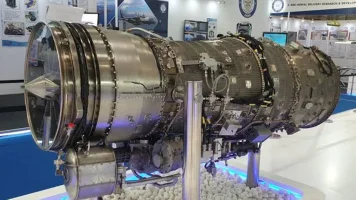
Utilising an advanced throttleable ramjet engine, the Meteor sustains peak speed and energy throughout its trajectory, resulting in a much larger "no-escape zone" compared to traditional solid-rocket missiles.
The Indian Air Force intends to keep the Meteor in active service until the 2040s.
With ongoing acquisitions, including the dedicated Rafale Marine variants for the Indian Navy, India’s total inventory of Rafale jets is expected to surpass 100 units.
This makes New Delhi one of the most prominent Meteor users on the planet.
It is important to note that halting the mid-life upgrade does not render the current Meteor missiles useless or outdated.
The manufacturer will maintain regular upkeep, software updates, and production support for current operators.
The Meteor's existing combat performance is still exceptionally high, ensuring it will serve as a premier offensive weapon for many years.
However, without the planned MLU, the Indian Air Force will miss out on substantial hardware leaps under the Meteor brand.
Improvements such as a redesigned radar seeker, stronger resistance to enemy jamming, upgraded engines, or a massive extension in maximum range are no longer on the table for this specific missile.
As neighbouring countries rapidly modernise their air combat forces, this stagnation in Meteor hardware could pose strategic difficulties for India over time.
China is already introducing highly advanced long-range air-to-air weapons into its arsenal. This includes the potent PL-15, which features a dual-pulse rocket motor, and ultra-long-range successors like the PL-17 designed to strike crucial support aircraft from vast distances.
Furthermore, upcoming Chinese stealth fighters are heavily focusing on sensor fusion and intense electronic warfare capabilities intended to defeat incoming missiles.
Simultaneously, Pakistan is enhancing its own aerial fleet by integrating these modern Chinese missile technologies, elevating the threat level on India's western border.
Given the lack of a major hardware boost for the Meteor, New Delhi will likely have to seek out other avenues to preserve its dominance in beyond-visual-range air combat.
One potential route is to join the European successor project as soon as export options become available.
Because France is a vital defence partner to India, New Delhi could negotiate an early role in the weapons emerging from the UK-France FASE initiative. This is especially logical if the Rafale jet remains the backbone of India's air power well past 2045.
Alternatively, India could heavily rely on its domestic missile manufacturing capabilities to fill the future gap.
The Defence Research and Development Organisation (DRDO) is making rapid strides with its indigenous Astra missile series.
The upcoming Astra Mk2 is projected to deliver a much longer reach than the current Mk1 version.
Furthermore, the Astra Mk3, which will utilise Solid Fuel Ducted Ramjet (SFDR) technology similar to the Meteor, is currently in development to rival the world’s elite long-range weapons.
Future iterations of the Astra family could seamlessly integrate the advanced technologies once expected from the Meteor upgrade.
India's massive investment in the Rafale platform also creates a unique strategic advantage for the country.
Operating a combined total of over 60 Rafales across its military branches, with more expected to serve for decades, India is a crucial customer for European aerospace firms.
This immense fleet gives New Delhi strong bargaining power to ensure future European next-generation missiles can be integrated into Indian jets, or even to demand collaborative industrial roles if France opens the FASE programme to foreign partners.
Ultimately, the cancellation of the Meteor upgrade serves as a critical warning for India's broader military strategy.
Relying entirely on foreign-made weapon systems means that the timeline for upgrades is dictated by the manufacturer's home nation, not the operational requirements of the buyer.
When a developer changes course—just as the UK has done by moving funds to a brand-new missile—buyers are forced to either make do with their current equipment or find their own path forward.
For the Indian Air Force, the Meteor will undoubtedly remain a highly effective tool well through the 2030s and into the 2040s.
Nonetheless, the abrupt end to its modernisation roadmap highlights exactly why India must speed up its indigenous long-range missile projects while still carefully nurturing its defence ties with France for future aerial combat solutions.