- Views: 2K
- Replies: 10
India’s pursuit of strategic autonomy in armoured warfare has reached a significant inflection point.
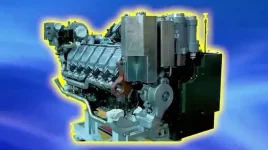
While the Combat Vehicles Research and Development Establishment (CVRDE) finalises the DATRAN 1500—the most powerful indigenous tank engine to date—engineers are already looking past conventional diesel technology.
Reports indicate that the laboratory is initiating ambitious programmes to develop hydrogen fuel cells and hybrid-electric propulsion systems, aiming to future-proof India’s next generation of main battle tanks (MBTs).
The DATRAN 1500 Milestone
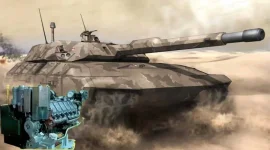
The immediate focus for CVRDE remains the DATRAN 1500, a high-output engine designed to power the Arjun Mk-1A and serve as the foundational technology for the proposed Future Ready Combat Vehicle (FRCV).This engine represents a critical step towards ending reliance on imported power plants, specifically the German designs that have historically powered India’s indigenous tanks.
Successful integration of the DATRAN 1500 will ensure that the Indian Army’s future armoured columns are driven by domestic engineering, securing supply chains and reducing maintenance complexities during conflicts.
The Hydrogen Advantage: Stealth and Endurance
However, the vision extends well beyond traditional internal combustion.Sources familiar with the developments suggest that CVRDE is collaborating with private sector partners to pioneer hydrogen fuel-cell propulsion for heavy armoured platforms.
In modern warfare, where thermal imaging and acoustic sensors can detect a tank from miles away, the "signature" of a vehicle is as important as its armour.
Hydrogen fuel cells offer a distinct tactical advantage: they operate with near-silence and emit significantly less heat than diesel engines, drastically reducing the vehicle's thermal signature. This makes the tank harder to detect by enemy infrared sensors and loitering munitions.
Furthermore, hydrogen systems could offer superior endurance, allowing armoured formations to operate for longer periods without the frequent logistical tail required for diesel refuelling.
Hybrid-Electric: Efficiency and Weight Reduction
Parallel to the hydrogen initiative, CVRDE is developing hybrid-electric power packs.The primary goal of this technology is to decouple the engine from direct mechanical drive, allowing the engine to run at its most efficient speed while electric motors drive the tracks.
This approach targets a 50 per cent increase in fuel efficiency—a game-changer for operations in high-altitude areas like Ladakh or the deserts of Rajasthan, where fuel logistics are challenging.
Additionally, hybrid-electric systems are lighter than traditional mechanical transmissions. Saving weight in the engine compartment allows designers to reallocate that mass to thicker armour or active protection systems without exceeding the weight limits of bridges and transport aircraft.
Powering the "Mobile Energy Hub"
The shift to electrification is driven by the changing nature of the battlefield itself. Modern tanks are evolving into mobile energy hubs that must power far more than just a gun turret.Future platforms, including the FRCV which is slated to replace the T-72 fleet, will require immense electrical power to operate advanced active protection systems (APS), jamming equipment, and potentially directed-energy weapons (DEWs) such as lasers for anti-drone defence.
Traditional diesel engines struggle to provide these massive bursts of electricity without compromising mobility. Hybrid architectures, equipped with high-capacity battery storage, can store energy during movement and discharge it rapidly when weapons or sensors are activated.
This capability also enables "Silent Watch" modes, where the tank can operate its sensors and communications with the main engine turned off, remaining acoustically invisible to the enemy.
A New Era of Public-Private Partnership
Crucially, CVRDE is moving away from the isolated development models of the past.By opening these high-tech domains to private industry collaboration, the defence establishment aims to merge government research capabilities with the rapid prototyping and manufacturing scale of the private sector.
This alignment with the broader defence industrial strategy is expected to accelerate the timeline from drawing board to deployment, ensuring that Indian forces are equipped with cutting-edge propulsion technologies that rival global standards like the US AbramsX or the European Main Battle Tank concepts.