Beyond DATRAN 1500, CVRDE Explores Hydrogen Fuel Cells and Hybrid Tech for India's Next-Gen Main Battle Tanks

Beyond DATRAN 1500, CVRDE Explores Hydrogen Fuel Cells and Hybrid Tech for India's Next-Gen Main Battle Tanks


India’s pursuit of strategic autonomy in armoured warfare has reached a significant inflection point.

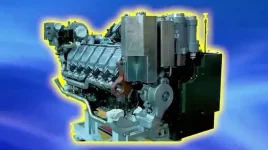
While the Combat Vehicles Research and Development Establishment (CVRDE) finalises the DATRAN 1500—the most powerful indigenous tank engine to date—engineers are already looking past conventional diesel technology.

Reports indicate that the laboratory is initiating ambitious programmes to develop hydrogen fuel cells and hybrid-electric propulsion systems, aiming to future-proof India’s next generation of main battle tanks (MBTs).

The DATRAN 1500 Milestone​

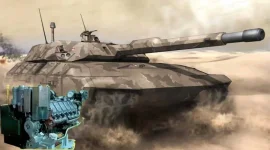
The immediate focus for CVRDE remains the DATRAN 1500, a high-output engine designed to power the Arjun Mk-1A and serve as the foundational technology for the proposed Future Ready Combat Vehicle (FRCV).

This engine represents a critical step towards ending reliance on imported power plants, specifically the German designs that have historically powered India’s indigenous tanks.

Successful integration of the DATRAN 1500 will ensure that the Indian Army’s future armoured columns are driven by domestic engineering, securing supply chains and reducing maintenance complexities during conflicts.

The Hydrogen Advantage: Stealth and Endurance​

However, the vision extends well beyond traditional internal combustion.

Sources familiar with the developments suggest that CVRDE is collaborating with private sector partners to pioneer hydrogen fuel-cell propulsion for heavy armoured platforms.

In modern warfare, where thermal imaging and acoustic sensors can detect a tank from miles away, the "signature" of a vehicle is as important as its armour.

Hydrogen fuel cells offer a distinct tactical advantage: they operate with near-silence and emit significantly less heat than diesel engines, drastically reducing the vehicle's thermal signature. This makes the tank harder to detect by enemy infrared sensors and loitering munitions.

Furthermore, hydrogen systems could offer superior endurance, allowing armoured formations to operate for longer periods without the frequent logistical tail required for diesel refuelling.

Hybrid-Electric: Efficiency and Weight Reduction​

Parallel to the hydrogen initiative, CVRDE is developing hybrid-electric power packs.

The primary goal of this technology is to decouple the engine from direct mechanical drive, allowing the engine to run at its most efficient speed while electric motors drive the tracks.

This approach targets a 50 per cent increase in fuel efficiency—a game-changer for operations in high-altitude areas like Ladakh or the deserts of Rajasthan, where fuel logistics are challenging.

Additionally, hybrid-electric systems are lighter than traditional mechanical transmissions. Saving weight in the engine compartment allows designers to reallocate that mass to thicker armour or active protection systems without exceeding the weight limits of bridges and transport aircraft.

Powering the "Mobile Energy Hub"​

The shift to electrification is driven by the changing nature of the battlefield itself. Modern tanks are evolving into mobile energy hubs that must power far more than just a gun turret.

Future platforms, including the FRCV which is slated to replace the T-72 fleet, will require immense electrical power to operate advanced active protection systems (APS), jamming equipment, and potentially directed-energy weapons (DEWs) such as lasers for anti-drone defence.

Traditional diesel engines struggle to provide these massive bursts of electricity without compromising mobility. Hybrid architectures, equipped with high-capacity battery storage, can store energy during movement and discharge it rapidly when weapons or sensors are activated.

This capability also enables "Silent Watch" modes, where the tank can operate its sensors and communications with the main engine turned off, remaining acoustically invisible to the enemy.

A New Era of Public-Private Partnership​

Crucially, CVRDE is moving away from the isolated development models of the past.

By opening these high-tech domains to private industry collaboration, the defence establishment aims to merge government research capabilities with the rapid prototyping and manufacturing scale of the private sector.

This alignment with the broader defence industrial strategy is expected to accelerate the timeline from drawing board to deployment, ensuring that Indian forces are equipped with cutting-edge propulsion technologies that rival global standards like the US AbramsX or the European Main Battle Tank concepts.
 
instead of wasting around time with govt factories, sub-contract to Mahindra & Mahindra or Kirloskar Group or Kalyani Group for required specification for Tank Engine.
They have domain specific knowledge for manufacturing and Billion dollar MNC with proven export history.
These govt factories would waste decades and spitout sub-standard lemon product!
private sector can do same porject in 2-3 years for sure, given their expertise and capacity.
 
I suppose we'll be able to see this inducted into service by the tail end of the 21st century ?
 
instead of wasting around time with govt factories, sub-contract to Mahindra & Mahindra or Kirloskar Group or Kalyani Group for required specification for Tank Engine.
They have domain specific knowledge for manufacturing and Billion dollar MNC with proven export history.
These govt factories would waste decades and spitout sub-standard lemon product!
"instead of wasting around time with govt factories"
People like you are the reason why the govt feels empowered to squander what little strategic capital India has and pay grubby Indian private players who'd fold under the first instance of foreign pressure instead of restructuring India's State owned production system.
Half baked knowledge is far worse than ignorance. Countries like Israel, Taiwan and China have state owned factories(Chinese SOEs are literally sanctioned by the Americans because of their potential to threaten American industrial and strategic might, thats an acknowledgement of the adversaries strength) none are as incompetent as India's, meaning there is nothing inherently wrong with State owned factories, Its the Indian aspect of Indian govt factories that needs to be aggressively criticized for its treasonous incompetence and restructured.
 
Apart from communist China, North Korea and Russia none of the democratic nation have "successful" and "functional" decent military-industrial complex.
All the foreign vendors where India source its defence needs are from private firm except Russian firms.
Israel is exception but they are aggressively privatising their small state run factories too. Israel nation based on different rigid, tight patriotic dedication that Hindus lacks big time. Being Hindu i want my community as strong, self aware like Jews!
Taiwan def manufacturing ?? kidding me they are non-existent.

Indian private firms are doing great job of exporting proven products, and fully capable to serve nation at short notice and better quality and cheaper than these mediore HAL+ADA+DRDO+ISRO+DeptAtomicEnergey+ShippingCompanies and Ordnenance factories.
for your enlightenment
HAL 20,000 employees cost U$2billion a year, delay and poor quality. Lets see objectively their history in last 70 years:
List of such ToTs for Gen Z
1. De Havilland Vampire FB.52 / T.55 Production: ~250 units Era 1953–1960
2. 2. Folland Gnat F.1 Production: ~200 units Era: 1956–1974
3. Hawker Siddeley HS-748 Production: 89 units Era: 1961–1988
4. SEPECAT Jaguar IS/IB/IM production start: ~1981 Over 120 units
5. MiG-21FL / MiG-21M / MiG-21 BIS Production: >600 units Era: 1966–1985
6. MiG-27M / MiG-27ML Production: ~165 units Era: 1985–1996
7. Su-30MKI Production: ~222 units Era: 2004–present
8. RD-33 Series Engines under license
9. AL-31FP Engines under license
10. Dornier Do-228-101 / 201 Production: 125+ units Era: 1984–present
11. Turbomeca / Safran Engines French engines under licence
12. Fairchild C-119 Flying Boxcar (Assembly only, 1950s)
If these hands on project did not make this giant to learn, upskill and innovate then its overdue to get rid of this burden on nation! Let L&T, Adani or Tata or Kalyani Group to take lead and serve nation.
** Similar story of ISRO, DRDO, Atomic Agency, Ordnance factories., termites letting nation down ***
Bharat of 2026 need to utilize and trust private sector as they are doing great job in UAV, Satellite fields

i am not sure what evidence or hope you saw to trust sarkari department.
Each and every Indian know how sarkari employee works and their professionalism.

you didnt see anything wrong with sarkari companies means you are Sarkari employee. also quoted communist nations as govt employees are all communist labour unions based. I call you burden on nation termites, eating nation from inside out!!
 
Last edited:

Forum statistics

Threads
6,365
Messages
62,875
Members
4,963
Latest member
nutankishore
Back
Top