- Views: 994
- Replies: 2
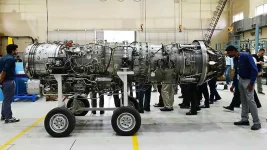
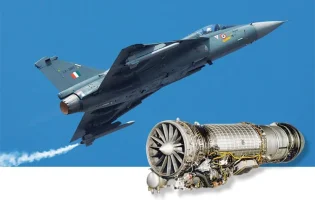
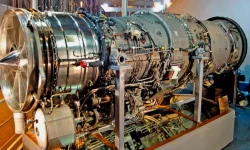
For many years, discussions about India's military aviation ambitions were dominated by a single endeavour: the Kaveri turbofan project.
Today, however, a much wider and potentially more ground-breaking transformation is taking root within the nation's defence aerospace sector.
Rather than pouring all its resources into a solitary, high-thrust engine for fighter jets, India is steadily establishing a comprehensive, homegrown military propulsion network.
This new landscape covers a variety of classes, including miniature turbojets, powerplants for unmanned aerial vehicles (UAVs), cruise missile engines, stealth-focused propulsion, and advanced aerospace materials.
Experts believe this pivot could be the most vital industrial development for India's armed forces in the coming decade.
A Pragmatic, Layered Approach
The challenges faced during the Kaveri project demonstrated the sheer difficulty of building a modern fighter-class engine from the ground up.Mastering elements like advanced metallurgy, high-temperature materials, and precision manufacturing proved that attaining high-performance military propulsion is a monumental task for any nation.
Recently, however, the Defence Research and Development Organisation (DRDO) achieved a major breakthrough by perfecting single-crystal turbine blade technology, a critical capability for handling extreme engine temperatures.
Armed with such advancements, India is moving away from relying exclusively on a massive fighter engine programme.
Instead, the country has adopted a tiered strategy, building expertise step-by-step through smaller, more manageable engine categories that endure lower thermal and mechanical stress.
The Era of Compact Turbojets and Autonomous Warfare
A quiet but rapid surge in small jet engine development is unfolding across DRDO labs, research institutes, and private firms.Investments are flowing into compact turbojets, disposable UAV engines, mini-turbofans, and high-altitude drone propulsion.
This clearly signals India's preparation for a future dominated by long-range drones, swarm tactics, and jet-powered kamikaze systems.
As demonstrated by recent global conflicts, particularly the Russia-Ukraine war, low-cost, mass-produced drones can apply immense strategic pressure and overwhelm expensive air defence networks.
To avoid supply chain vulnerabilities and foreign sanctions, India is moving quickly to ensure self-reliance.
A prime example of this success is the DRDO's development of the Manik Small Turbofan Engine (STFE).
This indigenous 4.25 kN thrust engine has become a cornerstone of India's strike capabilities, actively powering systems like the recently tested Long Range Land Attack Cruise Missile (LRLACM) and the Nirbhay cruise missile series.
The Rise of Private Sector Participation
Historically, public sector entities and the Gas Turbine Research Establishment (GTRE) spearheaded India's engine initiatives.Now, a crucial shift is underway as startups, micro, small and medium enterprises (MSMEs), and deep-tech ventures actively enter the propulsion ecosystem.
Private firms like DG Propulsion are already designing high-performance jet engines for drones and UAVs, while heavyweights like Bharat Forge are securing major marine gas turbine contracts.
Defence analysts suggest that this decentralised, collaborative approach will foster greater innovation and sustainability, much like the successful privatisation seen in India's space sector.
Powering Stealth UCAVs and Future Doctrine
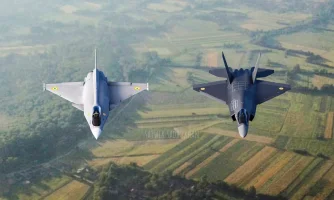
India's expanding arsenal of land-attack, anti-ship, and stealth cruise missiles relies heavily on this new propulsion ecosystem to guarantee mass production during wartime.Furthermore, projects like the Ghatak stealth Unmanned Combat Aerial Vehicle (UCAV) absolutely depend on domestically produced, compact, low-observable engines to function effectively.
Without a sovereign propulsion capability, fielding advanced stealth combat drones would remain a distant dream.
India's military doctrine is unmistakably shifting towards autonomous strike aircraft, loyal wingman systems, and swarm warfare.
The jet engine network currently under construction will serve as the bedrock for this modern combat strategy.
Ultimately, the specialised technologies born from these defence projects—ranging from heat-resistant alloys to advanced manufacturing techniques—are poised to trigger significant advancements in civilian aerospace, marine propulsion, and space exploration.