India’s roadmap for developing home-grown jet engines is moving forward with a clear, two-pronged strategy.
The Defence Research and Development Organisation’s (DRDO) Gas Turbine Research Establishment (GTRE) is currently managing two distinct engine projects to meet the unique needs of the Indian Air Force.
Originally conceived over four decades ago and separated from the main Light Combat Aircraft (LCA) programme in 2008 due to performance shortfalls, the indigenous Kaveri programme is now being revitalized.
According to recent reports, the new Kaveri 2.0 is being developed independently from the much larger 120-kilonewton (kN) engine meant for the Advanced Medium Combat Aircraft (AMCA). The GTRE is now aiming to produce a 90kN thrust-class engine for this upgraded Kaveri platform.
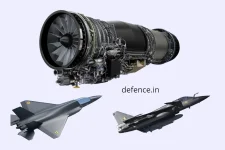
Defence sources state that the revamped Kaveri 2.0 is designed as a medium-thrust powerplant, perfectly suited for the future re-engining of platforms like the Tejas Mk1A.
The older Kaveri Derivative Engine (KDE) could only manage around 49kN to 52kN of thrust, which falls short of the rigorous demands required for modern frontline fighter jets.
To resolve this, Kaveri 2.0 aims to deliver a formidable 90kN to 100kN of maximum "wet" thrust (using an afterburner). To reach this peak, the engine must produce between 55kN and 60kN of "dry" thrust, marking a massive leap in core capability that will demand a completely overhauled architecture.
This upgraded 90kN performance perfectly matches the output of the American-made General Electric F404 engines that currently power the Tejas Mk1A fleet.
Given recent global supply chain delays affecting F404 engine deliveries from GE Aerospace—which have temporarily hindered Tejas manufacturing—a successful indigenous engine is more crucial than ever.
As the current F404 engines reach their mid-life replacement cycle in the 2030s, a fully capable Kaveri 2.0 would offer a direct, home-grown replacement.
This transition will slash India's reliance on imported defence hardware and ensure the fighter fleet remains fully operational without external supply chain hurdles.
Technologically, achieving these new targets means the GTRE cannot just slightly modify the old engine; they must completely rethink the core design.
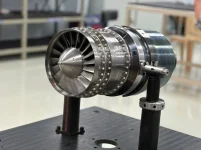
Engineers are heavily concentrating on boosting the High-Pressure Compressor (HPC), which dictates the engine’s overall thrust and fuel efficiency.
To increase the compressor's pressure ratio, the design will integrate advanced aerodynamic shapes and utilize modern blisks (bladed disks).
Often machined from next-generation titanium alloys, blisks combine the rotor disk and blades into a single piece. This cuts down weight, enhances structural strength, and prevents air leaks, ultimately improving the engine's thrust-to-weight ratio.
Shifting to this new core confirms that the Kaveri 2.0 is a comprehensive redesign rather than a simple tune-up. It will utilize state-of-the-art materials, such as single-crystal turbine blades, to withstand much higher temperatures and deliver vastly better thermal efficiency.
This level of durability is non-negotiable if the engine is to survive the punishing demands of daily fighter operations.
Meanwhile, a dry, non-afterburning variant of the Kaveri engine has already found a new purpose, successfully powering the DRDO Ghatak stealth unmanned combat aerial vehicle (UCAV).
At the same time, India is actively addressing its need for heavier, more powerful engines. To power the future fifth-generation AMCA, the country has launched the Advanced High Thrust Class Engine (AHTCE) programme.
This project aims to build an engine starting in the 120kN class, which could eventually be scaled up to 140kN.
To speed up development, India is partnering with French aerospace manufacturer Safran. This collaboration involves an unprecedented level of technology transfer, ensuring that the critical intellectual property remains in India, which will help build a sustainable domestic aerospace manufacturing ecosystem.
This dual-track strategy highlights a smart, practical approach to India's defence goals. By engineering a 90kN engine to upgrade its existing Tejas fleet and co-developing a 120kN engine for tomorrow's stealth fighters, India is solving immediate operational shortages while steadily securing absolute technological independence in the skies.