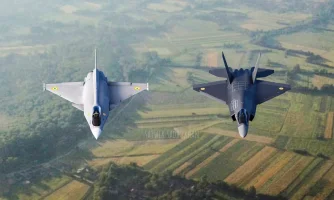
Recent updates from the Ministry of Defence to the Parliamentary Standing Committee reveal a major shift in India’s aerial warfare planning, as the Indian Air Force looks into joining global sixth-generation fighter projects.
Facing the swift technological upgrades of the Chinese and Pakistani air forces, New Delhi is seeking pathways to acquire futuristic aviation technology without absorbing the massive risks and delays of developing a sixth-generation jet entirely alone.
Two major multinational initiatives have dominated these evaluations: the Global Combat Air Programme (GCAP), spearheaded by the United Kingdom, Italy, and Japan, and the European Future Combat Air System (FCAS) vision led by France.
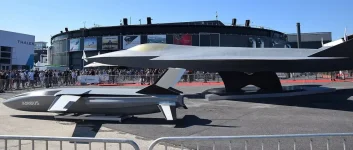
Both concepts are meant to be revolutionary "systems of systems" rather than just standalone aircraft, integrating piloted jets with drone wingmen, artificial intelligence, advanced sensors, and cloud-based combat networks.
However, recent developments in June 2026—namely the collapse of the Franco-German FCAS partnership—have drastically altered the landscape of European fighter development.
India's assessment goes far beyond simply buying a new combat jet. The objective is to identify which international partnership can deliver the ideal mix of frontline combat effectiveness, deep industrial involvement, unrestricted access to critical technology, and long-term strategic synergy.
GCAP stands out for its momentum and established roadmap, with the core partners nearing contract finalisation for a planned 2035 service entry. The consortium is building a heavy, twin-engine fighter designed for long-distance air dominance.
This specific design perfectly suits the vast geographical needs of the Indian Air Force, which must operate across expansive regions from the northern Himalayan borders down to the deep Indian Ocean.
Joining GCAP would open doors to world-class aerospace breakthroughs.
The combined technological might of the partners—including advanced radar systems from the UK, cutting-edge engine research by Rolls-Royce, and sophisticated Japanese sensor and missile technology—would profoundly upgrade India's future aerial combat capabilities.
On the downside, GCAP's advanced stage leaves little room for newcomers to shape the aircraft. The foundational design and operational concepts are already locked in by the founding members, meaning late joiners would have minimal say in the jet's core architecture.
Moreover, the industrial workshare is already tightly divided among giant defence contractors like BAE Systems, Leonardo, and Mitsubishi Heavy Industries.
Consequently, if India were to join GCAP, it would likely be relegated to a junior partner role, supplying secondary components or simply purchasing the final product, rather than acting as a lead designer.
Because the consortium is racing against a strict 2035 deadline, current members—particularly Japan—are reportedly highly resistant to onboarding new partners or accepting unique customization requests that might delay the project.
The French-led fighter proposition, however, offers a completely different set of opportunities.
Originally a joint effort between France, Germany, and Spain, the core vision revolves around a Next Generation Fighter networked with drones and a digital combat cloud. A major draw for India has always been the French requirement for a naval variant capable of operating from aircraft carriers.
As the Indian Navy looks to expand its carrier fleet in the coming decades, securing a sixth-generation fighter tailored for naval operations is a massive strategic advantage.
This platform is deeply focused on the future of warfare, prioritizing seamless coordination between human pilots and autonomous drones, alongside supreme electronic warfare capabilities. These attributes are perfectly matched with the evolving realities of modern, heavily defended airspace.
The greatest appeal of the French programme lies in the unparalleled scope for industrial participation, a factor magnified by recent geopolitical shifts. Historically plagued by corporate disputes over intellectual property between Dassault and Airbus, the Franco-German FCAS project officially collapsed in June 2026 when Germany exited.
This dramatic split has left France actively searching for capable, well-funded strategic partners to co-develop a sovereign fighter. This presents a golden window for India to negotiate a massive industrial role.
Unlike the rigid GCAP, a partnership with France could allow India to secure high-level design authority, extensive local manufacturing, and complete technological integration within its own aerospace sector.
The prospect is further strengthened by India’s existing ties to French aviation, particularly the Rafale.
Should India finalize the procurement of additional Rafale jets under the Multi-Role Fighter Aircraft (MRFA) initiative, the established domestic manufacturing infrastructure and supply chains would serve as a perfect launchpad for building a next-generation French-partnered fighter.
The primary risk with the French path is the current state of uncertainty. Following the collapse of the original European coalition, a new bilateral timeline must be drafted from scratch.
While France and India share excellent defence ties, forging a new multinational combat aircraft programme from the ground up carries inherent risks of severe delays before the first prototype ever takes to the skies.
Beyond the debate between joining the British-led consortium or partnering with France, India must also weigh a larger strategic priority: the domestic Advanced Medium Combat Aircraft (AMCA) project.
Exploring foreign sixth-generation partnerships is not a substitute for the AMCA, but a parallel strategy to support it. The AMCA stands as the absolute foundation of India's indigenous fifth-generation fighter goals and will form the backbone of the nation's air power for many years to come.
Collaborating on a global project acts as a strategic safety net that can directly speed up India's own research.
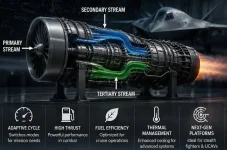
Gaining hands-on access to revolutionary technologies—like adaptive-cycle jet engines, advanced stealth coatings, AI-driven combat networks, and drone integration architectures—would infuse invaluable knowledge into India's defence ecosystem, directly benefiting future upgrades of the AMCA.
Ultimately, this dual approach allows India to bypass the crushing financial and scientific burdens of undertaking sixth-generation research alone.
By carefully selecting the right international partner, India can rapidly absorb critical aerospace technologies that would otherwise take decades of independent effort to master.