In a significant move to strengthen its national airspace, the Indian government is preparing for a massive upgrade to its missile shield.
The Defence Acquisition Council (DAC), led by Defence Minister Rajnath Singh, has approved the Acceptance of Necessity (AoN) to purchase five additional S-400 Triumf air defence squadrons from Russia.
This green light allows the Ministry of Defence to kick off detailed negotiations regarding costs, delivery timelines, and contract specifics for what is poised to be one of the most substantial military purchases in recent history.
Defence experts project that this upcoming contract could reach a value of nearly ₹1 lakh crore.
This estimated figure accounts for inflation, the establishment of necessary support facilities, training programmes, spare parts, and potential technological upgrades over the initial agreement.
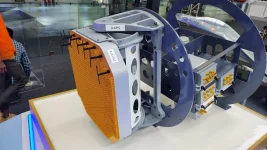
Locally referred to as the "Sudarshan Chakra," the S-400 system is viewed by top military brass as a vital pillar in the nation's modern, interconnected air defence network.
The timing of this new approval aligns closely with the conclusion of the first S-400 agreement, which was signed in October 2018 for roughly $5.43 billion.
India recently received its fourth squadron, which has been strategically deployed along the western frontier in Rajasthan, and the fifth and final unit of the first batch is slated to arrive by November 2026.
Officials indicate that New Delhi will likely hold off on formalising the second contract until these initial deliveries are fully completed.
If the new deal is sealed by late 2026, the first batch of these additional systems could start arriving in India between late 2028 and early 2029, ensuring a steady stream of advanced weaponry.
Once this second order is entirely fulfilled, the Indian Air Force (IAF) will command a formidable fleet of ten S-400 squadrons.
This will cement India's position as one of the largest operators of the Triumf system in the world, outside of its home country, Russia.
Operating such a vast network will greatly multiply the IAF's capacity to shield vital military bases and civilian centres from diverse threats, including stealth fighters, drones, and incoming cruise or ballistic missiles at interception ranges of up to 400 kilometres.
Furthermore, this acquisition is a key piece of India's vision for a multi-layered defence shield, designed to operate in tandem with the indigenous Project Kusha.
Developed by the Defence Research and Development Organisation (DRDO) at an estimated cost of ₹21,700 crore, Project Kusha is India's homegrown long-range surface-to-air missile programme.
Expected to enter active service between 2028 and 2030, it features three distinct interceptor variants capable of taking down targets at distances ranging from 150 to 400 kilometres.
By integrating both the Russian-made S-400s and the homegrown Project Kusha, military strategists aim to build overlapping protective zones across the northern and western borders.
This dual approach not only guarantees immediate protection against advanced aerial weapons but also gradually decreases the country's reliance on foreign military hardware as domestic defence technologies mature.