Launched in May 2025 as a decisive response to the tragic Pahalgam terror attacks, Operation Sindoor will go down in history as much more than a military victory.
It stands as a powerful testament to the fact that modern conflicts are heavily driven by economic endurance and industrial might.
In the 21st century, the outcome of a clash is dictated not just by the sheer volume of troops or aircraft, but by a nation's financial stamina and its capacity to sustain relentless operational tempos.
The financial statistics from the confrontation paint a stark picture.
Experts estimate that India’s total combat expenditure was between $320 million and $587 million. For a surging economy with a vast manufacturing sector, this sum equalled a mere fraction—less than one percent—of India's annual defence budget.
On the other side of the border, Pakistan faced catastrophic infrastructure and military damages, with estimated losses ranging from $1.4 billion to $2.6 billion.
For a nation already battling severe inflation, mounting debt, and relying heavily on international bailouts, this destruction delivered an unbearable financial blow.
Furthermore, India’s suspension of bilateral trade and the Indus Waters Treaty multiplied this economic strain without firing a single shot.
As a result, the operation emerged as a perfect case study in asymmetric economic warfare.
The strategic deployment of the air-launched BrahMos supersonic cruise missiles, fired from Su-30MKI fighter jets, highlighted this perfectly.
Even though a single BrahMos missile costs approximately ₹34 crore, its ability to annihilate multi-million dollar airborne early warning systems and command centres resulted in economic damage that vastly outweighed the weapon's price tag.
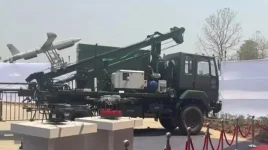
Furthermore, the Indian Armed Forces successfully utilised loitering munitions to dismantle expensive enemy radar networks and key military assets at bases like Noor Khan and Rahimyar Khan.
This trend illustrates a core principle of contemporary combat: the distinct advantage lies with the military that can deploy affordable precision systems to eliminate overwhelmingly expensive strategic targets.
This strategy of cost-effective destruction has now become a cornerstone of global military doctrine.
The conflict also magnified the crucial role of layered, integrated air defence networks.
During Pakistan's retaliatory strikes involving Chinese-origin missiles and Turkish "Yiha" unmanned aerial vehicles, India's robust shield—comprising the advanced S-400, the indigenous Akash system, and legacy platforms like Pechora—proved impenetrable.
While Pakistan deployed massive swarms of drones, India's multi-tier defensive architecture demonstrated how to intercept and neutralise mass aerial threats both effectively and economically.
The economic reality of replacing high-tech combat equipment is unforgiving.
Procuring new fighter jets, complex radar arrays, and surveillance aircraft demands massive capital, extended manufacturing timelines, and reliable global supply chains.
Nations with fragile economies find it nearly impossible to rebound from the loss of such elite platforms.
Consequently, Operation Sindoor exposed a profound structural divide between New Delhi and Islamabad.
Enhanced by the Indian Navy's strategic maritime deployments that confined Pakistani ships to their ports, India's massive economic footprint and booming domestic defence industry enable it to effortlessly absorb wartime expenses, swiftly replenish resources, and maintain relentless pressure.
Ultimately, this landmark confrontation proved that cost-efficient precision operations dictate modern victories.
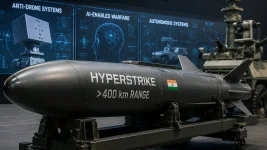
Militaries worldwide are prioritising weapons—such as autonomous drones and precision strike systems—that inflict maximum battlefield disruption at a fraction of the cost.
More importantly, the success of the campaign provides massive momentum to India’s drive for self-reliance in defence manufacturing.
With a vast domestic production network capable of rapidly churning out missiles, drones, and electronic warfare sensors, India has proven it is well-equipped to sustain its strategic dominance in any future high-intensity conflict.