India's premier supersonic cruise missile project is poised for a significant enhancement in its operational capabilities.
Dr. Jaiteerth Raghavendra Joshi, the CEO and Managing Director of BrahMos Aerospace, has revealed that developing a BrahMos variant capable of reaching distances of 1,500 kilometres is a key element of the organisation's future strategic planning.
This announcement highlights the continuous evolution of the missile system, which has seen considerable improvements in both range and technological prowess since India became a member of the Missile Technology Control Regime (MTCR) in 2016.
Established as a joint venture between India's Defence Research and Development Organisation (DRDO) and Russia's NPO Mashinostroyenia, BrahMos Aerospace continues to push the boundaries of modern missile technology.
In its early stages, the BrahMos missile was subject to MTCR guidelines, which strictly limited its strike range to approximately 290 kilometres.
However, India's official entry into the multilateral export control regime removed these restrictions, providing scientists and engineers with the opportunity to enhance the weapon's reach.
Through a series of progressive upgrades, the extended-range versions of the missile can now successfully neutralise targets up to 800 kilometres away.
Crucially, these modern variants maintain the impressive Mach 2.8 supersonic speed that makes the BrahMos one of the most formidable and difficult-to-intercept cruise missiles globally.
Creating a BrahMos missile with a 1,500-kilometre range would be a transformational upgrade for India's defence strategy.
This new variant would effectively fill the operational void between short-range tactical weapons and long-range strategic strike assets.
With this advanced capability, the Indian armed forces would be able to launch precision strikes against critical enemy infrastructure located deep within hostile borders.
Furthermore, they could execute these missions from safe, stand-off distances without sacrificing the crucial benefits provided by the missile's rapid supersonic velocity.
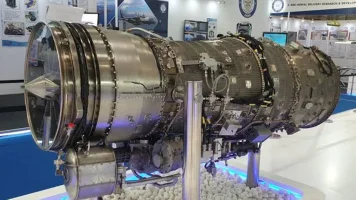
To accomplish such a remarkable extension in range, engineers will need to overcome major technological hurdles, particularly in areas like engine efficiency, fuel storage, flight path optimisation, and overall weight reduction.
BrahMos Aerospace is already actively engaged in designing future-ready systems to meet these challenges.
This includes the development of the BrahMos-NG (Next Generation), which will be a smaller and lighter weapon, alongside variants tailored specifically for submarines.
Dr. Joshi has reiterated that the company remains dedicated to creating more streamlined missiles using advanced composite materials, while also aggressively researching hypersonic technology to fulfil the military's future operational demands.
The potential introduction of a 1,500-kilometre BrahMos holds profound tactical importance, as it would drastically increase the number of land and sea-based targets vulnerable to Indian strikes.
For the Indian Navy, deploying such a weapon would vastly increase the offensive reach of its warships and submarine fleets patrolling the strategic Indian Ocean Region.
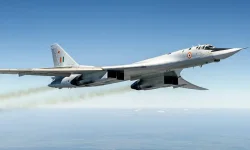
Simultaneously, if adapted for the Indian Air Force, an air-launched version of this long-range missile would grant fighter jets an unmatched ability to destroy heavily guarded enemy positions from well beyond the reach of opposing air defence systems.
This ambitious vision would further capitalise on the remarkable success India has achieved in indigenising the BrahMos platform.
Over the past few decades, domestic manufacturers have progressively replaced numerous imported parts with locally designed alternatives, including critical components like airframes, navigation tools, and target seekers.
Recently, it was confirmed that essential elements such as the solid-fuel boosters, which were previously sourced from Russia, are now completely manufactured within India.
This self-reliance has been a driving force behind the missile's continuous capability upgrades and has also led to significant cost reductions for the entire programme.
Although the 1,500-kilometre version is currently in the conceptual phase rather than an active production line, Dr. Joshi's remarks offer a clear glimpse into the long-term roadmap of BrahMos Aerospace.
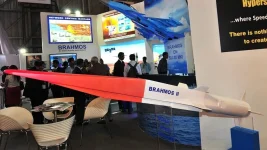
The existing missile family is already set to grow with cutting-edge projects like the BrahMos-NG and the highly anticipated hypersonic BrahMos-II concept, which is expected to reach speeds of Mach 8.
These ongoing developments strongly suggest that upcoming iterations of the missile will seamlessly integrate extended reach, enhanced evasion tactics, compact designs, and unprecedented flight speeds.