- Views: 1K
- Replies: 1
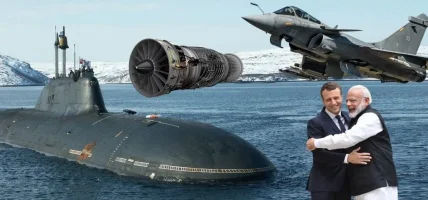
The ongoing project to arm the Indian Air Force’s Dassault Rafale fighter jets with the indigenous Astra Beyond Visual Range Air-to-Air Missile (BVRAAM) represents a major leap in India’s aerospace capabilities.
As this integration progresses, it has naturally raised a compelling question: could New Delhi eventually export the Astra to other global Rafale operators, such as Egypt, Greece, Indonesia, the United Arab Emirates, and Croatia?
Commercially and strategically, the idea holds immense potential. A fully integrated Astra missile could serve as a highly capable, cost-effective alternative to expensive European munitions like the MBDA Meteor or MICA missiles currently fielded on the Rafale.
However, the realities of modern aerospace engineering, intellectual property, and defence software architectures make independent exports a highly complex affair.
The primary hurdle lies in the aircraft's software. Integrating the Astra does not grant India access to the Rafale’s core mission computer or its highly classified radar source codes.
Modern combat jets rely on heavily guarded, proprietary software frameworks that remain the exclusive intellectual property of the original manufacturer—in this case, France's Dassault Aviation and Thales.
Because of this strict software security, weapon integration requires a highly structured, collaborative engineering process.
The Defence Research and Development Organisation (DRDO), which developed the Astra, must hand over the missile’s precise flight dynamics, seeker data, communication protocols, and launch parameters to the French manufacturers.
Dassault and Thales then write the necessary code, modifying the Rafale’s operating system so the aircraft can recognize and fire the Indian missile.
Once this new software is certified, it is installed on the Indian Air Force’s fleet. While this gives India the tactical ability to fire the Astra from its Rafales, it does not give New Delhi the underlying source code or the technical authority to alter the software on another country's jets.
Furthermore, strict intellectual property rules and export regulations govern global arms sales. Every Rafale sold internationally is bound by government-to-government agreements and commercial contracts with Dassault.
These agreements dictate that the original manufacturer is solely responsible for any software modifications to ensure the aircraft remains airworthy and safe.
If a third party attempted to hack or independently alter a foreign Rafale's software to add a new weapon, it would instantly violate contractual terms, void warranties, and jeopardize the aircraft's global certification.
Despite these strict technical and legal barriers, exporting the Astra to global Rafale operators is still a very realistic possibility—provided it follows a collaborative model.
The successful mating of the Astra to the Indian Rafale actually paves the way for a lucrative trilateral export strategy involving India, France, and a third-party buyer.
Under this model, if a nation like Greece or the UAE wanted the Astra, India would manufacture and deliver the physical missiles, launch rails, and logistical support. Dassault and Thales would then step in to unlock the necessary software on the buyer’s aircraft and certify the fleet for flight.
This approach offers a significant financial advantage to prospective buyers. Because the complex, expensive engineering and flight-testing required to integrate the Astra with the Rafale's baseline software will have already been funded and completed by India, subsequent integrations for other nations will be drastically faster and much cheaper.
This framework creates a mutually beneficial business environment. India gets to expand its footprint in the global defence market by exporting a world-class missile, while Dassault continues to generate revenue by providing ongoing software integration and lifecycle support to its global customers.
Such a setup is particularly advantageous for air forces operating mixed fleets. For instance, the Astra is already fully operational on the Indian Air Force's Russian-origin Su-30MKI fighters.
An operator like Indonesia, which flies both the Su-30 and the Rafale, could use the Astra to standardize its beyond-visual-range missile inventory across entirely different aircraft platforms. This would vastly simplify their supply chains and reduce long-term maintenance costs.
Ultimately, while India holds the complete intellectual property rights for the Astra missile, France remains the sole gatekeeper of the Rafale's digital ecosystem.
Any future global rollout of the Astra on the French fighter will rely on strong diplomatic and commercial cooperation between New Delhi and Paris.