In an effort to upgrade its military capabilities through cutting-edge technology, Thailand is currently evaluating the purchase of the anti-ship version of India’s BrahMos supersonic cruise missile.
This potential acquisition highlights Bangkok's commitment to modernising its armed forces without disrupting its finely tuned foreign relations.
Experts emphasise that Thailand’s interest in the advanced missile system is not aimed at countering China. Instead, it reflects the nation's traditional approach of strategic hedging to secure its interests within the shifting security landscape of the Indo-Pacific region.
Historically, the Southeast Asian nation has avoided tying itself exclusively to any single global superpower.
With the ongoing geopolitical rivalry between the United States and China echoing across the Indo-Pacific, Thai leadership has focused on keeping diplomatic doors open with various international allies to ensure maximum flexibility.
As India grows into a prominent supplier of defence technology, it presents Thailand with a fresh opportunity to broaden its security network, ensuring that the country does not rely too heavily on one specific weapon provider.
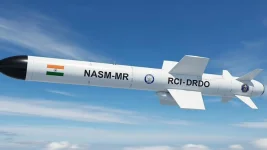
The BrahMos missile is perfectly suited for this flexible strategy. Co-developed by India's DRDO and Russia, it is widely considered one of the most formidable supersonic cruise missiles in operation today.
Capable of striking targets at speeds of nearly Mach 3, the missile offers a unique blend of devastating speed, pinpoint accuracy, and the ability to be launched from various platforms.
For the Royal Thai Navy, securing this anti-ship weapon would bring a massive upgrade to its maritime deterrence, acting as a cornerstone for modernising its fleets.
Defence experts frequently observe that Thailand chooses its military hardware based on practical operational needs rather than political loyalties. Over the years, the country has built deep economic connections with Beijing and has actively purchased Chinese-made military equipment.
Concurrently, Bangkok remains one of the oldest security partners of the United States in the region and buys from an array of global defence contractors.
Consequently, evaluating the BrahMos system is driven purely by the need for top-tier military technology, rather than an intentional pivot toward any specific geopolitical camp.
For military strategists in Bangkok, integrating the BrahMos provides a clear pathway to establishing a highly credible baseline of defence.
Armed with these advanced anti-ship capabilities, Thailand will be far better equipped to guard its vital sea lanes, secure its maritime borders, and protect national assets in surrounding oceans.
Achieving this level of security is becoming critical as countries throughout Southeast Asia closely watch the changing security environment and proactively boost their own territorial defences.
Across the broader Indo-Pacific, there is an escalating focus on maritime security, prompting many nations to pour investments into modern ships, advanced radar systems, and long-range precision strike weapons.
Even countries that enjoy stable and profitable political ties with China are actively fortifying their armed forces to firmly safeguard their sovereignty and territorial borders.
Thailand’s exploration of the BrahMos procurement is a direct reflection of this widespread regional push for stronger coastal defence.
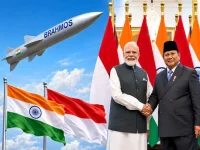
From New Delhi's perspective, securing a deal with Thailand would represent a major victory for India's growing aerospace exports, especially following the successful delivery of the BrahMos to the Philippines and ongoing discussions with nations like Indonesia and the UAE.
A purchase by Thailand would firmly cement India's status as a reliable defence exporter in Southeast Asia.
This development also directly builds upon the recent 10th India-Thailand Defence Dialogue held in Bangkok in June 2026, where the two nations, having elevated their ties to a Strategic Partnership in 2025, pledged to deepen collaboration in defence manufacturing and capability development.
Although the acquisition talks are still in their early phases, Bangkok’s interest clearly demonstrates the rising global appeal of the Indo-Russian missile system.
Ultimately, this potential deal illustrates a significant trend where middle powers like Thailand are crafting diversified defence procurement strategies.
By choosing equipment based on raw operational performance, these nations are ensuring their strategic independence instead of getting tangled in major power politics.