- Views: 2K
- Replies: 3
The Chinese People's Liberation Army (PLA) recently executed a mock combat drill focusing on neutralising India’s S-400 Triumf air-defence networks.
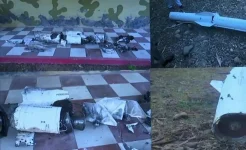
Conducted by the PLA's Western Theatre Command, which oversees the Line of Actual Control (LAC), the wargames reportedly utilised 370 mm guided rockets to target the operational zones of India's advanced surface-to-air missile systems.
This development highlights Beijing's increasing focus on the Suppression and Destruction of Enemy Air Defences (SEAD/DEAD) as a primary tactic for any potential high-intensity border conflict.
Over the past decade, and particularly following the 2020 border standoff, the Western Theatre Command has heavily fortified its positions with long-range rocket artillery, unmanned aerial vehicles, and surveillance equipment.
Open-source intelligence indicates that China has deployed advanced platforms like the PCL-191 multiple launch rocket system (MLRS) at high altitudes in Tibet and Xinjiang.
These assets are specifically positioned to execute rapid, high-density strikes on vital Indian infrastructure, including forward airbases, radar stations, supply depots, and missile batteries.
The 370 mm munitions featured in the simulation rely on satellite navigation and inertial guidance systems to achieve pinpoint accuracy over long distances, with some variants capable of reaching targets up to 350 kilometres away.
Military experts view these guided rockets as a cheaper, yet highly lethal, substitute for traditional tactical ballistic missiles.
Chinese combat doctrine has shifted away from relying exclusively on bomber aircraft for strike missions. Instead, the PLA is refining a multi-domain approach that combines heavy rocket barrages, drone swarms, cyber warfare, and electronic jamming to blind and overwhelm hostile air-defence shields.
On the Indian side, the Russian-origin S-400 Triumf stands as the cornerstone of the nation's protective airspace cover.
Deployed strategically to monitor both northern and western frontiers, the S-400 can track and shoot down fighter jets, cruise missiles, and incoming ballistic projectiles at distances of up to 400 kilometres.
However, military planners are well aware that such high-value assets are prime targets in the opening stages of a conflict.
To remain effective, these batteries must be highly mobile, frequently shifting locations to avoid detection, while relying on the Indian Air Force's broader Integrated Air Command and Control System (IACCS) for early warning and electronic protection.
Modern conflicts, such as the ongoing wars in Ukraine and the Middle East, have proven that even the most sophisticated air-defence systems can be vulnerable to coordinated saturation strikes using precision rockets and loitering munitions.
Recognising this global trend, Indian forces are actively working to protect these strategic systems.
Defensive countermeasures include the use of decoy launchers, enhanced electronic warfare shielding, and the integration of indigenous layered shields.
This includes India's ballistic missile defence programme and the under-development Project Kusha (Long-Range Surface-to-Air Missile system), which aims to provide an indigenous counterpart to the S-400.
While the specific details of the recent Chinese drills remain unverified, the exercise serves as a clear indicator of the evolving military strategies along the Himalayan frontier.
Both New Delhi and Beijing are continuously upgrading their deep-strike capabilities while investing heavily in advanced air-defence and network-centric combat systems, preparing for a modern battlefield where long-range precision fire and rapid mobility are critical.