- Views: 1K
- Replies: 1
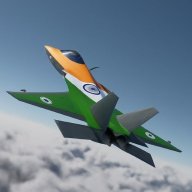
In a major boost to India's military strength, the Defence Acquisition Council (DAC), led by Defence Minister Rajnath Singh, approved the purchase of four squadrons of indigenous Remotely Piloted Strike Aircraft (RPSA) on 27 March 2026.
Comprising roughly 80 unmanned combat jets in total, this clearance was part of a broader ₹2.38 lakh crore procurement package aimed at modernising the armed forces.
These advanced drones, developed under the Defence Research and Development Organisation's (DRDO) 'Ghatak' programme, mark a significant leap in adding autonomous combat systems to the frontlines of the Indian Air Force (IAF).
These pilotless combat aircraft serve two main purposes: carrying out offensive precision strikes and acting as high-tech tools for intelligence, surveillance, and reconnaissance (ISR).
Built with stealth features to avoid enemy radar, they are specifically designed to fly into highly protected and contested airspace. This allows the IAF to launch deep strikes against critical high-value targets while completely removing the physical risk to human pilots.
Adding these drones to the fleet will drastically improve the IAF's ability to run coordinated air attacks and persistently monitor enemy movements.
Rather than working alone, these systems are expected to fly alongside traditional manned fighter jets in a setup known as manned-unmanned teaming (MUM-T).
In this role, the drones can take on the most dangerous tasks, such as breaking through heavily fortified air defences during the initial waves of a conflict, which creates a safer environment for human pilots to follow.
By clearing the purchase of four full squadrons, the government is demonstrating its intent to deploy unmanned combat aerial vehicles (UCAVs) on a massive scale, following a global shift towards network-centric aerial warfare.
Furthermore, building these high-tech stealth systems entirely within the country strongly supports India’s broader goal of self-reliance.
Championing domestic engineering not only cuts down the reliance on foreign suppliers but also actively expands India’s own aerospace and defence manufacturing industry.