To keep pace with the rapidly evolving nature of aerial warfare, India has begun exploratory talks to join one of the two premier sixth-generation fighter aircraft development consortia globally.
The Indian Air Force (IAF) and the Ministry of Defence recently informed a Parliamentary Standing Committee of their intent to participate in either the Global Combat Air Programme (GCAP)—driven by the United Kingdom, Italy, and Japan—or the Future Combat Air System (FCAS), led by France, Germany, and Spain.
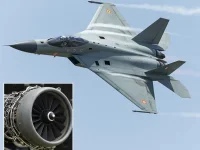
This strategic pivot highlights New Delhi’s urgent ambition to harness cutting-edge technologies and ensure that the nation's air power does not fall behind amidst escalating regional threats, particularly as regional rivals like China continue rapid advancements with their own next-generation prototypes.
At present, the Ministry of Defence is anticipating comprehensive proposals and official feedback from both multinational groups before committing to a firm strategic direction.
Top defence officials, including Chief of Defence Staff General Anil Chauhan, have stressed the importance of timely action to avoid a technological lag.
A rigorous evaluation of both the GCAP and FCAS initiatives is currently in motion, and government insiders suggest that New Delhi aims to conclude this review phase and potentially finalise a partnership framework by the close of the current year.
Negotiations with the respective consortiums are reportedly centred around three foundational pillars: the sharing of critical technology, the integration of local industry, and the requisite financial investments.
Indian decision-makers are insisting on clear terms regarding the transfer of next-generation capabilities to indigenous manufacturers.
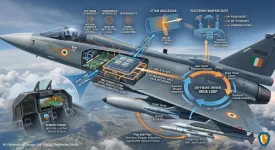
Essential technologies on India’s radar include sophisticated variable-cycle propulsion engines, multi-spectral stealth coatings, deep artificial intelligence integration, sensor fusion architectures, and "loyal wingman" manned-unmanned teaming (M-UMT) systems capable of deploying hypersonic and directed-energy weapons.
The allocation of industrial workshare will heavily influence the final verdict. New Delhi maintains a firm stance that any colossal defence pact must act as a catalyst for its own domestic aerospace sector.
Consequently, officials are pursuing substantial roles for Indian enterprises across both the public and private spheres.
The objective is to embed domestic firms deeply into these high-end global supply networks, allowing them to actively engage in the conceptual design, advanced manufacturing, digital software architecture, and the lifelong maintenance of the airframes.
The sheer fiscal scale of entering either the GCAP or FCAS programme presents a formidable challenge, making financial viability a paramount concern.
Both multinational ventures require massive, long-term capital commitments, routinely projected into the tens of billions of dollars.
Therefore, India must meticulously weigh the heavy financial burden against the long-term technological and strategic supremacy that such an investment would yield, ensuring it does not compromise funding for other vital military acquisitions or domestic projects.
Crucially, these global outreach efforts are running parallel to the development of India's indigenous fifth-generation fighter, the Advanced Medium Combat Aircraft (AMCA).
While the AMCA—expected to see its first prototype flight by 2029 and enter production in the mid-2030s—remains the bedrock of the IAF’s modernisation map, plugging into a sixth-generation project offers a vital leap forward.
Engaging with foreign partners on a next-generation platform could grant India early access to mature research and development ecosystems, potentially fast-tracking technologies that can later be incorporated into upgraded variants of the AMCA.
Both the GCAP and FCAS offer distinct visions for the future battlespace.
The UK-led GCAP is focused on delivering a core supersonic stealth fighter, occasionally dubbed "Tempest," augmented by networked autonomy and collaborative combat drones, with a prototype flight targeted for 2027.
Conversely, the Franco-German-Spanish FCAS envisions a holistic "combat cloud" and a Next-Generation Fighter (NGF) operating in seamless concert with unmanned remote carriers.
Notably, the FCAS program also contemplates a deck-based naval variant, an aspect that could prove highly attractive for the Indian Navy's future aircraft carrier requirements.
Ultimately, New Delhi’s choice will transcend the simple procurement of an aircraft.
The final resolution will be dictated by the broader strategic imperatives of securing high-end aerospace expertise, driving the self-reliance of India's defence industrial base, and ensuring the IAF is fully equipped to dominate the skies of tomorrow.
As global military powers pivot towards artificial intelligence and stealth dominance, India's entry into a sixth-generation consortium will be a defining moment for its future combat aviation trajectory.