- Views: 2K
- Replies: 1
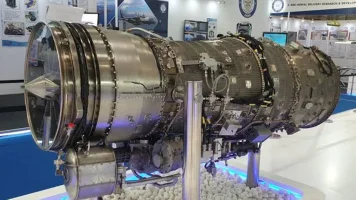
In a major leap towards self-reliance in military technology, the Defence Research and Development Organisation (DRDO) has initiated a critical project to create a homegrown family of aero engines for Unmanned Aerial Vehicles (UAVs).
Driven through the Technology Development Fund (TDF) scheme, this effort ranks among India's most important ventures in unmanned aviation, aiming to power drones across various size and performance categories.
Recent documents, including a Request for Information (RFI) and a call for feasibility studies, highlight India's ambition to design, build, and manufacture an entire ecosystem of compact propulsion systems natively.
These engines will power the next generation of surveillance drones, loitering munitions, drone swarms, and unmanned combat aerial vehicles (UCAVs).
This strategic push addresses deep concerns within the Indian defence sector regarding the nation's heavy reliance on foreign suppliers for engines falling within the 40 to 1500 Newton thrust range.
Drones are now undeniably central to modern combat, executing vital roles such as intelligence gathering, target marking, swarm attacks, and precision bombing.
Despite this, engine technology continues to be a glaring weak point in India's unmanned military capabilities, with the majority of operational engines being imported. The DRDO views this reliance on external vendors as a severe strategic weakness.
Official project guidelines explicitly warn that depending on foreign engines hampers the military's ability to scale up its drone fleets.
It also introduces significant risks during active conflicts and leaves essential defence capabilities vulnerable to global supply chain shocks.
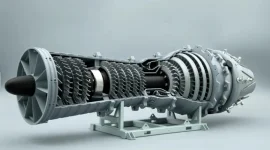
To counter this, the new initiative seeks total sovereign control over UAV propulsion, covering everything from tiny electric motors to complex turbofan engines.
Open-source data confirms that the application window for this vital TDF project extends into June 2026, underlining the Ministry of Defence's long-term commitment to the 'Make in India' initiative and providing ample time for industry partners to submit their proposals.
The envisioned engine family will support aircraft with a Maximum Take-Off Weight (MTOW) ranging from a mere 10 kilograms up to 250 kilograms and beyond.
To achieve this, the DRDO has divided the development into four distinct categories:
- Class E-I: Aimed at nano and micro drones (0.1kg to 2kg), utilizing electric or hybrid motors to generate under 5 Newtons of thrust.
- Class E-II: Designed for small UAVs (2kg to 100kg), using micro gas turbines or hybrids to produce between 5 and 50 Newtons.
- Class E-III: A highly strategic tier for mini and medium UAVs (100kg to 600kg). Utilizing small gas turbines or turbojets (50 to 500 Newtons), these engines will power long-range kamikaze drones, high-speed loitering munitions, and tactical strike platforms.
- Class E-IV: Focused on larger, medium-class drones (above 600kg). By deploying turboprop or turbofan engines (500 to 1500 Newtons), this category is expected to form the backbone of future indigenous unmanned combat aircraft and long-endurance surveillance systems.
One major obstacle is maintaining rotor stability at extreme speeds, with some engines expected to run at over 120,000 revolutions per minute.
Such intense speeds demand flawless manufacturing precision to prevent the breakdown of bearings, compressors, and turbine assemblies.
Heat management is another critical barrier. To handle soaring turbine inlet temperatures, Indian industry will need to formulate new high-temperature alloys and advanced cooling mechanisms.
Furthermore, the engines must guarantee reliable ignition under harsh combat conditions to ensure rapid deployment when it matters most.
Crucially, the DRDO is not merely looking to assemble imported parts. The project mandates the complete localization of the aero-engine ecosystem.
This includes domestically producing precision bearings, fuel injectors, and sophisticated Full Authority Digital Engine Control (FADEC) systems.
Moreover, the chosen industry partners must prove they can scale up manufacturing. The ultimate goal is mass production, enabling the armed forces to field vast numbers of indigenous drones across all branches of the military.
A standout feature of the DRDO's request is the demand for a modular design architecture.
By utilizing interchangeable components like combustors and compressors, military personnel will be able to perform rapid maintenance and reconfigurations directly in the field, drastically lowering long-term maintenance costs.
The engines must also be highly versatile, capable of running on multiple fuel types—including Aviation Turbine Fuel (ATF), JP-8, AvGas, and even synthetic bio-fuels—without needing significant modifications.
To support covert missions, the specifications mandate stealth capabilities such as suppressed acoustic noise, low-smoke output, and a reduced infrared signature.
Finally, all systems must be built to withstand extreme punishment. Complying with rigorous MIL-STD-810H standards, the engines must operate flawlessly in the freezing altitudes of the Himalayas, the heat of the desert, and corrosive maritime environments.