- Views: 43
- Replies: 1
The Defence Research and Development Organisation (DRDO) has issued a Request for Information (RFI) urging Indian manufacturers to provide seeker harnesses for Project Kusha, the nation’s ambitious long-range surface-to-air missile initiative.
This new development highlights steady progress in building the crucial internal subsystems required to power India's next-generation air defence shield.
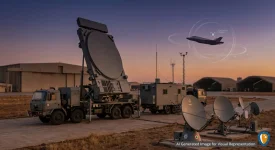
Often compared to the Russian S-400 Triumf, Project Kusha (also known as the Extended Range Air Defence System) was cleared by the government with a budget of roughly ₹21,700 crore to secure five squadrons for the Indian Air Force.
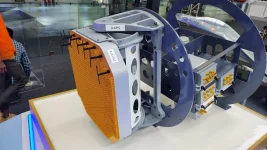
Inside an interceptor missile, a seeker harness plays a vital role in the overall guidance mechanism.
It acts as the primary physical and electrical link connecting the terminal seeker—the sophisticated sensor at the front of the missile that actively tracks down the target in its final moments—to the onboard computers.
This wiring assembly ensures that crucial tracking data flows instantly to the central processor, allowing the missile to adjust its path and make split-second decisions to strike the target.
By opening this RFI, DRDO is actively looking to partner with domestic companies capable of designing highly durable wiring, cables, and connectors.
These components will face some of the harshest conditions imaginable.
In order to function properly, the electrical harness must guarantee a continuous flow of power and data, even when subjected to the intense heat, structural shock, and electromagnetic interference that occur during a high-speed missile launch.
The operational demands for Project Kusha’s interceptors are incredibly high.
These missiles, which reportedly include the M1, M2, and M3 variants designed for 150 km, 250 km, and up to 400 km ranges respectively, are designed to travel at hypersonic speeds exceeding Mach 5.5.
At these velocities, the internal parts are subjected to extreme gravitational forces, sudden temperature spikes, and violent vibrations.
As a result, the seeker harness must be engineered to withstand massive stress during sharp manoeuvres while maintaining a perfect communication link between the sensor head and the flight computers.
In advanced air defence weapons, losing data connection for even a fraction of a second during the final attack phase can result in a missed target. Therefore, the wiring harnesses must be built to uncompromising standards.
They are required to offer supreme reliability, heavy shock resistance, protection against electronic jamming, and a long operational lifespan.
As India's premier long-range air defence project, Kusha is built to neutralise a wide array of aerial threats before they can reach Indian airspace.
It is designed to take down hostile fighter jets, stealth aircraft, drone swarms, and cruise missiles, while also possessing the capability to intercept certain ballistic missiles.
Expected to begin phased induction between 2028 and 2030 alongside production partners like Bharat Electronics Limited (BEL) and Bharat Dynamics Limited (BDL), this homegrown network will seamlessly integrate with the military's current layered defence grid.
This latest RFI underscores DRDO's ongoing commitment to cultivating a strong, domestic manufacturing base for complex missile technology.
By collaborating with local private industries to source essential hardware like seeker harnesses, the agency is fortifying the nation's supply chain.
Ultimately, this initiative drives India closer to total self-reliance in the production of highly strategic defence equipment.