India’s rapid advancements in hypersonic technology are laying the groundwork for a highly sophisticated, Intercontinental Ballistic Missile (ICBM)-class Hypersonic Glide Vehicle (HGV).
According to emerging assessments from strategic experts, this future system could be "dual-capable," meaning it is engineered to carry either conventional explosives or strategic nuclear warheads.
Expected to operate independently from India’s ongoing tactical hypersonic missile projects, this long-range platform would provide the armed forces with a highly versatile architecture for future warfare.
Currently, the primary objective for the Defence Research and Development Organisation (DRDO) appears to be establishing a Conventional Prompt Strike (CPS) capability.
This military concept focuses on delivering non-nuclear, high-speed kinetic strikes against critical and heavily fortified targets located deep inside hostile territory.
Such targets—which include underground bunkers, mobile missile launchers, integrated air defence networks, and vital radar stations—are often too well-protected for standard sub-sonic or supersonic cruise missiles like the Nirbhay or BrahMos to penetrate effectively.
To understand the strategic value of HGVs, one must look at their unique flight mechanics.
Traditional ballistic missiles follow a predictable, arching parabolic path into space and back, making them relatively easier for modern radars to track and intercept.
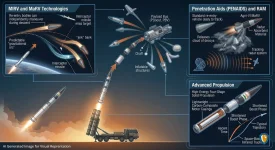
In contrast, an HGV is launched into the upper atmosphere using a traditional rocket booster—potentially an advanced variant of India's Agni series.
Once it reaches the correct altitude, the vehicle separates from the booster and glides towards its target at speeds exceeding Mach 5 (over 6,000 kilometres per hour).
Because it flies at a lower altitude and can manoeuvre unpredictably, it easily bypasses modern layered missile defence shields.
This ability to evade interception is precisely why nations like Russia (with its operational Avangard system) and China (with the DF-17) have aggressively pursued hypersonic arms.
For defending forces, predicting the final destination of an incoming HGV is nearly impossible, as the weapon can drastically alter its course multiple times before making its terminal dive.
India is steadily accumulating the necessary building blocks for such a complex weapon system.
A recent milestone includes DRDO's successful 1,200-second ground test of an actively cooled full-scale scramjet combustor.
Alongside continuous flight trials of the Hypersonic Technology Demonstrator Vehicle (HSTDV), these achievements prove India is mastering the extreme engineering challenges required for long-range hypersonic flight.
These hurdles include developing thermal protection systems to withstand immense atmospheric friction, advanced flight control algorithms, precision seekers, and specialised high-temperature materials.
However, deploying dual-capable HGVs introduces a complex global security challenge known as "strategic ambiguity."
During a conflict, adversary early warning radars cannot identify whether an incoming hypersonic glider is armed with a standard explosive or a nuclear weapon.
Because of this uncertainty, an adversary might assume the worst-case scenario—a nuclear strike—and respond with devastating force.
Many strategic analysts warn that this inability to distinguish between payloads could blur the lines of escalation during high-intensity conflicts.
Historically, India has strictly adhered to a doctrine of "credible minimum deterrence" and a robust second-strike capability, avoiding unnecessary arms races.
Yet, the unchecked proliferation of advanced ballistic missile defence systems across the Indo-Pacific region may compel military planners to adapt.
While the Ministry of Defence has not officially announced a dedicated nuclear-armed HGV project, the rapid pace of DRDO’s hypersonic research sends a clear message.
Developing a dual-capable HGV programme would ensure India retains an unassailable deterrent and maintains long-term technological parity with global military powers in the most critical domains of modern warfare.