India’s Defence Research and Development Organisation (DRDO) and the Aeronautical Development Agency (ADA) have initiated efforts to create a new, stealth-friendly class of smart weapons specifically tailored for the internal weapons bay of the upcoming Advanced Medium Combat Aircraft (AMCA).
This development follows recent revelations that the existing Rudram-1 anti-radiation missile is too bulky to be housed inside the fifth-generation fighter's concealed weapon compartments.
Instead of trying to forcefully modify the current Rudram-1 for internal deployment, defence engineers are focusing on a completely new family of smaller, precision-guided munitions.
These upcoming weapons are being designed to strictly match the physical limits of the AMCA, ensuring the twin-engine jet maintains its crucial stealth profile while fully armed.
Open-source data indicates that the AMCA’s main internal bay is designed to hold approximately 1.5 tonnes of armaments in full stealth mode, leaving no room for oversized payloads.
The primary hurdle lies in the sheer bulk of the Rudram-1. With a length of about 5.5 meters and a weight of roughly 600 kilograms, this missile was originally engineered to hang on the external wing stations of traditional fighters like the Sukhoi Su-30MKI.
While it excels at taking out enemy air defence radars, its massive frame makes it practically impossible to fit inside the AMCA without severely impacting the jet's internal layout.
Attempting to squeeze a missile of that scale into the AMCA would take up critical space meant for air-to-air combat missiles, throwing off the aircraft's planned payload arrangements.
More importantly, altering the fighter jet's internal bay to accommodate such a large weapon would defeat the entire purpose of the AMCA programme, which prioritises stealth, reduced radar signatures, and operational flexibility.
According to defence insiders, DRDO's strategy is clear: the weapon must be downsized to fit the aircraft, rather than restructuring the aircraft to fit the weapon.
To achieve this, the proposed missile design centres on a compact frame equipped with folding aerodynamic fins. This space-saving mechanism will permit the weapon to comfortably slot into the confined interior of the stealth fighter.
This design philosophy mirrors the standards used by advanced militaries worldwide, where every inch of internal space in a fifth-generation jet is strictly rationed.
Researchers are additionally investigating the integration of cutting-edge, high-energy solid propellants. These modern chemical mixtures can generate the required thrust from a significantly shorter engine section.
By upgrading the fuel chemistry, the missile's overall length can be drastically reduced without sacrificing its strike range or destructive power, making it an ideal candidate for concealed carriage.
A major advantage of this new initiative is the plan to reuse established technology from the existing Rudram project. Rather than inventing a completely novel anti-radiation weapon, DRDO aims to adapt the highly successful passive-homing seeker system that already powers the Rudram series.
This strategy is a hallmark of India's indigenous missile development. When DRDO successfully perfects a guidance system or seeker, they systematically adapt it for various platforms.
Experts predict that this upcoming AMCA-specific weapon will borrow heavily from the Rudram’s signal-processing algorithms, threat-detection software, and electronic intelligence modules, simply repackaging them into a sleeker, smaller shell.
Consequently, the final product will act as a direct, modernised descendant of the Rudram lineage, rather than an entirely disconnected defence project.
The strict size limitations of the AMCA will fundamentally dictate the new missile's proportions.
The fighter's stealth bay is configured to securely carry multiple munitions at once, with standard loadouts expected to accommodate four internal weapons simultaneously.
To integrate successfully alongside other munitions, the new anti-radiation missile will have to be drastically shorter than the Rudram-1, likely mirroring the more compact dimensions of air-to-air weapons like the Astra Mk2 or the upcoming Astra Mk3.
This miniaturisation effort highlights a significant evolution in how stealth jets execute the Suppression of Enemy Air Defences (SEAD). Older tactics involved launching massive missiles from great distances, far outside the reach of enemy anti-air systems.
However, fifth-generation platforms rely on their low radar cross-section to slip past early warning systems and infiltrate heavily guarded airspace unnoticed.
Operating under these modern parameters, the AMCA will not always need the extended range of a massive stand-off weapon.
Its invisible radar profile will allow it to sneak much closer to hostile tracking stations, where it can deploy these newly developed, smaller anti-radiation missiles to destroy targets with pinpoint accuracy from a shorter distance.
Despite this shift, the massive Rudram-1 and its larger successors will still play a vital role. When combat scenarios require extreme firing ranges rather than stealth, the AMCA will be fully capable of mounting heavier missiles on its external wing pylons.
This operational flexibility is common among modern stealth fighters, which frequently switch between a completely clean "stealth mode" and a heavily armed "beast mode" loaded with external ordnance.
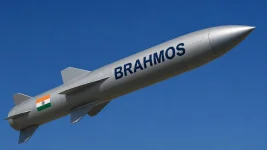
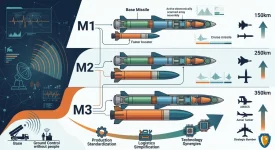
This project perfectly mirrors DRDO's overarching strategy of shrinking heavy missile systems into lighter, adaptable variants, as seen with the ongoing BrahMos-NG programme. Defence experts note that applying this same miniaturisation logic to anti-radiation weapons is a highly practical step forward.
Moving forward, the defence sector anticipates the formal launch of a dedicated anti-radiation missile programme specifically for the AMCA.
Whether the project is dubbed "Rudram-Mini" or given a fresh title, the ultimate goal is clear: equipping India's premier stealth fighter with an internally housed weapon that hunts down enemy radars without compromising its invisibility.