India's ambitious Advanced Medium Combat Aircraft (AMCA) project has achieved a major breakthrough, moving steadily closer to the manufacturing phase.
Two vital technologies developed by the Defence Research and Development Organisation (DRDO) have officially been handed over to Bharat Heavy Electricals Limited (BHEL).
This technology transfer marks an essential step in transitioning the fifth-generation fighter from the research stage to industrial production, directly bolstering the nation's "Aatmanirbhar Bharat" vision in the defence sector.
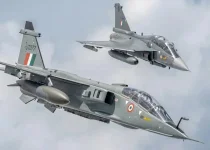
The newly transferred technologies are deeply connected to systems initially designed for the upcoming Tejas Mk2 fighter jet. This highlights a clear engineering progression and shared architecture within India's aerospace manufacturing ecosystem.
Specifically, both the AMCA and the Tejas Mk2 will rely on similar core designs for their Environmental Control Systems (ECS) and overall thermal management.
At the heart of this advancement is the Liquid Cooling System (LCS), an essential part of the aircraft's environmental control.
While BHEL's Heavy Plates and Vessels Plant (HPVP) in Visakhapatnam has reliably manufactured cooling units for the Tejas Mk1 since 1996, those earlier designs are insufficient for the immense heat generated by next-generation jets.
The sophisticated systems inside the Tejas Mk2 and the highly advanced AMCA require vastly superior cooling capacities.
In today's advanced combat jets, managing heat is not just about basic cooling; it is a mission-critical function essential for the aircraft's survival.
Fifth-generation fighters are packed with heat-producing equipment, including Active Electronically Scanned Array (AESA) radars, electronic warfare (EW) systems, scattered infrared sensors, and powerful computers.
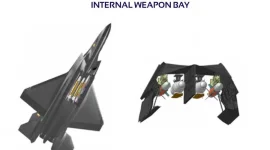
Furthermore, features like internal weapons bays and heat-sensitive stealth materials make temperature control even more complex.
Without a highly capable cooling network, these crucial systems could suffer reduced performance or completely fail during flight.
One of the main components transferred to BHEL was created by DRDO's Aeronautical Development Establishment (ADE): the Combined Pre-Cooler and Primary Heat Exchanger (CPPH).
This unit is responsible for the first stage of cooling. It takes boiling air directly from the aircraft's engine—often reaching temperatures between 200°C and 400°C—and cools it down before it enters the main ECS loop.
It achieves this by using cooler outside air (ram air) to absorb the heat, working much like an incredibly powerful, high-efficiency radiator.
Once the air passes through the CPPH, it moves into an Air Cycle Machine (ACM) where it gets compressed. Because compression naturally increases pressure and temperature, the air must pass through a secondary heat exchanger.
Here, more outside air is used to cool it down once again. This multi-step cycle guarantees that the air flowing into the sensitive electronic compartments remains safely within strict temperature limits.
The second major technology handed over is the Combined Condenser and Liquid Air Heat Exchanger (CCLA).
This critical subsystem ensures that the cooled air is completely dry and stable. Removing humidity is vital because any condensation or ice buildup inside the electronics bays could cause catastrophic system failures.
The CCLA guarantees that a steady stream of dry, perfectly chilled air reaches the radar, cockpit, sensors, and the pilot's onboard oxygen generation system.
Ultimately, an aircraft's ability to fight effectively relies heavily on how well it manages heat.
If temperatures spike, the radar's range can drop, electronic jamming equipment might falter, and the aircraft's stealth profile could be ruined by glowing hot spots visible to enemy infrared sensors.
Because the AMCA relies heavily on massive electrical power, advanced computing, and internalized weapons, mastering these thermal challenges is an absolute necessity.
Handing these complex systems over to BHEL signifies a major shift from laboratory research to active industrial production.
To handle such advanced aerospace components, BHEL has been steadily upgrading its facilities to meet strict AS9100 international aerospace manufacturing standards.
This partnership not only keeps the AMCA development moving forward but also firmly establishes India's domestic ability to produce high-end aerospace thermal management systems—a highly specialized field historically controlled by just a handful of foreign nations.