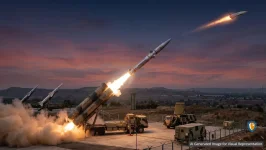
Before proceeding to the highly challenging phase of live underwater firing from an operational submarine, the Defence Research and Development Organisation (DRDO) is scheduling an additional developmental flight test for its Next-Generation Submarine-Launched Cruise Missile (SLCM).
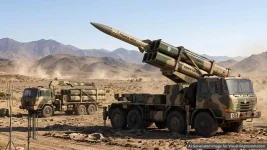
This weapons programme is a specialised naval variant of DRDO’s Long-Range Land Attack Cruise Missile (LRLACM). Scientists and engineers have engineered a highly compact, canister-based version of the weapon to meet the strict spatial and operational requirements of modern submarines.
According to insiders close to the project, this forthcoming land-based test is designed to confirm specific performance metrics before the weapon is entrusted to a live submarine crew.
By conducting another evaluation on land, DRDO can safely measure the missile's reliability, propulsion systems, flight stability, and guidance technology in a highly monitored environment, avoiding the immediate risks tied to an underwater launch.
The SLCM is being custom-built to arm the Indian Navy’s next generation of stealth vessels, specifically the upcoming Project 75(I) diesel-electric submarines and the future indigenous nuclear-powered attack submarines (SSNs).
The missile's design ensures it can be fired seamlessly from standard 533 mm heavy torpedo tubes, while also retaining compatibility with future Vertical Launch Systems (VLS) planned for newer submarine classes.
Firing a cruise missile from a submerged vessel is exceptionally difficult compared to launching one from land. It relies on a "cold launch" technique where the weapon is forcefully ejected from the submarine using high pressure.
The missile's rocket booster only ignites after it has safely cleared the water's surface. This intricate sequence must execute perfectly despite shifting water pressures, varying depths, and rough sea states, making it one of the toughest hurdles in naval missile engineering.
By inserting an extra developmental trial on land, DRDO is adopting a cautious, phased strategy. This step guarantees that the missile’s core flight mechanics are fully mature, thereby minimising technical hazards before integrating the system into naval launch platforms.
Once this land-based evaluation is cleared, the programme will advance to full underwater demonstrations using an active fleet submarine. Depending on the Indian Navy's scheduling and platform availability, these critical tests will likely utilise either a Kalvari-class (Scorpène) or Kilo-class vessel.
These trials will serve as the ultimate proof of concept, testing the entire sequence: submerged ejection, breaching the surface, booster ignition, wing deployment, and entering stable cruise flight.
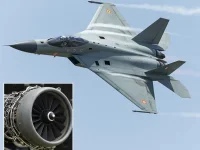
Technologically, the SLCM leans heavily on breakthroughs achieved during the LRLACM and Nirbhay programmes. It is powered by the indigenous Manik Small Turbofan Engine (STFE) and features advanced waypoint navigation and terrain-following capabilities for precision strikes.
However, to survive the immense pressures of an underwater launch and fit inside tight storage racks, this naval variant incorporates extensive structural reinforcements and a more compact 5.6-metre frame weighing just under a tonne.
It is also designed to carry a 250 kg warhead and strike targets at ranges of approximately 500 kilometres.
Successfully fielding this weapon will drastically upgrade the Indian Navy’s covert strike capabilities.
Submarines armed with these long-range cruise missiles can stalk the oceans and target strategic enemy infrastructure from hidden depths. This provides a highly survivable conventional deterrent and gives naval commanders unmatched tactical flexibility.
This precise, long-range firepower is vital for India's maritime future. As the fleet expands with Project 75(I) boats and domestic SSNs, equipping them with indigenous SLCMs will be critical for enforcing sea control and ensuring strategic deterrence across the entire Indian Ocean Region.