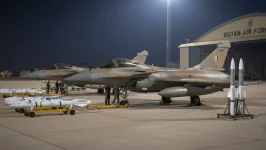
India’s intention to purchase 114 additional Rafale fighter jets through the Multi-Role Fighter Aircraft (MRFA) programme is shaping up to be one of the most significant military developments in the region.
Recent reports indicate that the Indian government has taken a major step forward by finalising a Letter of Request (LoR) for a massive ₹3.25 lakh crore deal with France.
While a final contract is still pending, defence experts in Pakistan are already expressing deep concern over the strategic shift this order would create if Dassault Aviation secures it.
For Pakistan, the addition of 114 new Rafales is a serious issue.
When combined with the 36 Rafale jets currently operated by the Indian Air Force (IAF), India would boast a formidable fleet of over 150 of these advanced aircraft.
This volume would drastically improve India’s capacity to conduct sustained, high-intensity air missions across multiple regions while ensuring easier maintenance and better long-term availability of the aircraft.
This push comes at a critical time for India, as its active fighter squadron strength has dropped to roughly 29 against an authorised requirement of 42.5 squadrons.
Historically, Pakistan’s military strategy has leaned on having superior technology and highly trained personnel to balance out India’s larger fleet of warplanes.
The Pakistan Air Force (PAF) has focused on modern avionics, rapid decision-making, and networked operations. For years, aircraft like the American F-16 and, more recently, Chinese-origin platforms like the J-10CE and JF-17 Block III have been the primary tools for this strategy.
However, a massive fleet of Rafales would severely challenge this historical advantage.
Defence analysts point out that the Rafale is a highly versatile aircraft that brings together powerful sensors, long-range weapons, and excellent electronic warfare systems.
Its built-in SPECTRA electronic warfare suite is specifically designed to jam enemy signals and warn pilots of incoming threats, increasing the jet's survival rate.
Furthermore, it carries the Meteor beyond-visual-range (BVR) missile, which is widely considered one of the deadliest air-to-air weapons in the world today.
Currently, with a limited fleet of just 36 Rafales, India has had to be careful about where and how it deploys them to allow for proper maintenance and training.
If the MRFA deal goes through and the fleet expands past 150, the IAF will no longer have to hold these jets back. India could maintain a constant, threatening presence of advanced fighters along multiple borders at the same time.
This creates a major headache for military planners in Pakistan.
Instead of preparing for the occasional encounter with a Rafale squadron, the PAF would have to factor in the constant presence of these advanced jets in high numbers during any extended conflict.
This would force a complete rethink of how Pakistan allocates its missions, distributes its forces, and sets up its air defence networks.
Modern aerial warfare has also shifted away from close-range dogfights.
The focus is now on detecting and destroying enemy aircraft from long distances before they are even visible to the naked eye. This requires advanced radars, data sharing between units, and beyond-visual-range missiles.
Experts in both countries agree that the ability to link sensors and operate as a network will decide the outcome of future air battles, an area where the Rafale excels.
Pakistan is also deeply concerned about the industrial benefits India will gain from this deal.
The Indian government has heavily promoted its "Make in India" initiative, and the MRFA programme reflects this.
Under the proposed terms, roughly 90 to 94 of the 114 jets will be manufactured in India through a partnership between Dassault Aviation and a local firm.
This promises to establish a massive domestic manufacturing, repair, and overhaul ecosystem within India, achieving nearly 50 per cent localisation.
Having a strong domestic aviation industry offers advantages that go far beyond just owning the planes.
Building and repairing jets locally means India will not have to rely as heavily on foreign suppliers for spare parts, ensuring the fleet remains ready for combat during prolonged crises.
It also creates a highly skilled workforce and builds advanced manufacturing capabilities that will benefit India's aerospace sector for decades to come.
From Pakistan’s viewpoint, this industrial growth is just as alarming as the aircraft themselves. A self-reliant aviation sector means India can sustain wartime operations much more effectively without suffering from global supply chain disruptions.
To keep up, Pakistan has accelerated its own air force modernisation.
In recent years, the PAF has integrated the advanced Chinese J-10CE fighter and the latest JF-17 Block III into its ranks, both of which carry modern sensors and long-range missiles. These additions have undoubtedly enhanced Pakistan’s current 4th and 4.5-generation combat capabilities.
Yet, to truly counter a fleet of 150 Rafales, Pakistani analysts believe they must leap forward to fifth-generation stealth fighters.
Reports reveals that in mid-2025, China officially offered Pakistan up to 40 of its Shenyang J-35 (export variant) stealth fighters.
While Pakistani officials have recently clarified that actual deliveries of the J-35 are not expected until at least 2027, the pursuit of this platform highlights Islamabad's desperate need to maintain technological parity as the region's airpower landscape shifts.
Funding this arms race is another major hurdle. Buying, arming, and maintaining modern combat jets requires enormous amounts of money.
For Pakistan to match an expanded Indian air fleet, it will need to commit to massive defence spending over many years. This forces Pakistani officials to carefully weigh their military needs against the reality of a tight national budget.
On the other side of the border, India insists that the MRFA purchase is strictly about its own security needs, not just regional rivalry.
The IAF urgently needs to replace its ageing Soviet-era planes, like the MiG-21s, to restore its depleted squadron numbers.
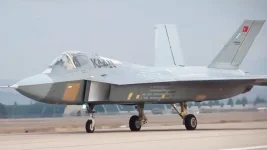
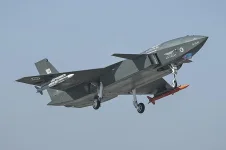
These 114 foreign fighters are seen as a necessary stopgap to protect the skies while India continues to develop its own domestic aircraft, such as the Tejas Mk2 and the stealth Advanced Medium Combat Aircraft (AMCA).
Ultimately, if the Rafale is officially chosen for the MRFA programme, it will make life much easier for the Indian Air Force.
Operating over 150 aircraft of the same type means India can use the same supply chains, training programmes, and maintenance facilities it already built for its first 36 Rafales, avoiding the massive cost and complication of introducing a completely new fighter jet into service.