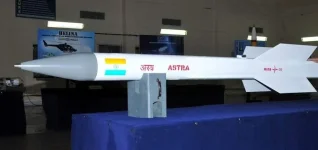
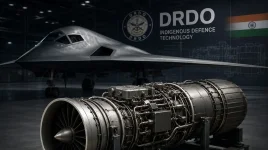
The Defence Research and Development Organisation (DRDO) is heavily modifying its Supersonic Target Resembling Missile (STAR) program.
Originally intended simply as a fast-moving target drone, the system is being re-engineered into an economical tactical supersonic missile designed for anti-ship and land attack operations.
Known as the STAR-Tactical (STAR-T), this modified variant is set to play a crucial role in India’s strategy to produce large numbers of low-cost, domestically built weapons.
These new missiles are intended to overwhelm hostile air defence systems without expending the much costlier BrahMos cruise missiles.
In its earliest form, the STAR project was a joint effort between DRDO’s Aeronautical Development Establishment (ADE) and the Defence Research and Development Laboratory (DRDL).
The primary goal was to create a supersonic vehicle that could realistically simulate incoming cruise missiles, giving India’s air defence units a high-speed target for practice and validation.
To achieve this, the original system was built to mimic low-altitude, sea-skimming threats. Operating at speeds between Mach 2.5 and Mach 3.0, it provided a highly accurate representation of modern supersonic dangers for interception training.
Over time, military officials from both the Indian Army and the Indian Air Force recognised that a drone designed to emulate a cruise missile naturally carried the required propulsion and aerodynamics to become an actual weapon.
The STAR-T initiative was born from this realisation, converting a high-speed target into a dedicated tactical strike asset sharing the exact same flight characteristics.
Advancing through its Phase-III trials initiated in late 2025, the program is already evaluating air-launched variants from LCA Tejas fighters, alongside ground-launched versions utilizing highly mobile truck platforms.
This development fits perfectly into the military's emerging "Hi-Lo Mix" strategy for precision strikes over long distances.
Under this doctrine, premium systems like the BrahMos will be strictly reserved for penetrating heavily fortified, high-value locations such as aircraft carriers, military command nodes, and reinforced bunkers.
In contrast, the more affordable STAR-T will be deployed to destroy medium-tier targets, suppress enemy air defences, and conduct tactical strikes on the battlefield, sparing the expensive strategic inventory where it would be economically inefficient.
Financial viability is a standout feature of the STAR-T project.
A single BrahMos currently demands between ₹34 crore and ₹40 crore (roughly $4 million to $4.8 million) to produce. The tactical STAR-T, however, is projected to cost merely ₹15 crore to ₹20 crore.
This means the military can acquire a weapon with similar supersonic capabilities—capable of reaching Mach 2.5 to Mach 3.2—at approximately half the price.
The drastic drop in price is attributed to indigenous manufacturing, streamlined ownership, and advanced propulsion choices.
While BrahMos utilises a liquid-fuel ramjet developed through a partnership with Russia’s NPO Mashinostroyeniya, STAR-T relies on Solid Fuel Ducted Ramjet (SFDR) technology created entirely within India.
Solid-fuel ramjets are substantially less expensive to build and maintain, bypassing the complicated infrastructure needed for liquid fuels while enhancing long-term storage stability and operational readiness.
DRDO recently proved the viability of this indigenous propulsion; on February 3, 2026, the agency successfully demonstrated the SFDR technology from the Integrated Test Range in Chandipur, validating the boron-based solid fuel system that will sustain the missile's supersonic speeds.
Complete domestic ownership provides another distinct edge.
The Indo-Russian BrahMos joint venture involves shared financial and licensing commitments, whereas STAR-T is 100% Indian.
This ensures that all manufacturing profits, supply chain operations, and intellectual property remain securely inside the nation's defence sector.
Furthermore, the STAR-T’s physical footprint heavily reduces expenses.
It is notably lighter and smaller than the 3,000-kilogram BrahMos, requiring far fewer costly aerospace materials like titanium.
While BrahMos houses a 200–300 kilogram warhead, the STAR-T is built for a 50–100 kilogram tactical payload, which inherently lowers production costs.
This reduced payload matches its intended function as a weapon produced in high volumes.
Recent international conflicts have proven that the economics of missile warfare heavily rely on cost-exchange ratios and the ability to saturate defences.
Even sophisticated integrated air defence networks, like the Russian S-300 derivatives or Chinese HQ-9, have a limit to how many incoming threats they can simultaneously track and destroy.
By utilizing STAR-T in "swarm-style" attacks, the Indian armed forces aim to overload enemy radars and interceptors through sheer numbers.
From a tactical standpoint, commanders could fire two to three STAR-T missiles for the price of one BrahMos, massively amplifying the density of a strike without wasting strategic reserves.
Reports suggest the military is evaluating the missile for both surface-to-surface and surface-to-sea strikes, giving it deep utility across both maritime and land operations.
The pivot towards the STAR-T underscores a realistic shift in modern precision warfare economics.
Speaking in May 2026, DRDO Chairman Dr. Samir V. Kamat stressed the necessity of building domestic systems in massive quantities to endure prolonged high-intensity conflicts without exhausting the national budget.
Firing a nearly $5 million weapon at a simple radar station, communication node, or logistics hub is no longer considered sustainable in environments requiring vast missile inventories.
Because of this strategic realization, DRDO has temporarily paused the highly expensive BrahMos-II hypersonic project to focus its resources on cost-effective, high-yield systems like the STAR-T and the Long-Range Land Attack Cruise Missile (LRLACM).