- Views: 2K
- Replies: 1
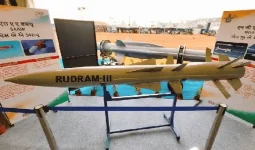
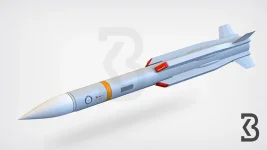
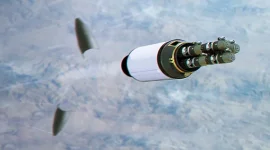
The Defence Research and Development Organisation (DRDO) is nearing a major breakthrough with the Rudram-2, India's domestically built air-to-surface missile.
Currently undergoing its final validation trials, the system is projected to be cleared for full-scale manufacturing shortly.
Crafted as an advanced anti-radiation weapon, the Rudram-2 will upgrade the Indian Air Force's (IAF) ability to execute Suppression of Enemy Air Defences (SEAD) operations, phasing out the older Russian-made Kh-31 missiles currently in service.
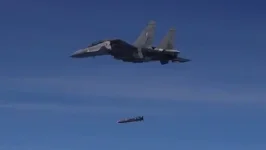
After a flawless full-configuration flight test from a Sukhoi Su-30MKI fighter jet off the Odisha coast in May 2024, the project moved into a rigorous tuning period spanning 2025 and 2026.
DRDO and the IAF are currently dedicating their efforts to perfecting the missile’s targeting sensors, ensuring it can identify enemy radar signals amidst heavy electronic interference.
This fine-tuning is vital for the weapon to reliably defeat modern, heavily networked air defence grids that use complex electronic warfare tactics to hide their locations.
Open-source data indicates the missile employs a highly accurate mix of Inertial Navigation Systems (INS) and satellite navigation for its mid-course journey, followed by Imaging Infrared (IIR) or passive homing heads for the final pinpoint strike.
To build the weapon, India is setting up a collaborative manufacturing network under the Development-cum-Production Partner (DcPP) framework.
Adani Defence and Aerospace, along with the state-run Bharat Dynamics Limited (BDL), will serve as central manufacturing partners.
Production is slated for Adani’s Hyderabad plant, representing a landmark moment for private industry involvement in developing top-tier missile technology—a domain historically controlled by government enterprises.
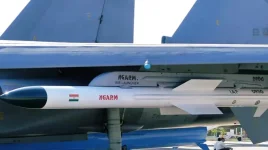
In terms of aircraft compatibility, the heavy-weight Su-30MKI fighter has operated as the main launch platform.
A single Su-30MKI can be armed with up to three of these advanced missiles, offering excellent tactical flexibility.
Engineers are currently working to equip the Mirage 2000 fleet with the Rudram-2, and future phases aim to integrate it with the Tejas Mk1A, the planned Tejas Mk2, and potentially the Rafale jets.
This broad integration plan guarantees that the weapon can be launched by a wide variety of fighter squadrons.
On a technical level, the Rudram-2 delivers a massive upgrade over older inventory.
It boasts a strike range of approximately 300 kilometres, allowing fighter pilots to target hostile radar outposts from a safe "stand-off" distance, either within friendly skies or at the edge of contested zones.
This extended reach keeps IAF jets safely out of the firing line of most hostile medium-range surface-to-air missile batteries, drastically increasing pilot safety during dangerous SEAD assignments.
Beyond its impressive range, the solid-propelled missile travels at blistering hypersonic speeds—capable of reaching up to Mach 5.5, according to public defence records—which leaves enemy operators with almost zero reaction time.
Its sophisticated sensors are designed to lock onto hostile radar waves even if the enemy attempts to switch them off mid-flight or uses mobile platforms to hide.
Armed with a heavy payload, such as a 155-kilogram pre-fragmented or 200-kilogram penetration warhead, it can efficiently destroy hardened bunkers or mobile radar stations attempting to use intermittent emissions to stay hidden.
From a broader strategic perspective, bringing the Rudram-2 into active service will be a game-changer for deep-penetration strikes against well-guarded territories.
By successfully crippling an adversary's air defence umbrella in the initial hours of a conflict, this formidable weapon will clear a safe path for subsequent waves of fighter jets and combat drones to operate freely.