- Views: 1K
- Replies: 2
As India advances toward the full-scale development of its Advanced Medium Combat Aircraft (AMCA), the project is evolving into far more than a single fighter jet programme.
It is rapidly becoming the catalyst for a massive, multi-tiered aerospace and defence industrial ecosystem, potentially engaging over 100 Indian companies.
This strategic shift represents the most significant expansion of India’s indigenous aviation manufacturing capacity since the Tejas project.
Redefining the Aerospace Supply Chain
Unlike historical combat aircraft programmes that relied predominantly on state-run entities, the AMCA project is reshaping the landscape by fostering a collaborative, competitive network.The Ministry of Defence recently issued a Request for Proposal (RFP) to three shortlisted private-sector consortia, marking a historic milestone where the private industry is invited to lead the production of prototypes for a frontline combat jet.
This model aims to accelerate production timelines and leverage the specialized expertise of private firms in airframe manufacturing, advanced avionics, and complex systems integration.
Pillars of the AMCA Industrial Network
The development of a fifth-generation stealth platform requires precision and innovation across several critical technology domains:- Airframe and Composite Structures: Stealth performance depends on extreme structural precision. Companies such as Tata Advanced Systems, Larsen & Toubro (L&T), and Dynamatic Technologies are expected to lead in high-tolerance fuselage and wing fabrication. Furthermore, with the aircraft’s external surface composed of over 60% advanced composites, firms like Kineco Aerospace and Tata Advanced Materials are instrumental in scaling these manufacturing capabilities.
- Sensors, Radar, and Electronic Warfare (EW): The AMCA’s "eyes and ears" are a collaborative effort between public institutions like the Electronics and Radar Development Establishment (LRDE) and private innovators. Entities such as Astra Microwave, Data Patterns, and Alpha Design Technologies are critical to developing the sophisticated radar warning receivers, electronic support measures, and self-protection suites that define modern aerial dominance.
- Mission Systems and Avionics: As the aircraft functions increasingly as a "flying computer," the role of software-defined architectures has become paramount. Leading private players are providing essential hardware for mission computers, display systems, and data management, ensuring seamless sensor fusion and net-centric warfare capabilities.
- Metallurgy and Mechanical Systems: The reliance on high-performance materials like titanium alloys and superalloys is central to the airframe's integrity. Organizations like MIDHANI and private precision engineering firms are tasked with supplying the specialized components required for landing gear and flight-control actuation systems.
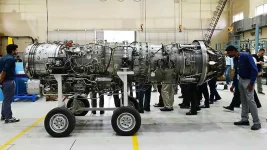
- Propulsion Ecosystem: While the initial AMCA prototypes will utilize the proven GE-F414 engines—for which commercial negotiations and co-production discussions are currently at an advanced stage—a broader supporting ecosystem is being built. Companies including Godrej Aerospace, MTAR Technologies, and Walchandnagar Industries are establishing the localized industrial base necessary for current and future engine support.
Driving Toward First Flight
The programme’s trajectory is set for an aggressive timeline.Following the recent RFP issuance, the government is conducting rigorous technical and commercial evaluations.
The winning partner, in collaboration with the Aeronautical Development Agency (ADA), will work to construct five flying prototypes.
With government approval for full-scale engineering development and significant funding sanctioned, the project aims for a prototype roll-out by late 2026 or early 2027, followed by a maiden flight in 2028.
A New Era of Defence Autonomy
The AMCA is not merely an aircraft; it is a long-term investment in India's technological sovereignty.By integrating state-of-the-art software, internal weapons bays, and advanced stealth capabilities, the programme forces the domestic industry to master complex integration challenges.
As the supply chain matures, this network of Tier-1, Tier-2, and Tier-3 suppliers will form the backbone of India’s future aerospace capabilities, positioning the nation to compete globally in the fifth-generation and beyond.