- Views: 4K
- Replies: 41
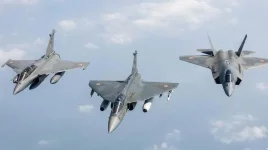
The Indian Air Force's (IAF) pursuit of 114 Rafale fighter jets through the Multi-Role Fighter Aircraft (MRFA) programme is a monumental defence initiative, estimated to cost roughly ₹3.25 lakh crore.
Although talks between New Delhi and Paris are advancing—with expectations of formalising the agreement in 2026—critical hurdles remain.
Key sticking points include France sharing the vital source codes needed for integrating Indian-made weapons, transferring advanced technologies, and seamlessly syncing the Rafale with the IAF's secure Integrated Air Command and Control System (IACCS).
The Network-Centric Warfare Backbone
These demands go far beyond basic technical requirements; they are essential for modern warfare.The IACCS forms the digital backbone of India's combat strategy, linking fighter squadrons with radar stations, command centres, and surface-to-air missiles to create a unified, real-time combat network.
If a newly purchased fighter cannot fully connect to this closed ecosystem, it severely restricts the military's reaction time and battlefield flexibility during a potential multi-front conflict.
Moreover, India is actively moving away from total dependence on foreign manufacturers.
True defence sovereignty means having the freedom to upgrade mission computers and mount domestic weapons without seeking permission from the original builders.
With India’s defence industry maturing rapidly, ensuring that new jets can fire homegrown systems like the Astra Mk2 air-to-air missiles, the Rudram anti-radiation missiles, and the upcoming BrahMos-NG cruise missiles is now an absolute priority.
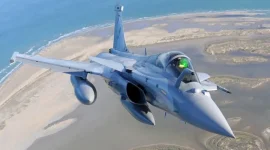
France’s Rafale is a proven platform in India, with 36 jets already serving effectively following a 2016 emergency purchase.
Procuring an additional 114 units—of which around 96 are planned to be built in India under a technology transfer agreement—would simplify pilot training, streamline spare parts supply, and utilise existing maintenance bases.
Despite these massive logistical advantages, New Delhi will be forced to look elsewhere if the final contract does not guarantee full operational independence.
This reality brings forward a critical question for national security: if the mega-deal stalls, what is the IAF's backup plan?
Evaluating the Domestic and Foreign Alternatives
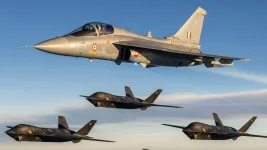
Finding an immediate substitute is complex.The domestic Tejas Mk2 medium-weight fighter is widely viewed as the long-term backbone of the IAF.
It promises major upgrades over the current Tejas Mk1A, featuring a powerful GE-F414 engine, advanced Uttam AESA radar using superior Gallium Nitride (GaN) technology, and a 6.5-tonne payload capacity.
However, the Mk2 is still navigating its prototype phase, with its maiden flight targeted for 2026. Mass production will likely not commence before the end of the decade, meaning it cannot instantly bridge the IAF's urgent fighter squadron shortage on its own.
Exploring other foreign fighters reveals distinct drawbacks for each option:
- Boeing F-15EX: Delivers massive payload capacity but operates as a heavyweight fighter, which would drastically increase fuel and operating budgets.
- Sukhoi Su-35: A highly capable Russian platform, but current global geopolitical tensions raise serious doubts about reliable spare parts and long-term supply chain support.
- Lockheed Martin F-16: Often viewed as a less suitable choice due to its older baseline design and political sensitivities regarding its use by regional adversaries.
On the other end of the spectrum, Sweden’s Gripen E offers modern electronics and low flight costs. Unfortunately, the Gripen relies heavily on an American-made engine and various European components, exposing India to the risk of multiple foreign vetoes during times of conflict.
The Logistical Weight of a New Fleet
Furthermore, inducting any brand-new foreign aircraft type forces the IAF to build a completely new support ecosystem from scratch.This means spending billions on new ground equipment, creating separate training courses for pilots and mechanics, and undertaking years of testing to pair Indian weapons with the new jets.
Expanding the already familiar Rafale fleet avoids these massive delays and hidden costs.
Because of these factors, the Rafale stands out as the most logical and cost-effective choice to fulfill the MRFA requirement.
The benefits of using the same tools, facilities, and procedures that the IAF already possesses are simply too great to ignore—as long as France meets India's terms.
However, the days of India simply buying off-the-shelf hardware are over.
The modern Indian defence strategy is firmly rooted in long-term self-reliance. Gaining total control over aircraft software, integrating homegrown sensors, and securing unrestricted compatibility with domestic command networks are no longer considered bonus features; they are non-negotiable strategic necessities.
While talks are highly likely to proceed given the deep strategic partnership and mutual interests between New Delhi and Paris, India remains resolute.
The nation is fully justified in demanding that any future multi-billion-dollar fighter deal guarantees the freedom to upgrade the jets domestically and deploy them without foreign interference.
Should these core requirements remain unfulfilled, triggering a Plan B—such as aggressively accelerating the Tejas Mk2 and Advanced Medium Combat Aircraft (AMCA) programmes—will shift from a theoretical discussion to an urgent reality.
It underscores a vital lesson: for a rising global power, the freedom to operate independently is just as crucial as the combat power of the aircraft it flies.