- Views: 2K
- Replies: 5
Amidst a strengthening strategic partnership between New Delhi and Paris, a notable shift is occurring in bilateral military trade.
Following the recent clearance by India's Defence Acquisition Council (DAC) to acquire 114 Dassault Rafale fighter jets in a landmark $36 billion agreement, France is seeking ways to demonstrate mutual goodwill.
Reports indicate that the French military is actively evaluating Indian-manufactured weaponry for its own use, with the indigenous Pinaka multi-barrel rocket launcher (MBRL) emerging as the leading choice.
This potential acquisition represents more than just a financial rebalancing of a massive aerospace contract. It highlights a maturing alliance where both nations recognise the strategic value of reciprocal reliance.
India has historically been a major consumer of French aviation technology, relying on French aircraft since the 1950s up to the modern Rafale squadrons that now form the backbone of the Indian Air Force.
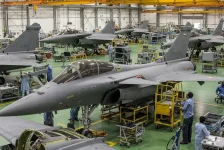
With the latest MRFA (Multi-Role Fighter Aircraft) programme proposing that up to 96 of the 114 new Rafales be built on Indian soil, France is signalling its willingness to support "Made in India" defence initiatives by opening its own procurement doors.
The Pinaka rocket system has become the primary focus of these discussions.
Engineered by India's Defence Research and Development Organisation (DRDO), the battle-tested system is celebrated for its agility, precision, and overwhelming firepower, capable of launching a salvo of 12 high-explosive rockets in a mere 44 seconds.
The French Army is currently facing an urgent need to replace its aging fleet of M270 Lance-Roquettes Unitaire (LRU) systems, a gap exacerbated by the depletion of European artillery stocks.
While the Pinaka's current operational range sits around 90 kilometres, ongoing developments for extended-range variants up to 130 kilometres make it an appealing, cost-effective alternative to pricier Western systems like the American HIMARS.
French strategic institutes acknowledge that such a procurement would carry immense symbolic weight, cementing a gesture of goodwill toward New Delhi.
The scope of France's interest extends beyond just rocket launchers.
French military officials are broadly assessing a variety of Indian defence systems that could meet their operational requirements, including artillery, electronic warfare technologies, and loitering munitions.
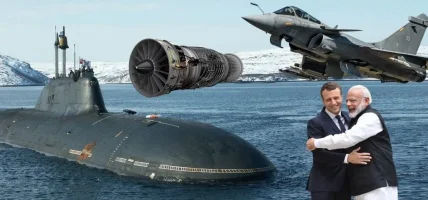
This momentum aligns with the broader cooperative framework highlighted during French President Emmanuel Macron's recent visit to India in February 2026, which saw agreements on co-producing helicopters and expanding submarine fleets.
This evolution into a two-way street allows India to diversify its arms industry while providing France with a reliable supply chain partner in an increasingly complex global security environment.
For observers of Indo-French diplomacy, this development signifies a deeply collaborative era. It is the type of reciprocal engagement that elevates a transactional relationship into a genuine strategic partnership.
As pilots from both countries train side-by-side and engineers jointly develop advanced upgrades, the shared vision for global security becomes a reality.
Ultimately, these robust defence ties go beyond military might, driving job creation, technological growth, and economic stability for families in both nations.