- Views: 2K
- Replies: 7
India has conveyed its intent to participate in the Future Combat Air System (FCAS), a cutting-edge European aerospace initiative originally established by France, Germany, and Spain.
During recent diplomatic discussions, including the 6th India-France Annual Defence Dialogue in Bengaluru this February, New Delhi proposed co-developing this sixth-generation fighter network alongside Paris.
While this collaboration promises a massive technological leap for the Indian Air Force and potentially the Indian Navy, severe engineering hurdles threaten the maritime aspect of this ambition.
Specifically, the massive weight of the proposed fighter jet clashes directly with the physical limitations of India’s current aircraft carriers.
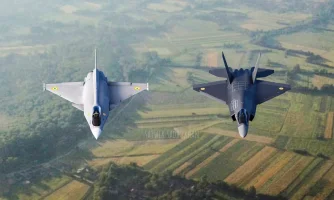
Spearheaded primarily by French aviation giant Dassault Aviation alongside Airbus, the FCAS is not just a single aircraft. It is a comprehensive "system of systems" centred around a highly advanced, radar-evading New Generation Fighter (NGF).
This central jet is designed to fly alongside a swarm of unmanned drone "wingmen" and share real-time battle data through a highly secure digital combat cloud.
While India's primary focus is on boosting its land-based air power, maritime defence planners are also evaluating the platform for future naval use.
However, bringing a sixth-generation jet of this scale to the sea presents a monumental challenge for the Indian Navy.
Current blueprints suggest that the FCAS New Generation Fighter will be a heavy-duty machine, tipping the scales at an estimated maximum take-off weight of 33 tonnes. This is vastly heavier than the aircraft the Indian Navy currently flies.
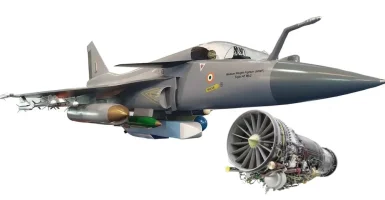
For comparison, India's newest indigenous aircraft carrier, INS Vikrant, was built to handle much lighter jets like the Russian-origin MiG-29K, which weighs about 24.5 tonnes fully loaded, or the upcoming domestic Twin Engine Deck Based Fighter, projected at 26 tonnes.
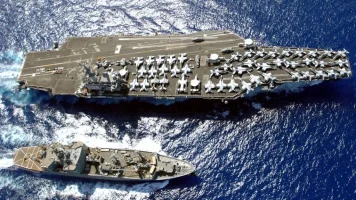
The root of the problem lies in how planes take off from Indian ships. Both of India's active carriers, INS Vikramaditya and INS Vikrant, utilise a STOBAR (Short Take-Off But Arrested Recovery) system, which relies on an angled ski-jump ramp to launch aircraft.
A ski-jump launch requires a jet to have a tremendous thrust-to-weight ratio to get airborne safely. Attempting to launch a colossal 33-tonne fighter from a ramp would mandate severe compromises.
To safely clear the deck, the aircraft would be forced to carry drastically less fuel or fewer weapons, effectively stripping away the very range and firepower that makes a sixth-generation fighter so valuable.
Landing such a massive aircraft brings equally dangerous risks. The arresting gear—the heavy wire system used to forcefully catch and stop a landing jet on a short flight deck—is calibrated for the momentum of lighter fighters.
Slamming a 33-tonne jet into Vikrant’s current arresting wires would place a catastrophic strain on the ship's braking mechanisms.
Furthermore, the physical dimensions of the carrier are too restrictive. The mechanical elevators that transport jets between the internal hangars and the flight deck were sized for the MiG-29K and the recently procured Rafale M.
A heavier aircraft with a broader wingspan or the distinctive tail shapes common in modern stealth designs would simply not fit within the ship's existing elevators or internal hangar bays.
These stark engineering realities dictate that India cannot operate the FCAS fighter from its current fleet or even the proposed 45,000-tonne sister ship to the Vikrant.
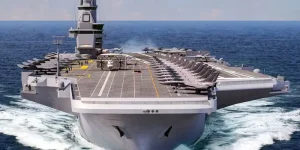
France, anticipating the bulk of the new fighter, is designing its own next-generation nuclear carrier (the PANG) with a CATOBAR (Catapult Assisted Take-Off But Arrested Recovery) system, featuring electromagnetic catapults that can literally throw heavy, fully-loaded jets into the sky.
For the Indian Navy to truly harness a heavyweight sixth-generation fighter, it will have to accelerate its long-debated plans for the IAC-3—a massive 65,000-tonne supercarrier equipped with the same advanced catapult technology.
Until such a vessel is built, India's naval ambitions for the FCAS will remain grounded by the physical limits of its current fleet.