- Views: 2K
- Replies: 14
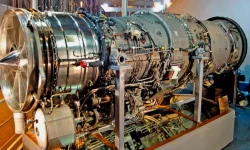
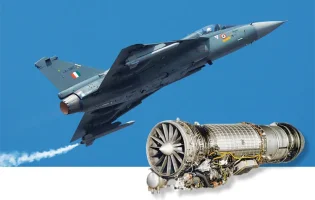
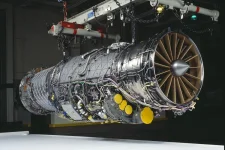
According to recent reports, American aerospace manufacturer GE Aerospace has successfully handed over the seventh F404-IN20 turbofan engine to Hindustan Aeronautics Limited (HAL).
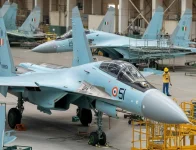
This critical delivery injects fresh momentum into the manufacturing of the Light Combat Aircraft (LCA) Tejas Mk1A.
The arrival of this engine is anticipated to assist HAL in steadily speeding up the final assembly of the fighter jets, overcoming previous setbacks caused by prolonged global supply chain disruptions.
The F404-IN20 engine, capable of generating approximately 84 kilonewtons (kN) of thrust, is the chosen power source for both the original Tejas Mk1 and the advanced Mk1A models.
Over the last couple of years, lagging engine shipments from GE have been the primary obstacle limiting HAL's capacity to meet the Indian Air Force's (IAF) strict induction timelines for the new fleet.
Receiving this seventh unit equips HAL with an essential propulsion system needed to continue the final construction and flight evaluation of the combat aircraft.
The state-owned aerospace company has proactively built around 30 fully equipped airframes, which are currently stationed on the assembly lines waiting solely for these powerplants to be integrated.
The Tejas Mk1A initiative stands as a cornerstone in the modernisation of the IAF's combat capabilities and India's self-reliance in aerospace defence. Initially, a ₹48,000 crore contract was signed for the production of 83 Mk1A fighters, which included an order for 99 GE engines.
Furthermore, the Indian government has cleared a subsequent acquisition of 97 more jets, expanding the total planned Mk1A inventory to 180 aircraft and prompting an additional order of 113 engines from GE.
In response to earlier logistical challenges, GE Aerospace has confirmed that it is actively expanding its manufacturing capabilities to support the F404-IN20 engine line.
The firm has assured stakeholders that the rate of deliveries will see a steady increase, with commitments to supply around 24 to 26 engines annually starting in 2026. This ramp-up will empower HAL to significantly expand its production volume over the next few years.
A consistent flow of these propulsion units is absolutely vital to the manufacturing process.
While components like the airframe, radar systems, electronic warfare suites, and avionics are already prepared, the aircraft can only advance to the final integration phase once the engine is securely installed.
Consequently, the timely arrival of these engines dictates the overall speed at which finished jets can be handed over to the IAF.
To accommodate the expected surge in engine supplies, HAL has established multiple assembly lines across its Bengaluru and Nashik facilities, substantially broadening its operational capacity.
As GE dispatches more F404-IN20 engines, HAL is well-positioned to rapidly increase the frequency of aircraft roll-outs and conduct the necessary flight trials to clear them for active service.
While the acquisition of the seventh engine is an encouraging step forward, keeping the Tejas Mk1A programme on track ultimately relies on GE's ability to provide a dependable and uninterrupted supply of engines that aligns with HAL's targets.
Should the promised acceleration in deliveries materialise, industry experts project HAL could begin delivering the first batch of fighters by late 2026, profoundly enhancing its ability to satisfy the IAF's urgent operational needs.