- Views: 2K
- Replies: 15
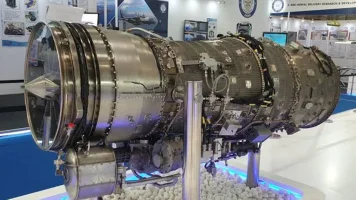
The Gas Turbine Research Establishment (GTRE), a premier laboratory under India's Defence Research and Development Organisation (DRDO), has set its sights on 2030 for conducting airborne tests of the afterburning Kaveri jet engine.
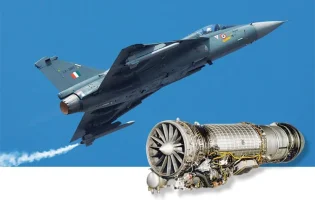
Originally conceptualized in the late 1980s, the Kaveri project is now slated to utilize an older Limited Series Production (LSP) model of the Tejas Mk1 as its testing platform.
The initial phase of these airborne trials will feature the engine's current afterburner setup, which yields around 73kN of thrust.
This critical step will pave the way for testing a future, more advanced afterburner variant designed to achieve a thrust of 84-85kN.
This approach marks a major operational shift for India's pursuit of a homegrown fighter jet engine.
Instead of delaying flight tests until the higher-thrust version is completely finalized, GTRE is opting to evaluate the current configuration in the air. This strategy enables scientists and engineers to compile vital performance data in a true flight environment.
In the past, the Kaveri engine underwent airborne trials using a modified Il-76 transport aircraft testbed in Russia, but testing it on a supersonic fighter platform like the Tejas will provide far more accurate, real-world dynamic insights.
To make this possible, GTRE has received the formal green light to convert an older Tejas LSP aircraft into an exclusive flying testbed. Using the Tejas is highly advantageous both technically and economically.
Because the Light Combat Aircraft (LCA) was originally shaped around the exact physical dimensions of the Kaveri engine during its early design phases, fitting the engine into this airframe requires minimal structural modifications.
This natural compatibility drastically cuts down on engineering difficulties, reduces overall development costs, and speeds up the timeline for flight testing preparations.
During the upcoming flight test campaign, researchers will closely monitor how the 73kN afterburning model behaves across varying flight envelopes.
Engineers will evaluate its throttle responsiveness, thermal stability, system integration with the aircraft, and overall dependability under stress.
The data gathered from these real-world conditions will be essential for verifying design models and guiding subsequent technical enhancements.
Once the initial trials conclude successfully, GTRE will shift its focus to integrating the new-generation afterburner currently in development.
This upgraded component aims to push the engine's maximum output to the 84-85kN range, a substantial leap that aligns the Kaveri more closely with the thrust requirements of contemporary fighter jets.
In parallel to these efforts for manned fighters, DRDO has also been making strides with a non-afterburning "dry" variant of the Kaveri, producing roughly 49-51kN of thrust, which was recently cleared for flight testing on indigenous unmanned platforms like the Ghatak stealth drone.
Ultimately, utilizing a dedicated flying testbed allows engine maturation to progress without delaying new aircraft programs, remaining a proven strategy among global aerospace leaders.