- Views: 2K
- Replies: 12
Hindustan Aeronautics Limited (HAL) has laid out a clear strategy to accelerate the manufacturing of its Tejas Mk1A fighter jets, targeting a production rate of 30 aircraft per year by 2027–28.
This development was confirmed by HAL Chairman and Managing Director Ravi K. during a recent discussion with the Zone Victor Aerospace & Defence channel. He highlighted that HAL is on track to increase output after making substantial upgrades to its production facilities.
The immediate goal for HAL, as stated by the CMD, is to stabilise production at 24 jets annually. This target has been the primary focus since the recent expansion of manufacturing hubs.
Once HAL can reliably deliver 24 jets each year, the state-run aerospace firm plans to fine-tune its supply chains and assembly operations to reach the ultimate goal of 30 aircraft annually by the 2027–28 timeframe.
Achieving this target marks a major upgrade from HAL's past manufacturing capabilities. Over recent years, the company has poured heavy investments into modernising its assembly lines, incorporating advanced tooling, increasing automation, and expanding its vendor network.
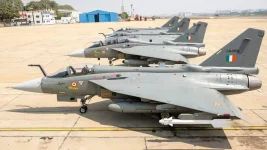
With three dedicated production lines now active in Bengaluru and Nashik, HAL can construct multiple airframes simultaneously, drastically cutting down the time required to build each jet.
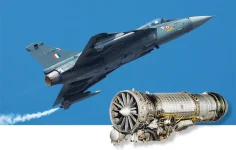
While deliveries have faced setbacks due to delays from US-based GE Aerospace in supplying the F404-IN20 engines, visual evidence from HAL’s assembly floors shows that aircraft construction has not stalled.
Airframes up to the 32nd production unit are reportedly in various phases of completion. This progress proves that India's domestic manufacturing capacity is no longer the primary hurdle in the fighter’s delivery timeline.
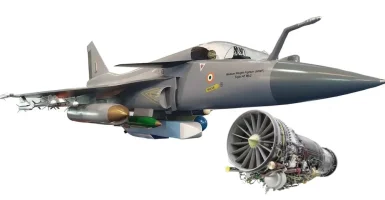
The core bottleneck continues to be the slower-than-expected arrival of the GE engines. To counter this, HAL has adopted a strategy of building the airframes, integrating avionics, and installing all internal systems while they wait for the powerplants.
Recent reports confirm that a seventh GE F404 engine successfully cleared quality checks in mid-2026, offering much-needed relief to the production line.
By stockpiling nearly finished jets, HAL ensures that deliveries to the air force can be fast-tracked as soon as engine shipments stabilise.
Scaling up to 30 aircraft per year perfectly aligns with the Indian Air Force’s urgent need to induct these advanced fighters.
HAL is currently executing an initial order for 83 Tejas Mk1A jets, valued at around ₹48,000 crore.
Following this, the government cleared an additional procurement of 97 jets, bringing the total confirmed order book for the Tejas Mk1A to 180 aircraft. To support these incoming orders, a separate contract was signed with GE in late 2025 for 113 more engines.
To fulfill these massive orders on time, accelerating production is non-negotiable. Rolling out 30 fighters a year will dramatically shrink delivery wait times.
More importantly, it will allow the Indian Air Force to swiftly replace its ageing fleets of MiG-21s, Jaguars, and Mirage 2000s, which is a critical necessity given the IAF's current squadron strength has dropped below 30 against a sanctioned requirement of 42 squadrons.
Ultimately, an enhanced production rate will give HAL the flexibility to take on potential export orders or additional domestic requests without disrupting its commitments to the Indian Air Force.
As India’s local defence and aerospace manufacturing sector matures, mass production of the Tejas is expected to boost efficiency, empower local suppliers, and drive down the overall cost per aircraft through economies of scale.