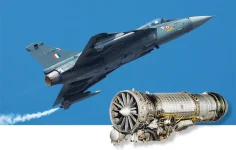
HAL Aims for 30 Tejas Mk1A Aircraft Annually by 2027–28 to Meet IAF Orders, Confirms CMD

HAL Aims for 30 Tejas Mk1A Aircraft Annually by 2027–28 to Meet IAF Orders, Confirms CMD


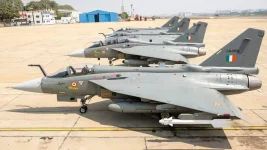
Hindustan Aeronautics Limited (HAL) has laid out a clear strategy to accelerate the manufacturing of its Tejas Mk1A fighter jets, targeting a production rate of 30 aircraft per year by 2027–28.

This development was confirmed by HAL Chairman and Managing Director Ravi K. during a recent discussion with the Zone Victor Aerospace & Defence channel. He highlighted that HAL is on track to increase output after making substantial upgrades to its production facilities.

The immediate goal for HAL, as stated by the CMD, is to stabilise production at 24 jets annually. This target has been the primary focus since the recent expansion of manufacturing hubs.

Once HAL can reliably deliver 24 jets each year, the state-run aerospace firm plans to fine-tune its supply chains and assembly operations to reach the ultimate goal of 30 aircraft annually by the 2027–28 timeframe.

Achieving this target marks a major upgrade from HAL's past manufacturing capabilities. Over recent years, the company has poured heavy investments into modernising its assembly lines, incorporating advanced tooling, increasing automation, and expanding its vendor network.

With three dedicated production lines now active in Bengaluru and Nashik, HAL can construct multiple airframes simultaneously, drastically cutting down the time required to build each jet.

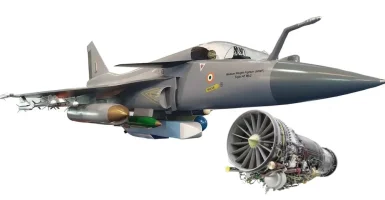
While deliveries have faced setbacks due to delays from US-based GE Aerospace in supplying the F404-IN20 engines, visual evidence from HAL’s assembly floors shows that aircraft construction has not stalled.

Airframes up to the 32nd production unit are reportedly in various phases of completion. This progress proves that India's domestic manufacturing capacity is no longer the primary hurdle in the fighter’s delivery timeline.

The core bottleneck continues to be the slower-than-expected arrival of the GE engines. To counter this, HAL has adopted a strategy of building the airframes, integrating avionics, and installing all internal systems while they wait for the powerplants.

Recent reports confirm that a seventh GE F404 engine successfully cleared quality checks in mid-2026, offering much-needed relief to the production line.

By stockpiling nearly finished jets, HAL ensures that deliveries to the air force can be fast-tracked as soon as engine shipments stabilise.

Scaling up to 30 aircraft per year perfectly aligns with the Indian Air Force’s urgent need to induct these advanced fighters.

HAL is currently executing an initial order for 83 Tejas Mk1A jets, valued at around ₹48,000 crore.

Following this, the government cleared an additional procurement of 97 jets, bringing the total confirmed order book for the Tejas Mk1A to 180 aircraft. To support these incoming orders, a separate contract was signed with GE in late 2025 for 113 more engines.

To fulfill these massive orders on time, accelerating production is non-negotiable. Rolling out 30 fighters a year will dramatically shrink delivery wait times.

More importantly, it will allow the Indian Air Force to swiftly replace its ageing fleets of MiG-21s, Jaguars, and Mirage 2000s, which is a critical necessity given the IAF's current squadron strength has dropped below 30 against a sanctioned requirement of 42 squadrons.

Ultimately, an enhanced production rate will give HAL the flexibility to take on potential export orders or additional domestic requests without disrupting its commitments to the Indian Air Force.

As India’s local defence and aerospace manufacturing sector matures, mass production of the Tejas is expected to boost efficiency, empower local suppliers, and drive down the overall cost per aircraft through economies of scale.
 
Given the current scenarios of upgradation in aircraft platforms is mk1a even relevant anymore I mean it's been delayed by 4 years now engines radar and ew suite problem after problem delay after delay it's better to focus on mk2 since it promises something comparatively better and relevant mk1a seems no better
 
Given the current scenarios of upgradation in aircraft platforms is mk1a even relevant anymore I mean it's been delayed by 4 years now engines radar and ew suite problem after problem delay after delay it's better to focus on mk2 since it promises something comparatively better and relevant mk1a seems no better
The Tejas Mk1A remains highly relevant within our current geopolitical landscape. Its primary purpose is to provide the sheer numbers needed to replace the aging MiG-21 fleet. While the Tejas Mk2 is a more capable medium-weight fighter, it is also more complex and costly to build and maintain.

Given the nature of our regional security environment, we don't strictly require long-range heavy fighters for every interception mission; we need simple, cost-effective, and easy-to-maintain aircraft for routine border patrols. The Tejas Mk1A fulfills this role perfectly, offering massive upgrades in radar, weapons, avionics,in-flight refuelling and electronic warfare capabilities compared to the platform it is replacing. Furthermore, its S-duct air intake masks the engine turbine blades, providing a degree of natural stealth. With the second tranche set to exceed 75% indigenous content, the Tejas Mk1A is a vital and relevant asset for the Indian Air Force.
 
What about advanced avionics and electronic war fare system. Software that promised earlier.
Regarding the advanced avionics and electronic warfare suites, the integration process is structured to be both flexible and robust. Rather than delaying the entire delivery schedule, the current strategy involves a phased rollout where the airframes are produced and fielded with baseline capabilities, while subsequent software-defined enhancements and hardware upgrades—such as the advanced EW suite—are applied incrementally.

Key aspects of this incremental integration strategy include:

Modular Architecture: The Tejas Mk1A utilizes an open-architecture avionics system, allowing for "plug-and-play" upgrades. This enables HAL to integrate new sensors and software patches as they mature without requiring a complete overhaul of the aircraft's internal structure.
Software-Defined Evolution: Many of the "promised" capabilities are software-based. By prioritizing the structural and mechanical readiness of the aircraft now, HAL ensures that the Indian Air Force (IAF) can begin pilot training and familiarization immediately. The advanced signal processing and electronic warfare algorithms can then be "pushed" to the fleet via software updates once they clear final validation.
IAF-HAL Collaboration: The concessions granted by the IAF reflect a mature understanding of modern aerospace development. By accepting an incremental induction path, the IAF avoids the "all-or-nothing" bottlenecks that have plagued previous defense procurement programs. This partnership ensures that as domestic suppliers—such as those involved in the Swayam Raksha Kavach project—reach delivery milestones, these components can be seamlessly fitted into incoming batches or retrofitted during routine maintenance cycles.
De-risking the Timeline: By decoupling the hardware delivery from the final software maturity, HAL minimizes the risk of production lines sitting idle. This approach balances the urgent requirement for increased squadron strength with the technical necessity of perfecting complex, indigenously developed electronic warfare systems.

Furthermore, I believe HAL is finally shedding its monopoly mindset, especially given the rising competition from private players like TASL, Reliance, and the Mahindra Group. Since TASL has already demonstrated the capability to manufacture aircraft in-house and the AMCA project is slated to be managed by a Special Purpose Vehicle (SPV) rather than HAL, this shift toward a more collaborative approach with the IAF is a strategic necessity for their survival.
 
From the very beginning HAL started the Tejas project in the wrong foot since then everything is in a mess. The Koreans started their KAI FA-50 Fighting Eagle Light combat aircraft much later than the Indian HAL. Today KAI FA-50 Fighting Eagle has long become a proven aircraft and appealing to several customer including Poland, Indonesia, Philippines and now Malaysia. The is how customer confidence comes into effect when they noticed European country like Poland procures a aircraft type others are watching and they become confident. I as an Indian having so much expectations and anxiously anticipating to see Tejas to experience the market confidence and procurement from Asian countries. But I think even countries like Philippines, Indonesia and Malaysia prefer FA50 rather than Tejas because of the long delays in marketing the aircraft to smaller economic countries. The Koreans were sourcing GE engines to power their FA50 but how did they manage to get the engines seamlessly compared to HAL. Now the Koreans KAI have overtaken HAL by leaps and bounds with their new fighter KF-21 which has gone through various parameters rigorous evaluation and cleared for operational use. Now that GE has revised the cost per F414 engines I am wondering how is it going to affect AMCA.
 
From the very beginning HAL started the Tejas project in the wrong foot since then everything is in a mess. The Koreans started their KAI FA-50 Fighting Eagle Light combat aircraft much later than the Indian HAL. Today KAI FA-50 Fighting Eagle has long become a proven aircraft and appealing to several customer including Poland, Indonesia, Philippines and now Malaysia. The is how customer confidence comes into effect when they noticed European country like Poland procures a aircraft type others are watching and they become confident. I as an Indian having so much expectations and anxiously anticipating to see Tejas to experience the market confidence and procurement from Asian countries. But I think even countries like Philippines, Indonesia and Malaysia prefer FA50 rather than Tejas because of the long delays in marketing the aircraft to smaller economic countries. The Koreans were sourcing GE engines to power their FA50 but how did they manage to get the engines seamlessly compared to HAL. Now the Koreans KAI have overtaken HAL by leaps and bounds with their new fighter KF-21 which has gone through various parameters rigorous evaluation and cleared for operational use. Now that GE has revised the cost per F414 engines I am wondering how is it going to affect AMCA.
Indonesia just exited the South Korean KF21 partnership and going for almost similar numbers of Rafael medium weight double engine fighters as India. Rafael SPECTRA (best EWS in the world focussing on evading incoming missiles making up for lack of low stealth), improved radar and weapons in Mod 4 and 5, besides higher availability (modular design for quicker maintenance and better reliability of parts, assemblies) is better suited for Air Forces of France, India, Indonesia.
 

Forum statistics

Threads
7,771
Messages
67,685
Members
5,657
Latest member
Tanay Ghosh
Back
Top