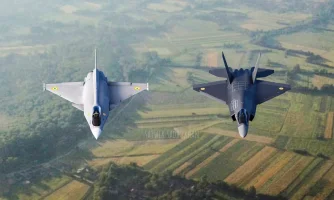
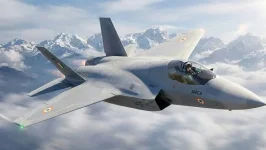
Hindustan Aeronautics Limited (HAL) has unveiled plans to unveil a fully functional flight developmental prototype of the Combat Air Teaming System (CATS) Warrior later this year.
This state-of-the-art unmanned combat aerial vehicle is scheduled to take its maiden flight in 2027.
Ahead of introducing this flight-ready model, HAL produced an earlier prototype last year designed specifically as a Ground Test Bed (GTB) to thoroughly evaluate critical systems before they take to the skies.
The Ground Test Bed acts as an essential physical framework for engineers to safely install and examine the aircraft's internal networks.
This process includes mapping out hydraulic and fuel pipelines, as well as testing complex electrical wiring and digital communication pathways.
Furthermore, the GTB enables the evaluation of flight control software by linking control inputs directly to the physical mechanical parts on a stationary structure.
Open-source reports confirm that the 2-to-3-tonne prototype recently completed successful engine ground runs powered by twin PTAE-W turbojet engines, marking a significant milestone in its mechanical validation.
In addition to structural assessments, the GTB is vital for operating auxiliary internal systems without the risks of actual flight.
It allows technicians to verify the durability of fuel tanks under simulated pressure and movement, ensuring they remain intact during high-speed aerial manoeuvres.
Importantly, the static model is used to detect and resolve any electromagnetic interference between the drone's advanced electronics.
For a sophisticated stealth drone like the CATS Warrior, ensuring that interconnected radars, electronic warfare equipment, and secure communication links do not disrupt one another is critical for modern air defence operations.
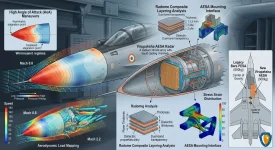
To further enhance its capabilities, HAL is reportedly equipping the drone with advanced artificial intelligence, GPS-independent visual navigation, and Active Electronically Scanned Array (AESA) radar systems.
Once all ground evaluations are finalized and the necessary airworthiness approvals are obtained, the CATS Warrior will be prepared for its highly anticipated first flight next year.
This event will launch a comprehensive and rigorous flight-testing phase.
As a "loyal wingman" designed to fly alongside manned fighter jets like the Tejas and Rafale, the successful development of the CATS Warrior promises to significantly bolster India's aerial combat capabilities by executing high-risk missions and protecting human pilots.