- Views: 5K
- Replies: 14
Hindustan Aeronautics Limited (HAL) is anticipating the completion of 16 Light Combat Aircraft (LCA) Tejas Mk1A fighter jets by the close of the current financial year in March 2026.
However, the final delivery rhythm to the Indian Air Force (IAF) is currently being dictated more by the integration of sophisticated software than by the physical construction of the airframes.
This development comes at a critical time for the Ministry of Defence, which is urgently looking to bolster the IAF's depleted fighter squadrons.
To this end, the government recently finalised a massive ₹62,370 crore contract in September 2025 for an additional 97 Mk1A jets, supplementing the initial order of 83 aircraft placed in 2021.
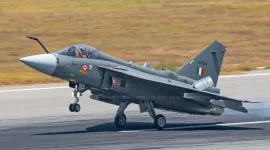
Providing an update on the production line, HAL revealed in early February that five Mk1A aircraft have been fully assembled and equipped with the primary combat capabilities specified by the IAF. These structurally complete and airworthy jets are now primed for induction testing.
Furthermore, another nine jets are prepared for flight, with two more currently undergoing final assembly.
This indicates that HAL's manufacturing facilities—which recently expanded to include a third production line in Nashik to increase output to 24 jets annually—are operating actively.
However, the handover process is currently paused pending the integration of specific software modifications requested by the Air Force.
Industry insiders clarify that these software adjustments do not point to any structural flaws or major operational defects.
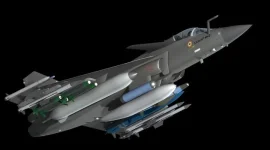
Rather, they are necessary tweaks to harmonise the aircraft's cockpit interfaces, mission control logic, and weapons integration—such as recent complex trials involving the Astra beyond-visual-range missile and Israeli radar systems—with the specific operational requirements of the IAF.
HAL has proposed that these ongoing software enhancements could be installed incrementally while the jets undergo their trial phases, allowing for the physical transfer of the aircraft without further postponement.
The aerospace manufacturer has also highlighted the financial and practical burdens of keeping finished, combat-ready jets stored in hangars awaiting final sign-off.
While the IAF has yet to announce a strict timeline for officially accepting the new fighters, HAL maintains that both parties are working closely together to speed up the handover process.
Such continuous software development is a standard feature of modern military aviation programmes.
Unlike older generations of fighter jets, cutting-edge platforms like the Tejas Mk1A rely heavily on complex software architectures to manage everything from flight controls to advanced sensor fusion.
Therefore, iterative software updates are a routine and expected aspect of preparing a modern jet for frontline service.
Alongside the software discussions, the ongoing shortage of aircraft engines remains a significant overarching hurdle for the programme.
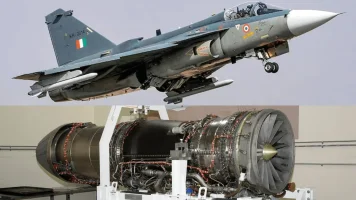
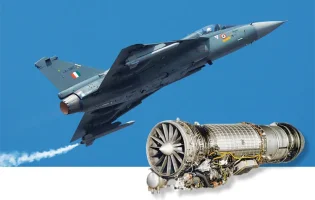
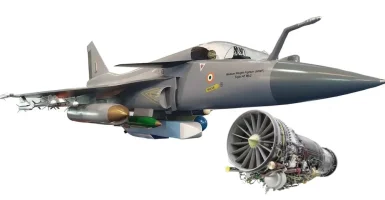
The Tejas Mk1A relies on the F404-GE-IN20 turbofan engine produced by the American aerospace firm General Electric (GE). Global supply chain disruptions have severely restricted the availability of these critical powerplants, directly impacting the final delivery schedules.
While HAL projected a need for 12 engines for the current financial year, only a handful have arrived in India so far, though recent reports suggest GE has committed to supplying up to 20 engines in the upcoming 2026-27 financial year to help HAL scale up.
Despite these broader hardware constraints, the immediate focus regarding the current batch of completed airframes remains securely on finalising the software integration.