- Views: 95
- Replies: 1
India's ambitious Tejas Mk2 fighter jet project has received its most definitive roadmap to date, outlining a methodical development schedule that will extend into the next decade.
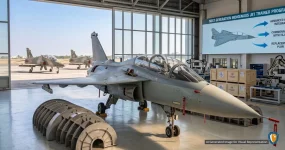
Hindustan Aeronautics Limited (HAL) is now aiming to unveil the first prototype and conduct its maiden flight between March and July 2027.
However, defense sources reveal a carefully staggered approach to the aircraft's development: weapons testing will not commence until the third prototype is ready in mid-2030, and the final green light for mass production is anticipated around 2031.
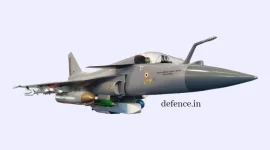
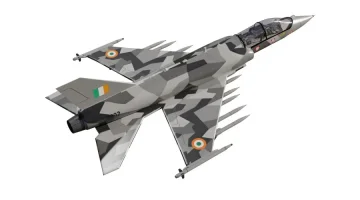
Designed as a 4.5-generation Medium Weight Fighter (MWF), the jet promises significant upgrades over its predecessor, including a heavier payload capacity, canard delta-wing configuration, and advanced avionics.
The revised timeline of March to July 2027 for the first flight was recently confirmed by HAL Chairman and Managing Director Ravi Kumar during the 2026 Farnborough International Airshow. He assured that the structural assembly of the initial prototype is progressing on schedule.
This current timeframe follows several previous deadlines—originally set for 2023 and later pushed to 2025 and 2026—that were missed.
Much of the delay stems from a government mandate to increase the fighter's indigenous components from 65 percent to 80 percent.
Program leaders view these extensions not merely as setbacks, but as deliberate decisions to thoroughly test critical technologies, such as the indigenous Uttam AESA radar, composite materials, and advanced flight control software, before the aircraft takes to the skies.
Following the maiden flight, HAL plans to adopt a steady manufacturing rhythm, producing roughly one new prototype each year rather than rushing multiple jets simultaneously.
After the first prototype debuts in 2027, a second is scheduled for late 2027 or early 2028. The third and fourth prototypes will follow in 2029 and 2030.
This gradual four-year rollout is designed to give engineers at HAL and the Aeronautical Development Agency (ADA) ample opportunity to learn from each test phase, refining the aircraft's design step-by-step instead of relying on a single, untested blueprint for the entire test fleet.
A key strategy in this new schedule is the clear separation of testing duties among the four prototypes.
According to insiders, the first two aircraft will be used exclusively for fundamental developmental trials.
This includes verifying the jet's aerodynamic stability, expanding its flight limits, and ensuring basic safety and airworthiness. Only after these core capabilities are proven will the focus shift to combat readiness.
The third and fourth prototypes, arriving in 2029 and 2030, will be strictly dedicated to live munitions testing.
The Tejas Mk2 is slated to feature 11 weapon stations capable of carrying up to 6,500 kg of payload, but live-fire testing of these systems will not begin until the middle of 2030.
While ADA had previously hoped to speed up development by running various tests in parallel, they have opted for a more traditional, sequential approach to ensure the airframe is completely safe before integrating heavy weaponry.
Once both the developmental and weapons trials are successfully completed, the Tejas Mk2 is expected to receive its final production clearance by 2031.
This timeline allows for approximately four years between the first flight and the start of serial manufacturing—a much faster progression than the 17-year journey of the earlier Tejas Mk1.
Upon receiving clearance, HAL’s production facilities in Nashik and Bengaluru will need to rapidly scale up manufacturing to meet the demands of the Indian Air Force (IAF).
The IAF requires well over 100 Tejas Mk2 jets to replace its aging fleets of Jaguar, Mirage 2000, and MiG-29 fighters.
Given the project's history of shifting deadlines, defense analysts advise viewing the upcoming 2029-2031 milestones with measured optimism.
Project officials acknowledge past delays but assert that the current schedule prioritizes engineering reality over symbolic deadlines.
The success of this realistic, step-by-step strategy heavily depends on HAL's ability to maintain its planned yearly prototype cadence.
A significant factor in meeting these goals will be the reliable supply of GE F414-INS6 engines from the United States, which offer a powerful 98 kN of thrust, and the successful implementation of a technology transfer agreement intended to eventually manufacture these engines locally in India.
For the Indian Air Force, the extended development timeline of the Tejas Mk2 demands careful strategic planning.
Because combat-ready Mk2 prototypes will only emerge around 2030 and full production will not begin until 2031, the first operational squadrons are unlikely to be formed before the mid-2030s.
Consequently, the IAF must continue to fund and maintain its older fighter fleets for at least another five to seven years to maintain squadron strength.
This situation highlights the critical importance of interim solutions, such as the ongoing induction of the Tejas Mk1A and the integration of new ASRAAM missiles into existing platforms, which will serve as vital stopgaps to preserve the Air Force's combat readiness while awaiting the arrival of the heavier, more capable Tejas Mk2.