Hindustan Aeronautics Limited (HAL) has initiated a major infrastructure expansion at its Aircraft Manufacturing Division (AMD) in Nashik.
By floating a new tender for civil works—specifically the installation of aluminium partitions and false ceilings in Shops 25 and 31—the aerospace giant is gearing up to boost the production of the indigenous Prachand Light Combat Helicopter (LCH).
This foundational upgrade signals HAL's readiness to execute the monumental ₹62,700 crore contract for 156 helicopters, which includes 90 units for the Indian Army and 66 for the Indian Air Force.
The tender highlights a critical transition for India’s premier defence manufacturer, marking a decisive shift from prototype development to high-rate serial production.
While HAL’s Greenfield Helicopter Factory in Tumakuru, Karnataka, has historically been the focal point of the LCH programme, this latest move confirms that the Nashik complex will be instrumental in executing the massive order and adhering to strict delivery timelines expected to conclude by 2033.
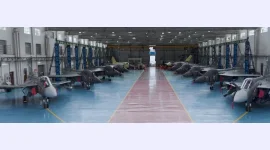
The scope of the project focuses on transforming existing industrial buildings into highly specialised assembly lines for helicopters.
Rather than facing the multi-year delays associated with constructing entirely new facilities from the ground up, HAL is employing a proven aerospace strategy: retrofitting.
This approach allows the company to quickly modernise its current factory spaces to meet the exacting standards required for precision aircraft assembly.
Installing aluminium partitions is far more than a cosmetic upgrade. The production of modern combat helicopters requires highly controlled environments. These partitioned zones will help rigorously manage dust, regulate temperature, and prevent contamination.
Ultimately, these dedicated workspaces will enhance workflow, improve safety, and enable multiple stages of assembly to occur safely side-by-side within the same facility.
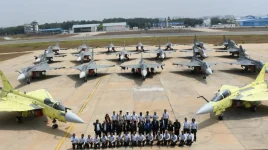
Selecting Shops 25 and 31 for this upgrade aligns perfectly with HAL's broader vision of maximising its existing industrial footprint. The Nashik facility boasts a rich legacy of manufacturing and overhauling advanced fighter jets, including the MiG-21, MiG-27, and Su-30MKI.
By repurposing this well-established aviation hub for the Prachand programme, HAL bypasses the severe bottlenecks that plague greenfield construction projects, ensuring a rapid scale-up in manufacturing capability.
This expansion also reveals a shift towards a decentralised, hub-and-spoke manufacturing strategy for the Prachand helicopter. Instead of relying solely on one factory, HAL is distributing the workload.
While Tumakuru will continue to act as the primary helicopter production hub, Nashik will operate as a vital secondary centre for assembly and integration, sharing the immense production burden as the output scales up.
Distributing the manufacturing process across multiple sites is essential given the sheer volume of the recent order. Successfully rolling out 156 sophisticated combat helicopters over the planned production period demands a massive leap in production speed compared to earlier initial runs.
By equipping multiple facilities, HAL is effectively eliminating potential manufacturing chokepoints, ensuring that commitments to the Indian Army and Air Force are met without delay.
Furthermore, this infrastructure drive mirrors the evolving landscape of aerospace production in India. HAL is increasingly adopting a model where the manufacturing of individual components and machined structures is outsourced to private industries, with HAL handling the final integration.
Under this system, the Nashik facility will function as a Final Assembly and Integration (FAI) hub. Here, dynamic components, advanced avionics, and mission systems sourced from external partners will be pieced together into combat-ready helicopters.
This collaborative public-private ecosystem is a cornerstone of the government’s Aatmanirbhar Bharat initiative. Instead of manufacturing every bolt in-house, HAL is fostering a vast supply chain network capable of manufacturing precision aerospace parts.
The Prachand project alone will achieve an indigenous content of over 65 percent, involve more than 250 domestic companies—mostly MSMEs—and is expected to generate upwards of 8,500 direct and indirect jobs. This strategy not only accelerates production but deeply strengthens the country’s domestic defence industrial base.
The latest tender serves as a reminder that robust defence manufacturing relies just as heavily on industrial infrastructure as it does on cutting-edge engineering.
While public attention usually gravitates towards missile systems, engines, and flight performance, high-volume serial production requires massive investments in climate-controlled workspaces, logistics, and quality assurance workflows.
Civil works like those at Nashik provide the essential physical foundation upon which sustained, high-rate manufacturing depends.
Defence analysts are also observing a broader trend across HAL’s nationwide facilities, where similar infrastructure upgrades are taking place.
Recent tenders for advanced electronics assembly zones and clean-room environments suggest that the company is systematically modernising its capabilities to handle complex mission computers, avionics, and electronic warfare systems.
As India's indigenous military platforms incorporate increasingly sophisticated digital tech, these internationally compliant manufacturing spaces will become even more vital.
For the Nashik complex, this structural upgrade represents a historic evolution in its long-established role within India’s defence sector.
Traditionally renowned for its expertise in fighter jet production and lifecycle support, the Aircraft Manufacturing Division is now successfully branching out into rotary-wing assembly.
This strategic diversification not only adds a new capability to one of HAL’s most experienced manufacturing centres but also provides the company with the operational flexibility needed to distribute its production footprint nationwide.