In a major boost for India's indigenous aerospace sector, American engine manufacturer GE Aerospace has launched a specialised production facility exclusively for the F404-IN20 turbofan engine.
This strategic move aims to drastically accelerate engine shipments for the Tejas Mk1A light combat aircraft, resolving the prolonged supply chain bottlenecks that previously hampered the fighter jet's manufacturing timeline.
To smooth out these earlier constraints, GE has integrated its proprietary "FLIGHT DECK" lean operating model into the revitalised production approach.
With the new assembly infrastructure in place, GE has firmly committed to dispatching between 20 and 22 engines by the close of this year, and an additional 30 units next year.
This rapid turnaround is essential to meeting the Indian Air Force's strict target of operationalising the first full Tejas Mk1A squadron by March 2027.
Over the past couple of years, the slow arrival of F404 engines emerged as the primary hurdle for the Tejas project.
While Hindustan Aeronautics Limited (HAL) successfully built the airframes—with reports indicating that approximately 30 structures are already fully assembled—they were left waiting on the factory floor without their crucial powerplants.
Consequently, this mismatch severely delayed HAL's intended rollout strategy.
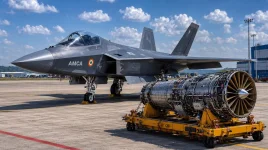
To clear this backlog, GE Aerospace overhauled its industrial capacity by restarting and dedicating a continuous supply chain for the F404-IN20, a variant custom-designed for the Tejas Mk1A featuring a higher-flow fan and single-crystal turbine blades.
This dedicated line is structured to bring back stability to the delivery process, guaranteeing that HAL receives a steady, uninterrupted flow of engines as they scale up aircraft production.
Currently, India stands as the world's most significant buyer of the F404-IN20 engine. The Indian Air Force initially signed a firm contract for 83 Tejas Mk1A fighters, which was later bolstered by government clearance for 97 more units. This colossal procurement brings the total fleet requirement to 180 aircraft.
Because every single fighter requires one primary engine along with several spares for lifecycle maintenance, the sheer volume of this order transforms India into a vital long-term operator of the GE F404 series.
The magnitude of this requirement directly justified GE’s substantial financial and operational investment into restarting a production line that had remained dormant for over five years.
By securing 20 to 22 engines before the end of this year, HAL will finally be able to equip its stockpiled airframes and swiftly deliver them to the Indian Air Force.
Furthermore, the anticipated delivery of 30 additional powerplants next year will reinforce the manufacturing tempo, allowing HAL to steadily push its annual Tejas Mk1A production rate towards a goal of 24 to 30 aircraft per year across its Bengaluru and Nashik facilities.
This resurgence in the propulsion supply chain arrives at a pivotal moment for India's defence strategy.
While awaiting the engines, HAL has been expanding its assembly footprint and outfitting the Mk1A with cutting-edge domestic technologies, including the Uttam Active Electronically Scanned Array (AESA) radar, next-generation electronic warfare suites, and locally developed weapon systems.
In addition to meeting domestic needs, a reliable stream of F404 engines significantly bolsters the export potential of the Tejas Mk1A.
With guaranteed engine availability and predictable delivery dates, the platform becomes a much more attractive and dependable option for allied nations looking to modernise their own air forces.
Looking ahead, while the F404 remains the backbone of the Mk1A fleet, India's upcoming aerospace projects are shifting towards more robust propulsion technologies.
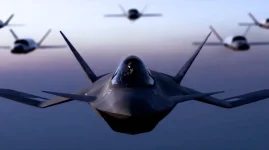
The heavier Tejas Mk2 will be powered by the advanced GE F414-INS6 engine. Similarly, the fifth-generation Advanced Medium Combat Aircraft (AMCA) will utilise the F414 in its early phases, before eventually incorporating a highly anticipated, domestically produced high-thrust engine for its later blocks.