- Views: 2K
- Replies: 5
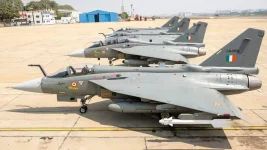
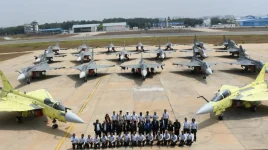
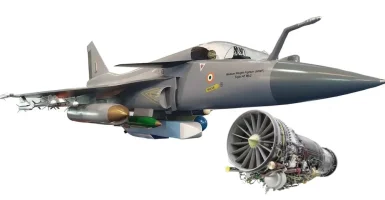
Hindustan Aeronautics Limited (HAL) anticipates commencing deliveries of the Light Combat Aircraft (LCA) Tejas Mk1A to the Indian Air Force (IAF) between August and September 2026, provided the supply of F404 engines from American manufacturer GE Aerospace reaches a steady state.
HAL Chairman and Managing Director Ravi Kota provided this updated timeline during the company’s Q4 FY26 earnings call.
This development marks a vital turning point for the Rs 48,000-crore contract signed in 2021 for 83 Mk1A fighters, a program that had previously experienced timeline shifts primarily due to global supply chain disruptions affecting engine deliveries.
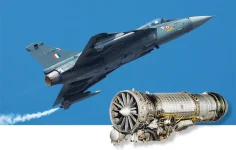
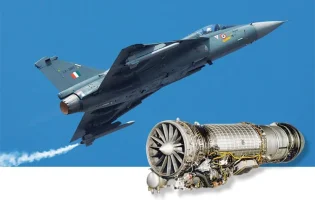
During the briefing, it was confirmed that HAL has officially received the sixth F404-GE-IN20 engine. The newly delivered powerplants are currently moving through rigorous evaluation and integration phases.
According to the HAL chief, the company expects the broader engine supply program to overcome its recent bottlenecks and achieve full stabilization by late summer 2026.
This anticipated consistency in the supply chain is critical for scaling up the manufacturing pace of the indigenous fighter jets.
As the engine validation process moves forward smoothly, HAL is preparing to formalize the handover process. The leadership plans to initiate detailed discussions with the IAF in the near future to establish a firm delivery schedule.
Confidence remains high that the first batches of the Tejas Mk1A will be ready for induction by August or September 2026, a milestone that will significantly boost India’s broader push toward self-reliance in the defence sector.
Simultaneously, the aerospace manufacturer is utilizing this period to perfect the fighter’s systems.
HAL engineers are conducting final software calibrations, validating flight parameters, and optimizing the integration of critical mission systems to guarantee the aircraft meets all operational standards prior to its service entry.
The Mk1A represents a major leap in capability over the baseline Tejas Mk1, bringing formidable modern assets to the IAF fleet, including an Active Electronically Scanned Array (AESA) radar, a modernized electronic warfare suite, advanced beyond-visual-range (BVR) firing capabilities, and enhanced turnaround times for better operational availability.